
ESD and environmental education, in numbers
UNESCO Associated Schools, which Japan's Ministry of Education (MEXT) treats as the hubs for ESD (Education for Sustainable Development), numbered 1,065 nationwide as of 31 March 2026 (MEXT). The member list on the official website shows 2 in Saga Prefecture and 70 in the eight prefectures of Kyushu and Okinawa. Regional ESD hubs registered with the ESD Resource Center of Japan numbered 229 as of 10 November 2026, of which 5 are in Saga and 3 in Karatsu (ESD Resource Center hub list).
Karatsu Farm & Food compiled this page as part of the Karatsu Data Bank. It sets out figures on ESD and environmental education as published by MEXT, the Ministry of the Environment and the ESD Resource Center, without conclusions or evaluations. Values we counted from lists are marked as such. School and pupil numbers for Karatsu are on Karatsu Schools and Pupil Numbers Data.
The national curriculum guidelines for elementary and junior high schools published in March 2017 state, in the preamble and general provisions, the aim of raising "creators of a sustainable society" (MEXT and the Japanese National Commission for UNESCO, in Japanese).
How many UNESCO Associated Schools are there?
UNESCO Associated Schools are members of UNESCO's school network (ASPnet). In Japan their number grew from 16 in FY2005 to 913 in FY2014 and 1,120 in FY2019, and stood at 1,065 on 31 March 2026. MEXT describes this as the largest number of any single country (MEXT). Worldwide, about 10,000 schools in 167 countries are members (end of March 2026, official website).
A 2020 MEXT document records 18 requests to leave the network in FY2018 (2 later withdrew the request) and 12 in FY2019. Reasons (multiple answers): difficulty continuing activities, 13 schools; school closure or merger, 9; a certain level of results achieved, 6; a change of educational focus, 5. Schools that did not submit an annual report numbered 10 in FY2018 and 44 in FY2019 (MEXT).
| Prefecture | Schools |
|---|---|
| Fukuoka | 44 |
| Saga | 2 |
| Nagasaki | 2 |
| Kumamoto | 3 |
| Oita | 3 |
| Miyazaki | 7 |
| Kagoshima | 4 |
| Okinawa | 5 |
Saga and Kyushu
The official member list (checked 13 November 2026) shows 2 UNESCO Associated Schools in Saga Prefecture: a compulsory-education school in Genkai and a junior high school in Takeo. No school in Karatsu is listed. Kyushu and Okinawa have 70, with 44 in Fukuoka and 7 in Miyazaki. Nationwide, Tokyo has the most (123), followed by Ishikawa (86), Aichi (72) and Miyagi (71); Iwate has 1, and Saga and Nagasaki 2 each.
| Date | Registered hubs |
|---|---|
| 2023-06-20 | 181 |
| 2024-02-20 | 187 |
| End of January 2026 | 216 |
| 2026-11-10 | 229 |
| Prefecture | Regional ESD hubs |
|---|---|
| Fukuoka | 8 |
| Saga | 5 |
| Nagasaki | 2 |
| Kumamoto | 4 |
| Oita | 3 |
| Miyazaki | 2 |
| Kagoshima | 5 |
| Okinawa | 5 |
How many regional ESD hubs are there?
Regional ESD hubs are organisations that act as a support point for people working on ESD in schools and community education. The ESD Resource Center of Japan, set up in 2016 as a joint project of MEXT and the Ministry of the Environment, began registering hubs in November 2017; by the end of January 2026, 216 organisations in every prefecture were registered (Ministry of the Environment). As of 10 November 2026 there are 229 (ESD Resource Center).
By location, Hokkaido (25) and Tokyo (22) have the most, and the Kyushu and Okinawa block has 34. Saga has 5: 1 in Kashima, 1 in Saga City and 3 in Karatsu. The three in Karatsu are the city's environment division, an NPO working to conserve the Nijinomatsubara pine forest, and Karatsu Farm & Food (our count from the list).
| Date | Certified | Users |
|---|---|---|
| 1 February 2025 | 35 sites | 33,847 (FY2022) |
| 1 March 2026 | 37 sites | 43,009 (FY2023) |
| September 2026 | 40 organisations |
Experience opportunity sites for environmental education
Under Article 20 of the Environmental Education Promotion Act, prefectural governors and others certify privately owned land or buildings that offer nature or social experience activities and meet safety and other criteria. The Ministry of the Environment lists 40 certified organisations as of September 2026 (Ministry of the Environment). When 37 sites were certified (1 March 2026), users in FY2023 numbered 43,009 (ministry document). In the ministry's list of 38 sites (June 2026), the only site in Saga is a satoyama site in Imari (Ministry of the Environment).
| Year | Island | Record |
|---|---|---|
| FY2023 | Ogawa | Of 23.07 kg of litter collected, 15.87 kg was plastic. Bottle caps: 230,546 g (as of 30 September 2023) |
| FY2024 | Kakara | 28 participants collected 79.9 kg of litter. Plastic bottles by country: Japan 100, South Korea 59, China 56, Malaysia 5, other 6 |
| FY2025 | Madara | At Tajiri beach: two light-truck loads of bulky waste and 34 bags |
| FY2026 | Takashima | 77 bottle caps picked up: Japan 45, South Korea 13, China 9, other 10 |
Our counts on Karatsu's islands
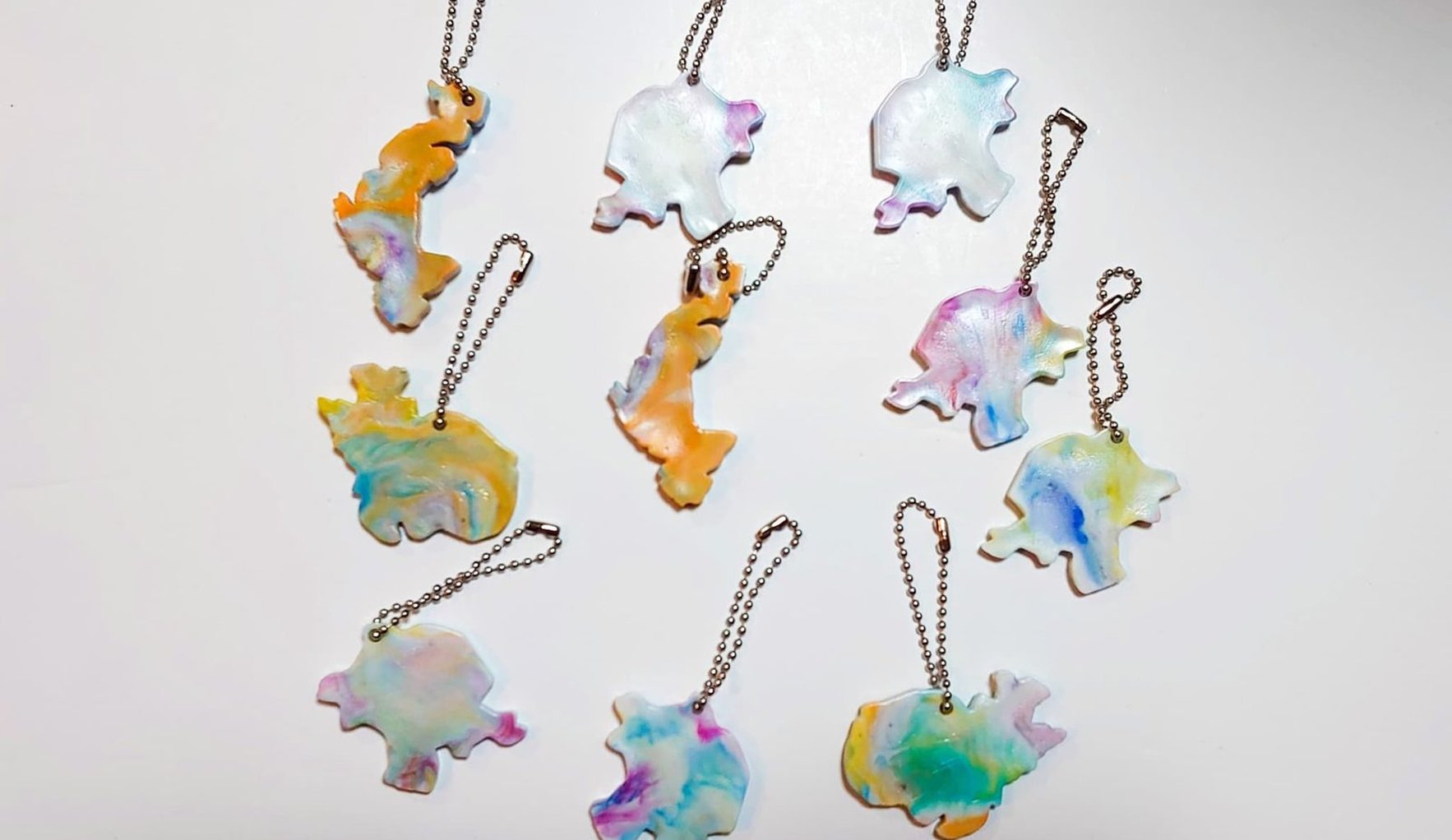
As part of Saga Prefecture's "Plasma LIFE Saga" initiative, we have worked with the school of one Karatsu island a year since FY2023, collecting and surveying beach litter and turning bottle caps into island-shaped key rings and coasters (Island ESD). The table above shows figures counted in that work.
Frequently asked questions
Q1. How many UNESCO Associated Schools are there in Japan?
According to MEXT, 1,065 as of 31 March 2026, up from 16 in FY2005; there were 1,120 in FY2019. MEXT describes this as the largest number of any single country.
Q2. How many UNESCO Associated Schools are in Saga Prefecture?
The member list on the official website (checked on 13 November 2026) shows 2 schools in Saga: a compulsory-education school in Genkai and a junior high school in Takeo. No school in Karatsu is listed. The eight prefectures of Kyushu and Okinawa have 70, of which 44 are in Fukuoka.
Q3. What is a regional ESD hub, and are there any in Karatsu?
Regional ESD hubs are organisations that act as a support point for people working on ESD in schools and community education. The ESD Resource Center of Japan (a joint project of MEXT and the Ministry of the Environment) began registering them in November 2017. As of 10 November 2026 there are 229, of which 5 are in Saga Prefecture and 3 in Karatsu, including Karatsu Farm & Food.
Q4. How many certified "experience opportunity sites" for environmental education are there?
These are sites certified by prefectural governors and others under the Environmental Education Promotion Act. The Ministry of the Environment lists 40 organisations as of September 2026. When 37 sites were certified (1 March 2026), users in FY2023 numbered 43,009. In the ministry's list of 38 sites (June 2026), the only site in Saga is in Imari.
Q5. Do schools leave the UNESCO Associated Schools network?
A 2020 MEXT document records 18 requests to leave in FY2018 (2 later withdrew the request) and 12 in FY2019. Reasons (multiple answers): difficulty continuing activities, 13 schools; school closure or merger, 9; a certain level of results achieved, 6; a change of educational focus, 5.
Source ledger
| Source | URL | Accessed |
|---|---|---|
| UNESCO Associated Schools (MEXT, in Japanese) | https://www.mext.go.jp/unesco/004/1339976.htm | 2026-11-13 |
| Status, issues and direction of UNESCO Associated Schools (MEXT, Dec 2020, in Japanese) | https://www.mext.go.jp/content/20201217-mxt_koktou01-000011703_1.pdf | 2026-11-13 |
| UNESCO Associated Schools member list (official site, in Japanese) | https://www.unesco-school.mext.go.jp/schools/ | 2026-11-13 |
| About UNESCO Associated Schools (official site, in Japanese) | https://www.unesco-school.mext.go.jp/about-unesco-school/aspnet/ | 2026-11-13 |
| Regional ESD hub list (ESD Resource Center of Japan, in Japanese) | https://esdcenter.jp/kyoten/ | 2026-11-13 |
| About the ESD Resource Center (Ministry of the Environment, Mar 2026, in Japanese) | https://policies.env.go.jp/policy/eco/files/04_material_r803.pdf | 2026-11-13 |
| Regional ESD hub register, 20 Feb 2024 (in Japanese) | https://esdcenter.jp/wp-content/uploads/2024/02/c148394471b25a81f90fdfab2024f064.pdf | 2026-11-13 |
| Regional ESD hub register, 20 Jun 2023 (in Japanese) | https://esdcenter.jp/wp-content/uploads/2023/06/1b8a104a66c6b5f37dd3379c50e1a2c0.pdf | 2026-11-13 |
| Experience opportunity site certification (Ministry of the Environment, in Japanese) | https://www.env.go.jp/policy/post_57.html | 2026-11-13 |
| Implementation of the Environmental Education Promotion Act (Ministry of the Environment, Mar 2026, in Japanese) | https://policies.env.go.jp/policy/eco/files/03_material_r803.pdf | 2026-11-13 |
| Implementation of the Environmental Education Promotion Act (Ministry of the Environment, 2025, in Japanese) | https://policies.env.go.jp/policy/eco/files/03_material_r702.pdf | 2026-11-13 |
| Experience opportunity sites (Ministry of the Environment, in Japanese) | https://policies.env.go.jp/policy/eco/taiken-kikainoba/ | 2026-11-13 |
| Education for Sustainable Development guidebook (MEXT and Japanese National Commission for UNESCO, in Japanese) | https://www.mext.go.jp/content/20250528-mxt_koktou02-000028952_3.pdf | 2026-11-13 |
Notes on reading the figures
Prefecture counts of UNESCO Associated Schools are search counts on the official member list; their total (1,064) differs in date from MEXT's 1,065 (31 March 2026). Counts of regional ESD hubs by prefecture and city were made by us from the location field of the hub list; registration does not measure the amount of activity. Experience opportunity sites are counted in "sites" or "organisations" as written in each source.
What this page does not cover
This page does not evaluate individual schools or organisations, does not compare schools or prefectures, does not count ESD activities at schools outside the UNESCO network, and does not use values read off charts. Japanese sources are summarised in our own translation; the originals take precedence.
Citing this page and enquiries
To cite figures from this page or to ask about finding local data, please use our contact page or write to info@karatsu-f-f.com.
About this page
By Hiroaki Kojima (Vice Director, Karatsu Farm & Food) / Contact: info@karatsu-f-f.com (contact page) / Published: 13 November 2026 / Markdown: esd-data.mdThis page is made together with AI. See this data bank and AI for how.
Related links
▶ Karatsu Data Bank
▶ Island ESD: four islands off Karatsu
▶ Karatsu Schools and Pupil Numbers Data
▶ ESD・環境教育のデータ(日本語)