

🌐 日本語版(サステナブルツーリズム事業)はこちら / Read this page in Japanese
Learn sustainability from the field
We help companies, local governments and institutions learn sustainability from the field — through hands-on study visits in Karatsu, Kyushu, and joint inspections in Japan and abroad. Our focus is the move from sustainable tourism (minimizing impact) toward regenerative tourism (actively restoring the environment and society through travel).
The integrated Karatsu study tour
Our core offering is a single, integrated visit that brings four real sites together:
- Hands-on Precious Plastic molding — recover and remake ocean plastic yourself
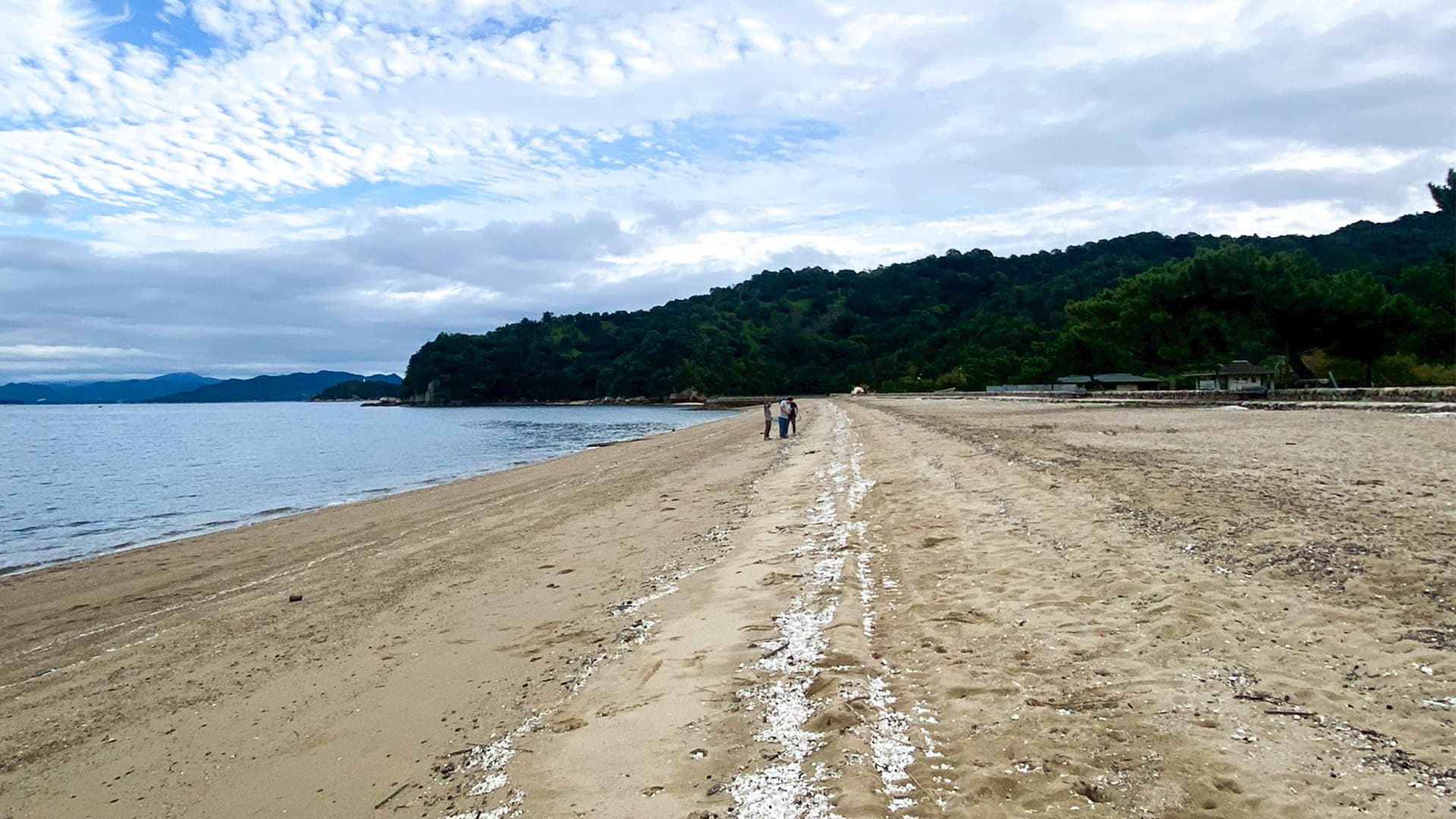
- Yokomakura OECM site — Saga's first OECM site, for biodiversity and nature-positive practice
- Madara Island — island fieldwork and community context
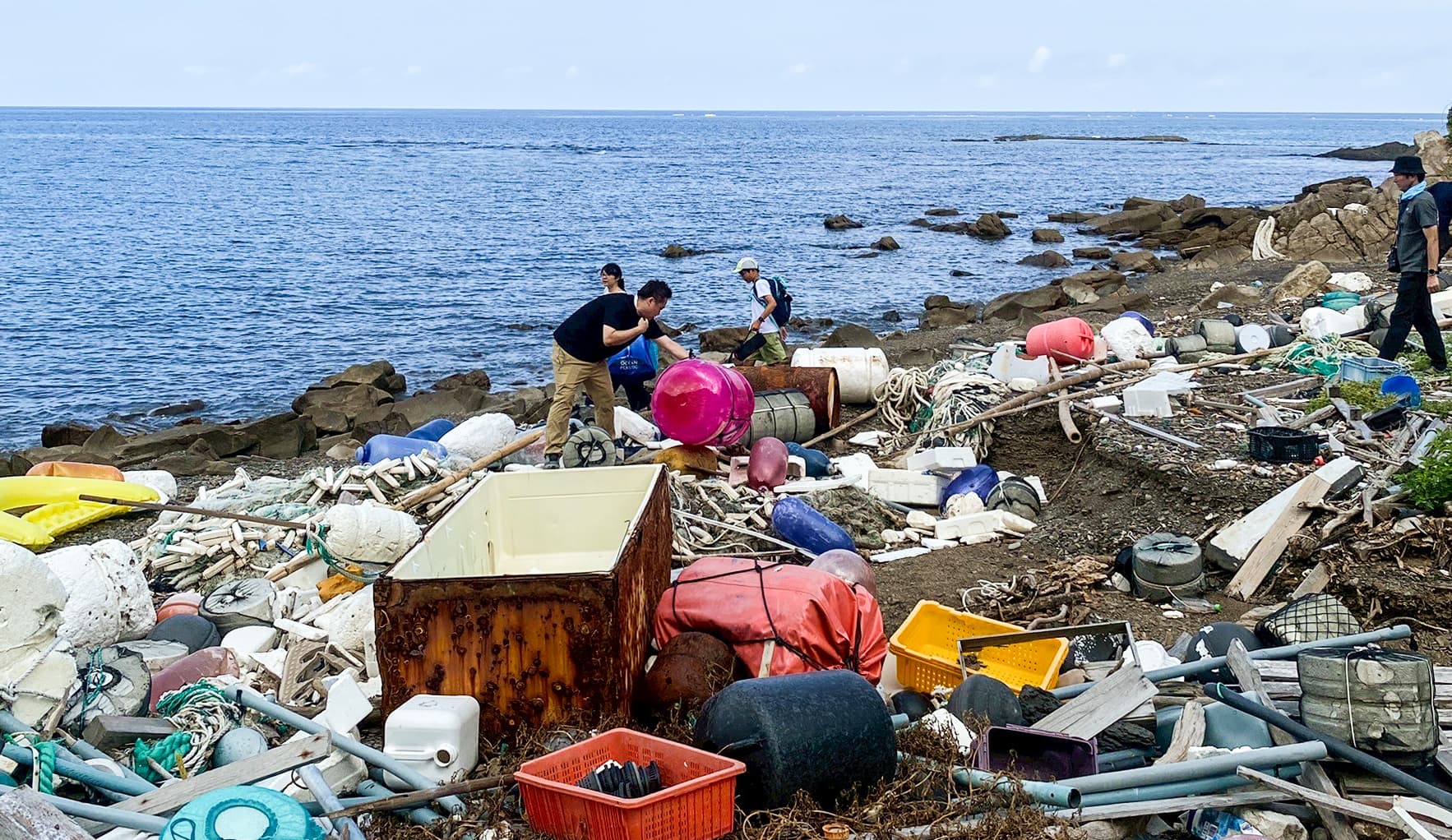
- Hadomisaki ocean-plastic recovery site — see recovery work at the front line
The route is customizable by theme — for executives, sustainability teams, study trips or international delegations.

Designed as ESG / TNFD supplier-visit evidence
For listed companies and international visitors, the integrated Karatsu tour is structured to serve as documented supplier-visit and field evidence for ESG and TNFD or wider sustainability reporting. We can tailor the route and supporting documentation to your disclosure needs.
Track record — in Japan and abroad
We don't just talk about sustainable tourism; we've delivered and studied it across many sites:
- Okinoerabu Island — commissioned by the island's tourism association to develop ocean-waste-to-resource tourism experiences (three visits)
- Miyajima Blue Initiative — supported the launch of a Precious Plastic site, turning fishery and oyster-farming plastic into a local resource
- Tsushima — marine-plastic co-creation design with Kyushu Tankentai (Daimaru Hakata), Tsushima City, Kanazawa College of Art, SARAYA and ZERI JAPAN
- Bali, Indonesia — studied regenerative tourism at ethical hotels and local organizations
- Thailand — invited by the Tourism Authority of Thailand to study sustainable tourism on Koh Tao and Koh Samui
- Ocean Revival Competition — a 2nd-in-the-world idea for ocean-plastic solutions and sustainable tourism

A two-way model — we visit you, too
Our model is bidirectional. We don't only host inbound visits — we also travel to study and collaborate with organizations abroad (for example, invited by the Tourism Authority of Thailand to study Koh Tao and Koh Samui, and on study visits to Bali). And when we work together, we can help share your work with a Japanese audience through our media reach — more than 1,000 PR Times syndications and 43 earned-media features. For overseas DMOs, tourism boards and sustainability organizations, that's a route into the Japanese market.


| Place | What it is | Figures and mechanism (as stated) | Source |
|---|---|---|---|
| Aso, Kumamoto (Kyushu) | Travellers join local pasture cooperatives in grassland conservation work ("Millennium Grassland" activities); the Japan Tourism Agency calls it regenerative content | More than 400 participants and over JPY 4 million in sales; over JPY 400,000 returned to the cooperatives as a grassland conservation fee in FY2023 (target JPY 2.5 million in FY2024) | Japan Tourism Agency case book, case 06 (p.19, Japanese) |
| Tonami and nearby, Toyama | Aims to establish "regenerative tourism" that carries the scattered-farmhouse landscape and traditional crafts into the future | 2% of the room rate at an inn, plus a donation built into new products, goes to conserving the landscape | Japan Tourism Agency case book, case 03 (p.16, Japanese) |
| Ikusaka, Nagano | A tour operator and the village run a regenerative tourism programme ("Travelling Creatures College") | Second season (FY2025): six tours. The first season won a special award at the Japan Tourism Agency's 2nd Sustainable Travel Awards and an excellence award (environment) at the 3rd JATA SDGs Awards | Club Tourism press release, 24 July 2025 (Japanese) |
| Tatsugo, Amami Oshima (Kagoshima) | Regenerative tourism on a nature coexistence site (OECM) of rice terraces, selected for the Ministry of the Environment's FY2025 model projects | Biodiversity fieldwork with 28 people (20 of them local residents), a workshop with 29, and joint stone-lining of a drainage channel with 25 | Ministry of the Environment (Japanese) |
| Shinano, Nagano | A local model built on regenerative tourism, so that "the more visitors come, the more local biodiversity recovers", using three nature coexistence sites in the town | No figures given; policy directions agreed across departments and shared with a nature-positive council | Cabinet Office case book, March 2026 (Japanese) |
Regenerative tourism in Japan: examples
Regenerative tourism is starting to appear in Japanese government case books. In Aso, Kyushu, travellers who join grassland conservation have passed 400 participants and JPY 4 million in sales, and over JPY 400,000 was returned to the pasture cooperatives in FY2023 (Japan Tourism Agency, March 2024). In Toyama, 2% of the room rate at an inn goes to conserving the landscape. Two other examples, Tatsugo on Amami Oshima and Shinano in Nagano, are built on nature coexistence sites (OECMs), as is Yokomakura in Karatsu, the first such site in Saga Prefecture.
Our own figures and work are summarised in the slides we used at the Ministry of the Environment's model-project training in Karatsu on 21 October 2026: Regenerative Tourism slides (PDF, Japanese).
Frequently asked questions
What is regenerative tourism, and how is it different from sustainable tourism?
Sustainable tourism aims to minimize the environmental and social impact of travel. Regenerative tourism goes a step further: it uses travel to actively restore the environment and society. In Bali, for example, some ethical hotels are run so that the operation itself drives waste circulation and local employment. We help organizations move from sustainable practice toward regenerative practice.
What does Karatsu Farm & Food offer?
We offer an integrated study tour in Karatsu that combines hands-on Precious Plastic molding, Saga's first OECM site at Yokomakura, Madara Island, and the Hadomisaki ocean-plastic recovery site. We also coordinate joint inspections overseas, and we have delivered work across Okinoerabu Island, Miyajima and Tsushima.
Can a study visit serve as ESG or TNFD supplier-visit evidence?
Yes. The integrated Karatsu tour is designed to provide documented supplier-visit and field evidence for ESG and TNFD or wider sustainability reporting. We can tailor the route and supporting documentation to your disclosure needs.
Do you coordinate visits outside Japan as well?
Yes. Our model is two-way: we have studied regenerative tourism in Bali and Thailand, where we were invited by the Tourism Authority of Thailand to study Koh Tao and Koh Samui, and we can co-design overseas inspections. When we collaborate, we can also help share your work with a Japanese audience through our media reach.
Are there other examples of regenerative tourism in Japan?
Yes. The Japan Tourism Agency's case book (March 2024) includes grassland conservation activities in Aso, Kumamoto (more than 400 participants, over JPY 4 million in sales, and over JPY 400,000 returned to pasture cooperatives in FY2023) and an inn in Toyama that puts 2% of its room rate towards conserving the local landscape. Other examples are Ikusaka in Nagano, and Tatsugo on Amami Oshima and Shinano in Nagano, both built on nature coexistence sites (OECMs) like Yokomakura in Karatsu.
Work with us
To plan a study visit, an ESG / TNFD supplier visit, or a joint overseas inspection, get in touch and choose "Site visit / sustainable tour" on our contact form. We read and write English well; for calls, an interpreter helps, so tell us your preferred language.
Related
▶ Nature Positive — Saga's first OECM site
▶ Precious Plastic Karatsu
▶ Education for Sustainable Development (ESD)
▶ Types of Tourism in Numbers: sustainable, regenerative, eco and volunteer tourism
▶ 日本語版:サステナブルツーリズム事業(視察事例つき)
About the organization
Karatsu Farm & Food
A non-profit based in Karatsu City, Saga Prefecture, Japan, working on ocean-plastic solutions, the circular economy, environmental education (ESD) and the management of Saga's first OECM site. We coordinate sustainable- and regenerative-tourism study visits — in Karatsu and abroad — and have worked across Okinoerabu, Miyajima, Tsushima, Bali and Thailand. Think Locally, Act Globally.