
Beach cleanups, in numbers
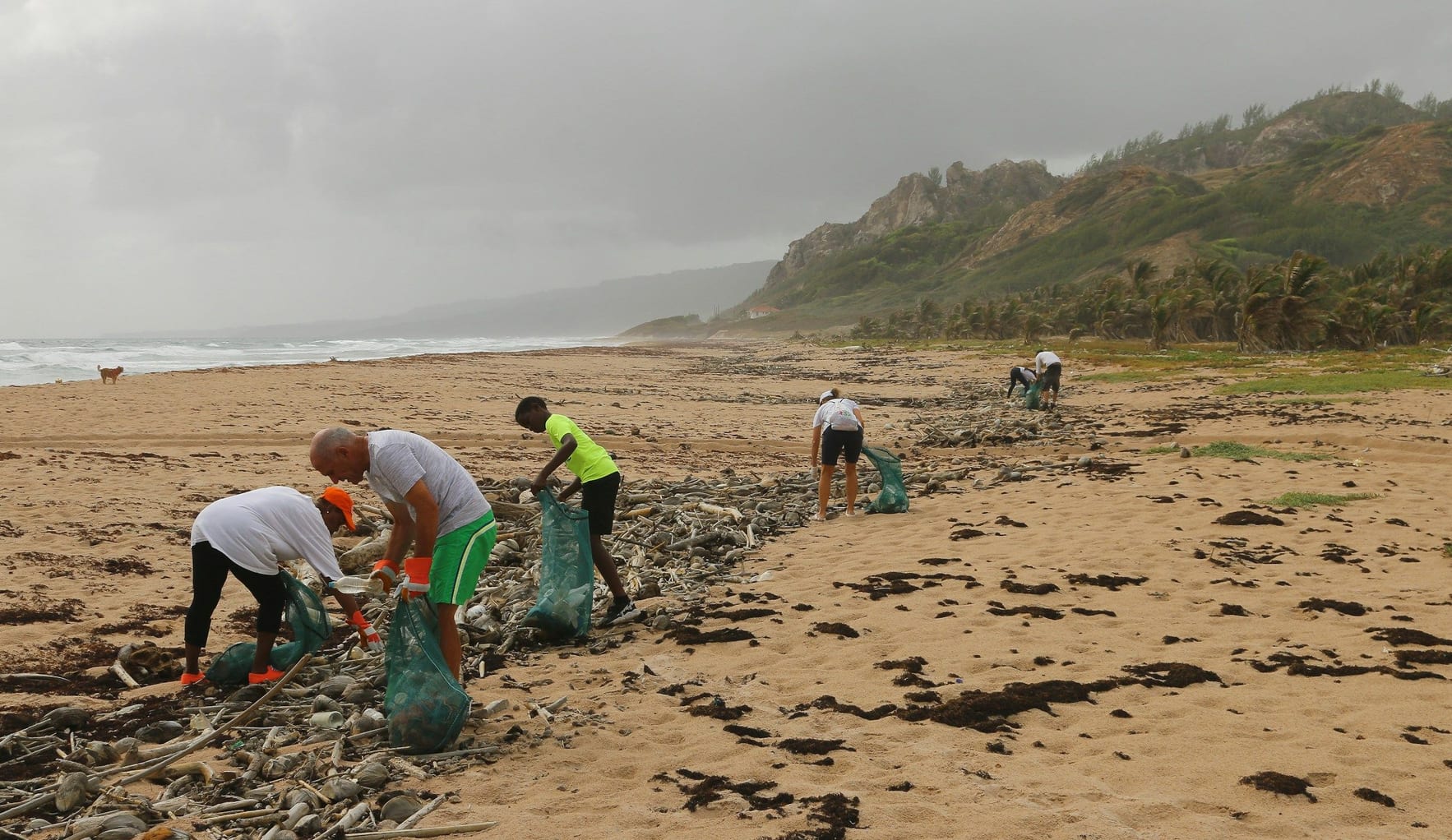
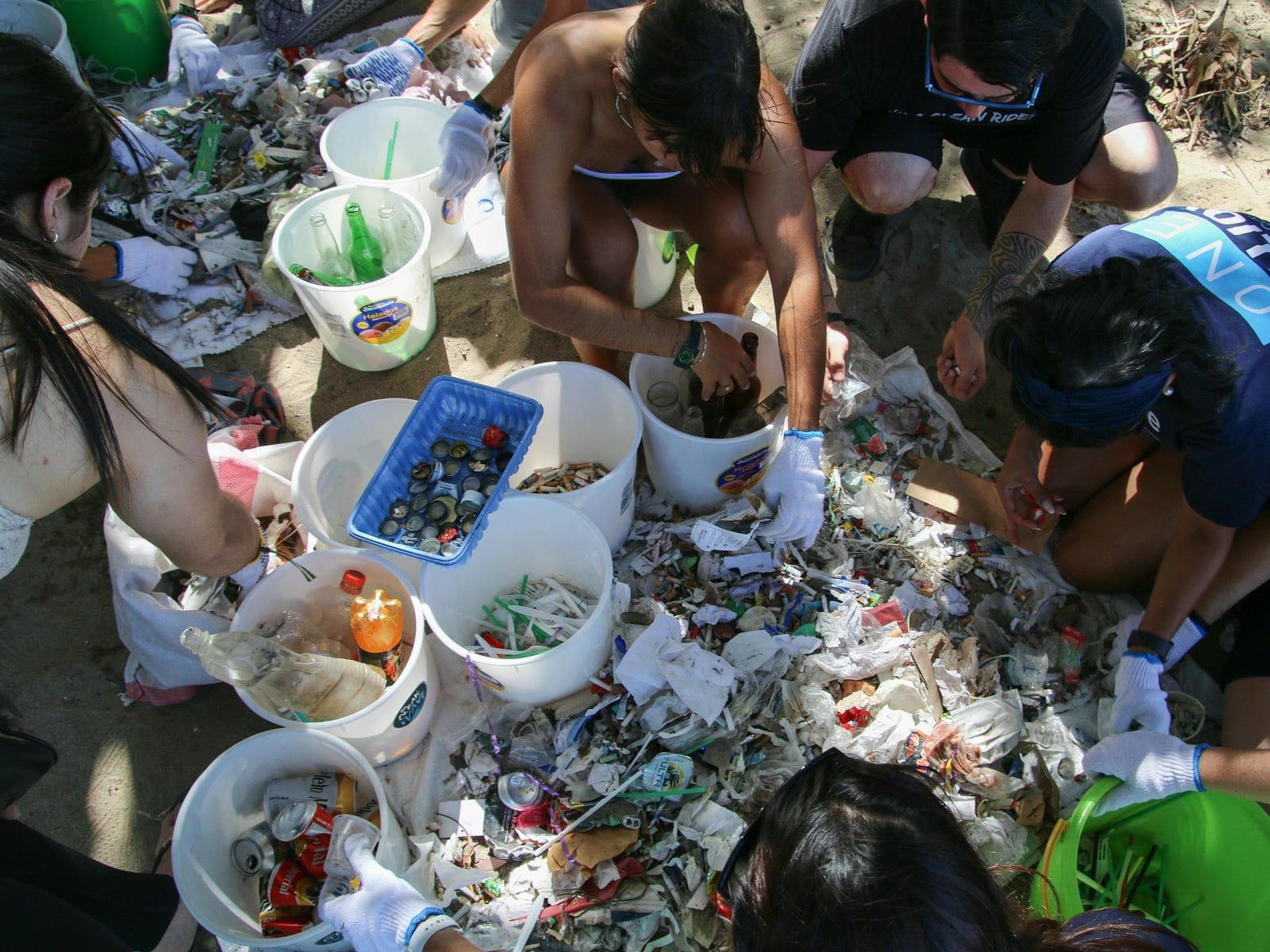
A beach cleanup is picking up, by hand, litter that has washed ashore or been dropped on the coast. In fiscal 2024, Japan's prefectures and municipalities collected 39,551.5 t of litter washed ashore under a national subsidy programme based on the Marine Litter Disposal Promotion Act, in 21,363 cleanups with 265,404 participants (Ministry of the Environment). This page lists the amounts, participants, items and research findings on beach cleanups from government, international and academic sources.
Karatsu Farm & Food, a nonprofit in Karatsu, Saga, made this page as part of the Karatsu Data Bank. We run beach cleanups and environmental education with island schools. The page gives no conclusions or evaluations, only figures and statements from the sources. All photos on this page are illustrative Unsplash images, not photos of Karatsu. Our own records are on a separate page (Karatsu marine litter and beach cleanup data, Japanese).
| Fiscal year | Japan total | Cleanups | Length cleaned | Saga | Nagasaki |
|---|---|---|---|---|---|
| FY2020 | 27,740 t | 16,083 | 10,094 km | 657 t | 2,300 t |
| FY2021 | 39,007 t | 16,101 | 12,845 km | 743 t | 2,199 t |
| FY2022 | 54,266 t | 21,965 | 16,746 km | 356 t | 2,436 t |
| FY2023 | 27,554 t | 18,956 | 14,357 km | 282 t | 2,333 t |
| FY2024 | 39,551.5 t | 21,363 | 41,902.5 km | 425.2 t | 2,300.4 t |
How much marine litter is collected on Japan's coasts
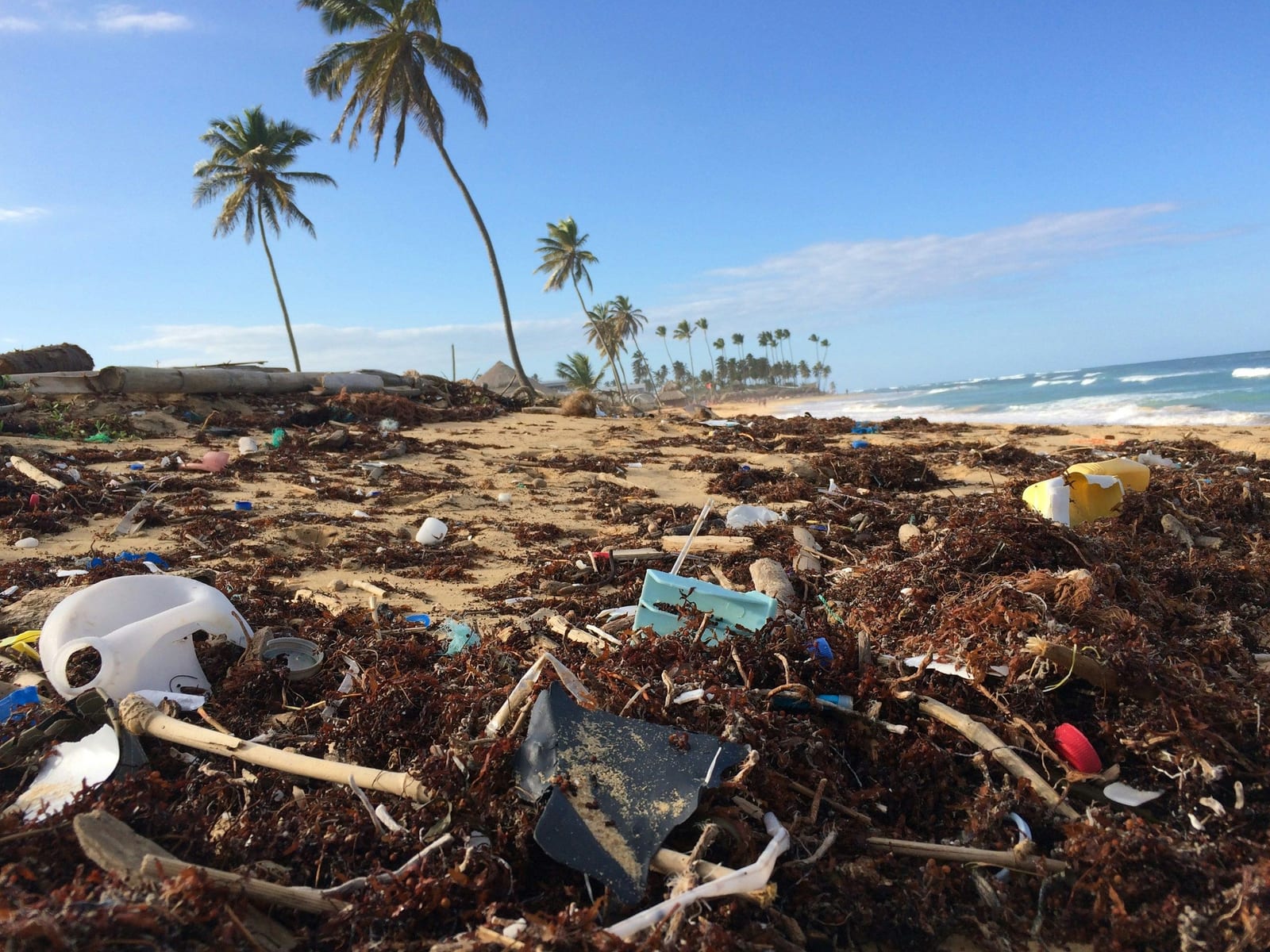
The amount collected under the programme changes greatly from year to year: 27,740 t in FY2020, 54,266 t in FY2022, 27,554 t in FY2023 and 39,551.5 t in FY2024. It was 8,671 t in FY2009 (Ministry of the Environment). In FY2024, Saga Prefecture collected 425.2 t in 294 cleanups over 1,011.4 km; neighbouring Nagasaki collected 2,300.4 t.
| Rank | Most common by count (share) | Most common by weight (share) |
|---|---|---|
| 1 | Oyster farming spacer tubes (17.8%) | Wood and timber (23.2%) |
| 2 | Oyster farming pipes (12.6%) | Plastic rope and string (17.9%) |
| 3 | Plastic rope and string (11.5%) | Hard plastic fragments (11.1%) |
| 4 | Bottle caps (11.1%) | Fishing nets (9.4%) |
| 5 | PET bottles under 1 L (7.3%) | Polystyrene floats and buoys (8.1%) |
What washes ashore: Japan's beach litter composition survey
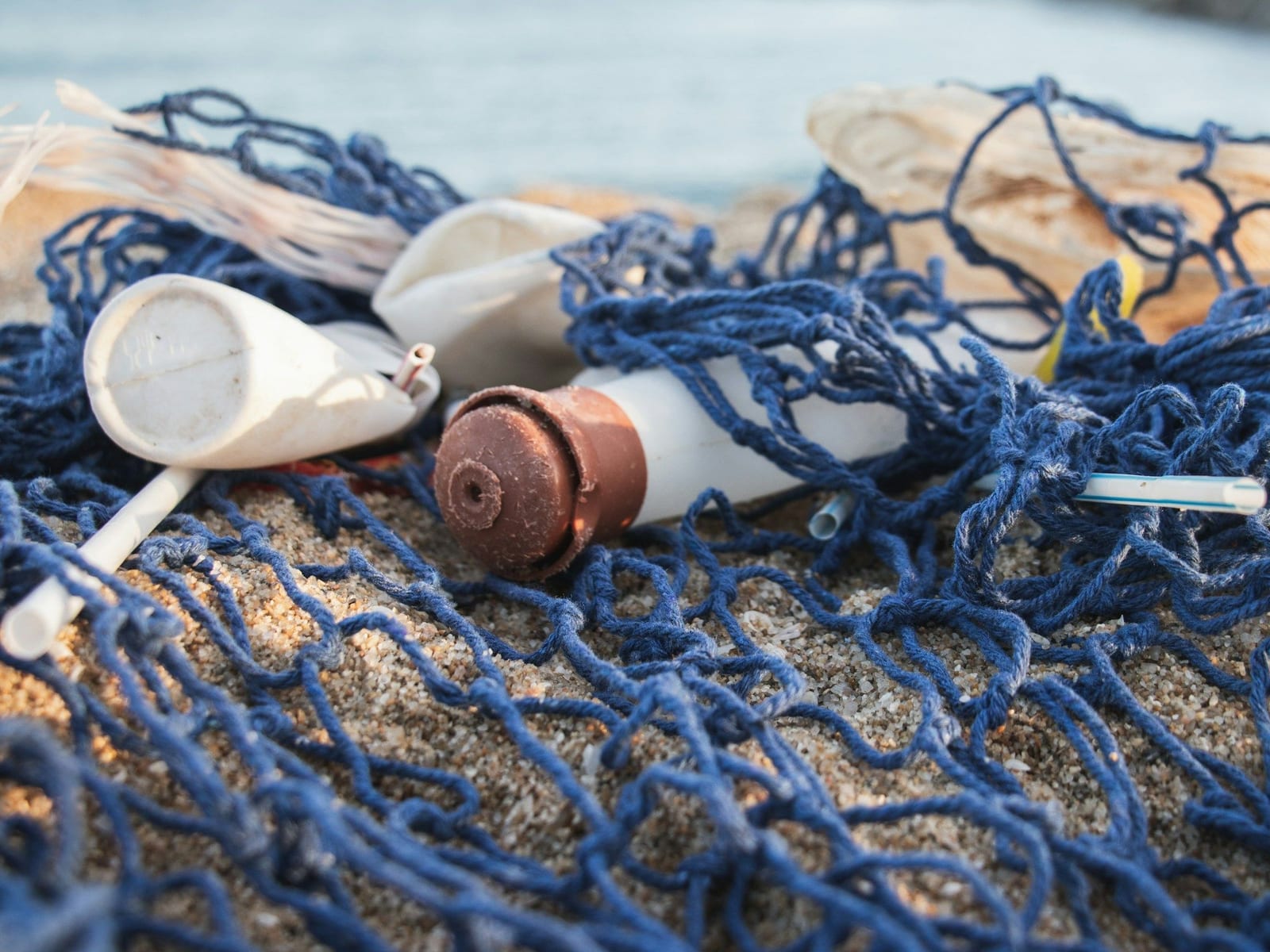
Every year the Ministry of the Environment surveys the types and amounts of beach litter. In FY2023, 87,725 man-made items weighing 7,852 kg were collected at 76 sites. Plastics were 93% by count and 72% by weight; plastic classed as sea-based made up 44% of the total weight of man-made items (Ministry of the Environment). In FY2022, at sites on the upstream side of the Tsushima Current, Korean was the most common language on PET bottles (Ministry of the Environment). Saga's survey site in both years was a beach in Karatsu (幸多里海岸); site-level figures are not published.
| Programme | Scale | When | Source |
|---|---|---|---|
| National coastal litter programme (participants) | 289,902 | FY2022 (record) | MOE |
| Same | 253,302 | FY2023 | MOE |
| Same | 265,404 | FY2024 | MOE |
| Umigomi Zero Week | About 1,300 sites, more than 600,000 people | FY2024 | MOE |
| SPOGOMI (litter picking as a sport) | About 190,000 participants and 1,800 events in total; about 280 events in 2024 | 2024 | SPOGOMI |
| Pirika (litter-picking app) | More than 470 million items in 137 countries and regions | Checked 28 Oct 2026 | Pirika |
How many people take part
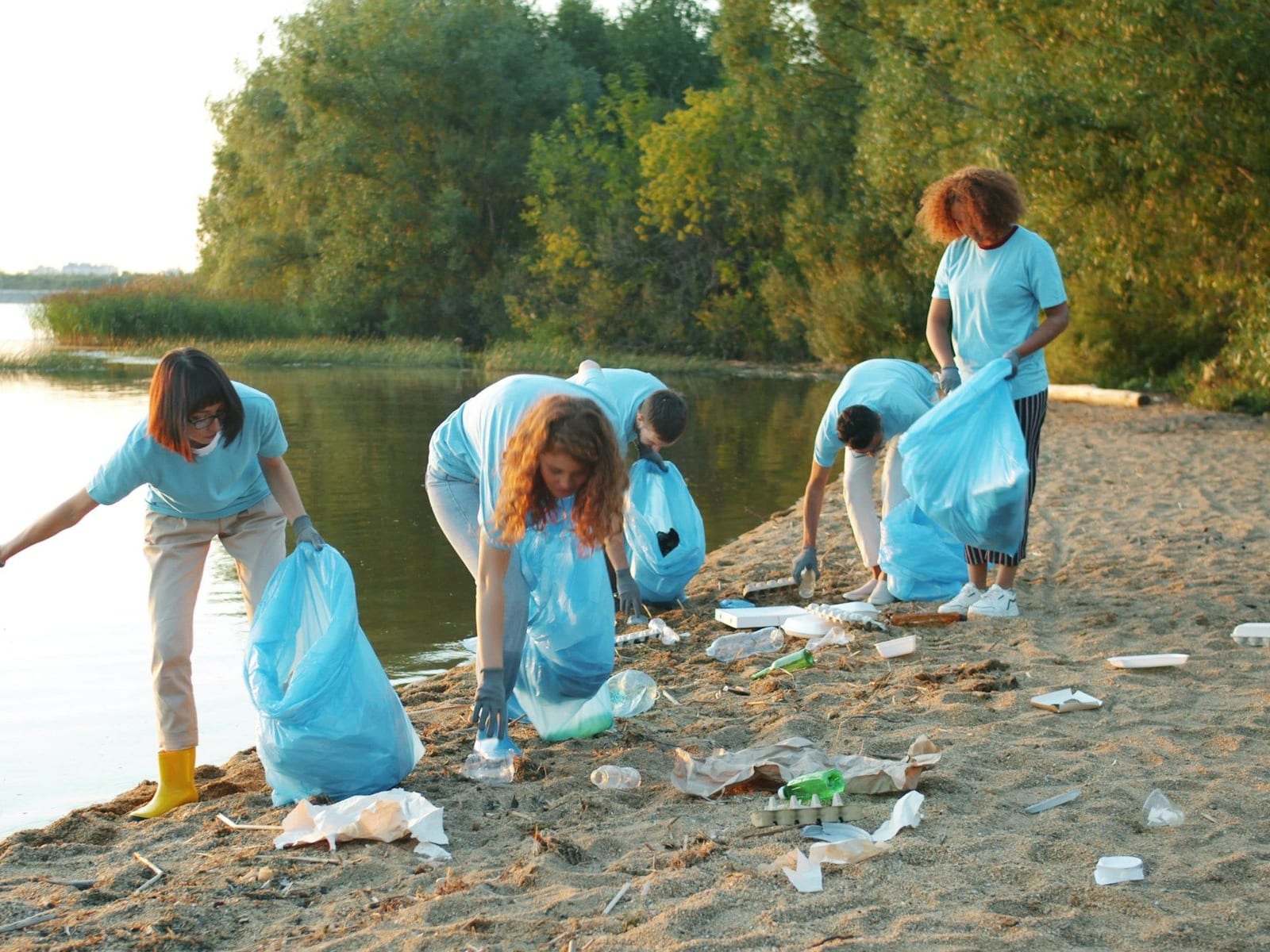
Participants in cleanups under the national programme peaked at 289,902 in FY2022 and were 265,404 in FY2024 (Ministry of the Environment). Umigomi Zero Week, run by the Nippon Foundation and the Ministry, drew more than 600,000 people at about 1,300 sites in FY2024 (Ministry of the Environment).
| Year | Volunteers | Weight | Distance | Items | Top item | Japan |
|---|---|---|---|---|---|---|
| 2023 | 486,045 | 3,612,215 kg | 16,308 mi | 14,339,832 | Cigarette butts 1,947,483 | 3,651 people, 12,475 kg |
| 2024 | 486,706 | 3,387,301 kg | 15,304.3 mi | 17,820,206 | Food wrappers 1,442,860 | 4,101 people, 9,521 kg |
| 2025 | 630,069 | 3,586,528 kg | 15,142 mi | 13,861,048 | Plastic beverage bottles 1,338,712 | 4,369 people, 5,736 kg |
Beach cleanups worldwide: the International Coastal Cleanup
Ocean Conservancy has run the International Coastal Cleanup since 1986. In 2025, 630,069 volunteers collected 3,586,528 kg. The top items were plastic beverage bottles (1,338,712), cigarette butts (1,197,920), bottle caps (885,854) and beverage cans (840,046). Japan had 4,369 volunteers and 5,736 kg (Ocean Conservancy). JEAN, Japan's ICC coordinator, registered 236 cleanups from October 2024 to September 2025, 195 of them recording data on ICC cards (JEAN).
| Study | What was studied | Reported result |
|---|---|---|
| Haarr et al. (2024) | Three beaches in Lofoten, Norway, surveyed every two weeks for 31 months | On average 10 items per 100 m per day arrived; median residence time 99 days; frequent small cleanups can remove 3 to 4 times more litter than rare large ones |
| Ryan et al. (2014) | Daily versus weekly cleaning | Daily cleaning collected 2.5 times (2.1–3.4) more items and 1.7 times (1.3–2.3) more weight than weekly cleaning |
| Smith & Markic (2013) | Survey interval and estimated litter abundance | A three-day gap underestimates abundance by 50%; a month, by an order of magnitude |
| Dijkstra (2025) | Henderson Island after a full cleanup in 2019 | Annual accumulation fell from 284.75 to 16.8 g/m², but 53 items/m² remained |
| Zielinski et al. (2019) | Review of beach cleaning methods and 11 beach award schemes | Calls for studies comparing method efficiency on beaches with different use, and for isolating the effects of mechanical cleaning |
| Wyles et al. (2017) | 90 students assigned to a beach clean, rock-pooling or a walk | All three improved mood and pro-environmental intentions; the beach clean was rated most meaningful, with lower restorativeness ratings of the environment |
Research on the effects of cleanups
A cleanup removes what is on the beach at that moment. A 31-month study of three Norwegian beaches found litter arriving at about 10 items per 100 m per day, staying a median of 99 days, and that frequent small cleanups can remove 3 to 4 times more litter than rare large ones (Haarr et al. 2024). An experiment with 90 students found a beach clean improved mood and was rated the most meaningful of three coastal activities (Wyles et al. 2017).
| Item | Value | Source |
|---|---|---|
| Litter washing ashore on Tsushima (estimate) | 30,000 to 40,000 m³ a year; about 70% from abroad, such as Korea and China | Tsushima City |
| Tsushima coastline | 915 km | Tsushima City |
| Composition of litter collected on Tsushima (FY2022; the poster chart is in m³) | Wood 34%, polystyrene 33%, PET bottles and buoys 22%, nets and rope 9% | Tsushima City |
| Participants in beach cleanups run or co-run by Karatsu Farm & Food | 3,313 (cumulative, as of April 2026) | our records |
Tsushima and Karatsu
Tsushima City estimates that 30,000 to 40,000 m³ of litter washes ashore every year, about 70% of it from abroad (Tsushima City). In Karatsu, 3,313 people have taken part in beach cleanups run or co-run by Karatsu Farm & Food (as of April 2026). Corporate programmes such as Plastic Whale's plastic fishing in Amsterdam (EUR 54 per person excluding VAT, Plastic Whale) are listed on Hotel Sustainability in Numbers.
Frequently asked questions
Q1. How much marine litter is collected on Japan's coasts each year?
Under the national coastal litter programme, prefectures and municipalities collected 39,551.5 t in FY2024; including NGOs and the Ministry, the total was 39,678 t (Ministry of the Environment, March 2026).
Q2. What are the most common items on Japan's beaches?
In the FY2023 composition survey, oyster farming spacer tubes were most common by count (17.8%) and wood by weight (23.2%); plastics were 93% by count and 72% by weight.
Q3. Do beach cleanups work?
Research in Norway found frequent small cleanups can remove 3 to 4 times more litter than rare large ones (Haarr et al. 2024), and daily cleaning collected 2.5 times more items and 1.7 times more weight than weekly cleaning (Ryan et al. 2014).
Q4. How many people join the International Coastal Cleanup?
630,069 volunteers worldwide in 2025, collecting 3,586,528 kg; 4,369 in Japan (Ocean Conservancy).
Q5. Can companies or schools join a beach cleanup in Karatsu?
Yes. Karatsu Farm & Food runs beach cleanups on the coast and islands of Karatsu. Contact us via the contact form or info@karatsu-f-f.com.
Source ledger
| Document | Publisher | Date | URL | Accessed |
|---|---|---|---|---|
| FY2025 report on marine litter collection | Ministry of the Environment, Japan | 2026-03 | https://www.env.go.jp/content/000318995.pdf | 2026-10-28 |
| Beach litter composition survey FY2023 | Ministry of the Environment, Japan | 2025-03 | https://www.env.go.jp/content/000318998.pdf | 2026-10-28 |
| Beach litter composition survey FY2022 | Ministry of the Environment, Japan | 2024-03 | https://www.env.go.jp/content/000224793.pdf | 2026-10-28 |
| Umigomi Zero Week press release | Ministry of the Environment, Japan | 2025-04-15 | https://www.env.go.jp/press/press_20240402_00007.html | 2026-10-28 |
| ICC Annual Report 2024 | Ocean Conservancy | 2024-09 | https://oceanconservancy.org/wp-content/uploads/2024/09/ICCAnnualReport2024_Digital.pdf | 2026-10-28 |
| ICC Annual Report 2025 | Ocean Conservancy | 2025-09 | https://oceanconservancy.org/wp-content/uploads/2025/09/ICCAnnualReport_Digital.pdf | 2026-10-28 |
| ICC Report 2026 | Ocean Conservancy | 2026-08 | https://oceanconservancy.org/wp-content/uploads/2026/08/2026-ICC-Report_digital.pdf | 2026-10-28 |
| 18th annual report | JEAN | 2025 | https://www.jean.jp/about-jean/pdf/pdf_houkoku_18.pdf | 2026-10-28 |
| History | SPOGOMI | - | https://spogomi.or.jp/history/ | 2026-10-28 |
| Pirika | Pirika Inc. | - | https://corp.pirika.org/ | 2026-10-28 |
| Haarr et al., Marine Pollution Bulletin 206 | Elsevier | 2024 | https://doi.org/10.1016/j.marpolbul.2024.116720 | 2026-10-28 |
| Ryan et al., Marine Pollution Bulletin | Elsevier | 2014 | https://doi.org/10.1016/j.marpolbul.2014.08.036 | 2026-10-28 |
| Smith & Markic, PLoS ONE | PLOS | 2013 | https://doi.org/10.1371/journal.pone.0083694 | 2026-10-28 |
| Dijkstra, Marine Pollution Bulletin | Elsevier | 2025 | https://doi.org/10.1016/j.marpolbul.2025.118095 | 2026-10-28 |
| Zielinski et al., Marine Pollution Bulletin 139 | Elsevier | 2019 | https://doi.org/10.1016/j.marpolbul.2018.12.027 | 2026-10-28 |
| Wyles et al., Environment and Behavior 49 | SAGE | 2017 | https://doi.org/10.1177/0013916516649412 | 2026-10-28 |
| Marine litter poster | Tsushima City | - | https://www.city.tsushima.nagasaki.jp/material/files/group/69/poster1.pdf | 2026-10-28 |
| FAQ | Plastic Whale | - | https://plasticwhale.com/faq/ | 2026-10-28 |
What this page does not cover
Evaluations of organisations, programmes or cleaning methods; values read off charts; figures not confirmed in primary sources; site-level litter amounts (not published); seabed and microplastic estimates; and the FY2024 composition survey (not found as of 28 October 2026).
Citing this page and enquiries
To cite these figures, or to discuss beach cleanups and workshops for companies, schools or groups, use our contact form or info@karatsu-f-f.com.
About this page
By Hiroaki Kojima (Vice Director, Karatsu Farm & Food) / Contact: info@karatsu-f-f.com (contact form) / Published 28 October 2026 / Markdown: beach-cleanup-data.mdThis page is made together with AI. See this data bank and AI for how. Photos are from Unsplash (illustrative).
Related links
▶ Karatsu Data Bank
▶ Plastic in Numbers
▶ Why recycling ocean plastic is hard
▶ Remote Islands in Numbers
▶ Hotel Sustainability in Numbers
▶ 日本語版