
How many Nature Symbiosis Sites are there in Japan?
On 30 October 2026, Japan's Ministry of the Environment certified 122 more Nature Symbiosis Sites (shizen kyosei sites) in round 2 of FY2026, bringing the total to 700 sites covering 127,000 ha (Ministry of the Environment (MOE), certification of Nature Symbiosis Sites, FY2026 round 2 (Japanese)). Counting from the Ministry's lists, Saga Prefecture has eight sites, two of them in Karatsu City (our count).
This page was made by Karatsu Farm & Food, a nonprofit in Karatsu, Saga, as part of the Karatsu Data Bank. It sets out the number of certified sites as published by the Ministry. No conclusions or judgements are added.
Nature Symbiosis Sites are areas where biodiversity is conserved through private and local efforts, such as company forests, satoyama landscapes and urban green spaces. The Ministry began certifying them in FY2023. In April 2025 the scheme was put into law by the Act on Promoting Activities to Enhance Regional Biodiversity, which added restoration and creation activities to the maintenance of areas already rich in biodiversity. The Environmental Restoration and Conservation Agency (ERCA) handles certification (Ministry of the Environment (MOE), certification of Nature Symbiosis Sites, FY2026 round 2 (Japanese)).
| Certification round | Sites | Area |
|---|---|---|
| FY2023-FY2024 (former scheme) | 328 | 93,000 ha |
| FY2025 | 367 | 35,000 ha |
| FY2026 round 1 | 56 | 21,000 ha |
| FY2026 round 2 | 122 | 59,000 ha |
| Total | 700 | 127,000 ha |
Who applies, and what kinds of nature are certified?
Since FY2023, applicants have been companies (50.6%), NPOs and other organisations (30.9%), local governments (16.3%) and individuals (2.3%). In round 2 of FY2026 the shares were 44.3%, 36.9%, 18.0% and 0.8% (MOE, Attachment 3 on the FY2026 round 2 certification (Japanese), pp.1 and 3).
The 122 sites in round 2 comprise 112 maintenance sites (106 enhancement plans and 6 collaborative plans), 7 restoration sites and 3 creation sites (Ministry of the Environment (MOE), certification of Nature Symbiosis Sites, FY2026 round 2 (Japanese)). Of all 545 sites certified under the Act, 506 are maintenance, 24 restoration and 15 creation sites (our count from the lists).
How many sites are in each prefecture?
Counting by prefecture from the Ministry's three lists (as of 30 October 2026), the most sites are in Tokyo (47), Kanagawa (46), Hokkaido (44), Aichi (41) and Hyogo (34). Saga has eight, 31st in Japan (level with Miyazaki). In Kyushu and Okinawa: Kumamoto 15, Oita 12, Kagoshima 12, Nagasaki 9, Saga 8, Miyazaki 8, Fukuoka 7 and Okinawa 5 (our count; MOE list of sites certified in FY2023-FY2024, list of certified enhancement activity plans and list of certified collaborative plans (all Japanese, as of 30 October 2026)).
| Prefecture | Sites | Prefecture | Sites |
|---|---|---|---|
| Hokkaido | 44 | Shiga | 21 |
| Aomori | 3 | Kyoto | 28 |
| Iwate | 9 | Osaka | 24 |
| Miyagi | 24 | Hyogo | 34 |
| Akita | 3 | Nara | 6 |
| Yamagata | 2 | Wakayama | 6 |
| Fukushima | 10 | Tottori | 21 |
| Ibaraki | 21 | Shimane | 3 |
| Tochigi | 13 | Okayama | 15 |
| Gunma | 10 | Hiroshima | 9 |
| Saitama | 15 | Yamaguchi | 5 |
| Chiba | 23 | Tokushima | 3 |
| Tokyo | 47 | Kagawa | 4 |
| Kanagawa | 46 | Ehime | 7 |
| Niigata | 9 | Kochi | 11 |
| Toyama | 5 | Fukuoka | 7 |
| Ishikawa | 4 | Saga | 8 |
| Fukui | 4 | Nagasaki | 9 |
| Yamanashi | 13 | Kumamoto | 15 |
| Nagano | 25 | Oita | 12 |
| Gifu | 12 | Miyazaki | 8 |
| Shizuoka | 30 | Kagoshima | 12 |
| Aichi | 41 | Okinawa | 5 |
| Mie | 14 |
Where are the sites in Saga Prefecture?
Saga's eight sites are in Karatsu City (2), Takeo City (2) and one each in Imari, Ureshino, Kashima and Tara. The only Saga site certified in FY2023 was the Ochi-cho Yokomakura area in Karatsu (second half of FY2023). All eight are maintenance sites (MOE list of sites certified in FY2023-FY2024, list of certified enhancement activity plans and list of certified collaborative plans (all Japanese, as of 30 October 2026)).
| Site name (as listed) | Municipality | First certified | Certified under the Act |
|---|---|---|---|
| 相知町横枕自然共生区域 | Karatsu City | FY2023 second half | FY2025 round 1 |
| 唐津 串浦ふるさとの海 | Karatsu City | FY2025 round 1 | FY2025 round 1 |
| いまり こまなきの里山 | Imari City | FY2024 second half | FY2025 round 2 |
| たのしい農家お百笑さんの体感型観光梅園 | Takeo City | FY2024 second half | FY2025 round 1 |
| 鷹匠の里山 | Takeo City | FY2024 second half | FY2025 round 2 |
| 嬉野茶生産茶園 | Ureshino City | FY2024 second half | FY2026 round 2 |
| 多良岳200年の森 | Tara Town | FY2025 round 1 | FY2025 round 1 |
| ななうら 干潟とめだかの里 | Kashima City | FY2025 round 1 | FY2025 round 1 |
What are the two sites in Karatsu?
Karatsu's two sites are the Ochi-cho Yokomakura area and the Kushiura home sea (唐津 串浦ふるさとの海). Kushiura is a collaborative plan applied for by the Mayor of Karatsu with the Chinzei branch of the Saga Genkai Fisheries Cooperative, aimed at the seaweed beds, and was certified in round 1 of FY2025 (MOE list of certified collaborative plans).
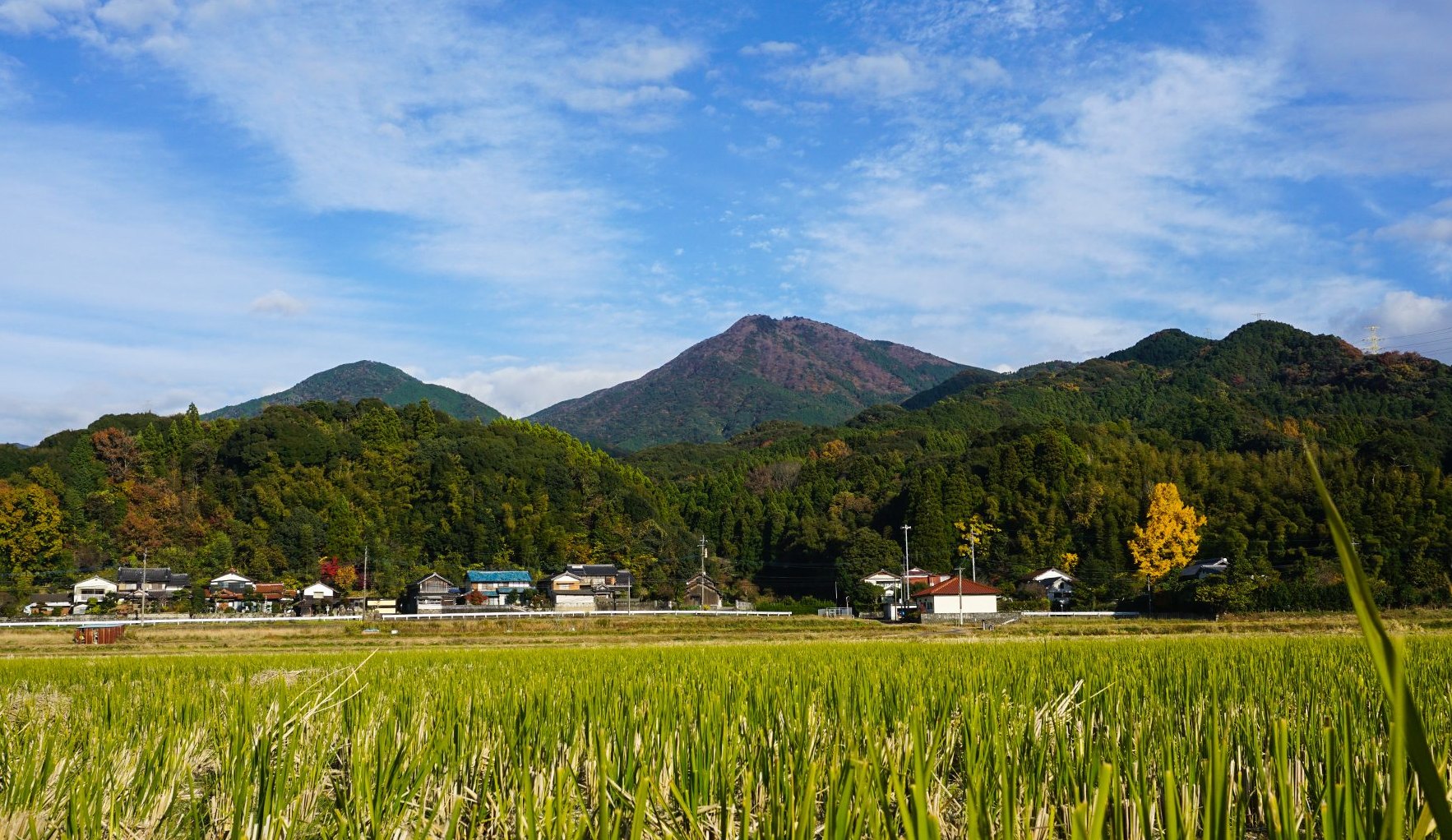
The Ochi-cho Yokomakura area (36.67 ha) is a satoyama that Karatsu Farm & Food conserves with local residents. It moved to certification under the Act in round 1 of FY2025. Our records are on Nature Positive & OECM Site in Kyushu.
How are the sites counted internationally?
The Ministry registers the parts of maintenance sites that do not overlap protected areas in the international database as OECMs (other effective area-based conservation measures) (Ministry of the Environment (MOE), certification of Nature Symbiosis Sites, FY2026 round 2 (Japanese)). On 3 August 2026 it reported registering 10,000 ha of the 23,100 ha certified in FY2025, bringing registered OECM area to 64,600 ha. Protected areas and OECMs together cover 21.0% of land (OECMs 0.2%) and 13.3% of the sea (MOE, registration in the international database (Japanese)).
FAQ
Q1. How many Nature Symbiosis Sites are there in Japan?
According to the Ministry of the Environment, 700 sites covering 127,000 ha had been certified by round 2 of FY2026 (30 October 2026).
Q2. How many sites are in Saga Prefecture?
Counting from the Ministry's lists (as of 30 October 2026), eight: two in Karatsu City, two in Takeo City and one each in Imari, Ureshino, Kashima and Tara.
Q3. What was the first certified site in Saga?
The Ochi-cho Yokomakura area in Karatsu, certified in the second half of FY2023. It was the only Saga site certified in FY2023 (Ministry list).
Q4. Which prefectures have the most sites?
Counting from the Ministry's lists: Tokyo 47, Kanagawa 46, Hokkaido 44, Aichi 41 and Hyogo 34 (as of 30 October 2026).
Q5. Who applies for certification?
Since FY2023: companies 50.6%, NPOs and other organisations 30.9%, local governments 16.3% and individuals 2.3% (Ministry of the Environment).
Sources
| Document | Publisher | Date | URL | Accessed |
|---|---|---|---|---|
| Certification of Nature Symbiosis Sites under the Regional Biodiversity Act, FY2026 round 2 | MOE | 2026-10-30 | https://www.env.go.jp/press/press_05720.html | 2026-11-07 |
| Attachment 1: certified enhancement activity plans, FY2026 round 2 | MOE | 2026-10-30 | https://www.env.go.jp/content/000435743.pdf | 2026-11-07 |
| Attachment 2: certified collaborative plans, FY2026 round 2 | MOE | 2026-10-30 | https://www.env.go.jp/content/000435744.pdf | 2026-11-07 |
| Attachment 3: certification of Nature Symbiosis Sites, FY2026 round 2 | MOE | 2026-10 | https://www.env.go.jp/content/000435745.pdf | 2026-11-07 |
| List of sites certified in FY2023-FY2024 | MOE (30by30 Alliance) | as of 2026-10-30 | https://policies.env.go.jp/nature/biodiversity/30by30alliance/documents/nintei/R5R6ninteilist.pdf | 2026-11-07 |
| List of certified enhancement activity plans | MOE (30by30 Alliance) | as of 2026-10-30 | https://policies.env.go.jp/nature/biodiversity/30by30alliance/documents/nintei/R806ZoshinninteiList.pdf | 2026-11-07 |
| List of certified collaborative plans | MOE (30by30 Alliance) | as of 2026-10-30 | https://policies.env.go.jp/nature/biodiversity/30by30alliance/documents/nintei/R806RenkeiZoshinninteilist.pdf | 2026-11-07 |
| Registration of Nature Symbiosis Sites in the international database | MOE | 2026-08-03 | https://www.env.go.jp/press/press_05386.html | 2026-11-07 |
Notes on reading the figures
The Ministry does not publish counts by prefecture, so prefecture and municipality counts are ours, taken from the three lists. Former-scheme sites that moved under the Act are counted once, on the Act side. Sites spanning more than one prefecture are counted in the prefecture listed first. Applicant shares and ecosystem-type counts are as printed in the Ministry's charts. Counts are numbers of areas and do not reflect size.
What this page does not cover
Area by prefecture (not confirmed in published material), the activities and species records of individual sites, the content of certification reviews, and the amount of support for sites. Wider biodiversity figures are on Biodiversity Loss in Numbers.
Citing this page and enquiries
To cite figures from this page or to ask about finding local data, please use the contact page or write to info@karatsu-f-f.com.
About this page
By Hiroaki Kojima (Vice Director, Karatsu Farm & Food) / Contact: info@karatsu-f-f.com (contact page) / Published 7 November 2026 / Markdown: shizenkyosei-site-data.mdThis page is made together with AI. See this data bank and AI for how.
Related links
▶ Karatsu Data Bank
▶ Biodiversity Loss in Numbers
▶ Nature Positive & OECM Site in Kyushu
▶ 日本語版