
Is the number of alien species increasing?
About 200 new alien species are recorded worldwide every year, and 37% of all known alien species have been reported since 1970. Under business as usual, the number of alien species in 2050 is projected to be about 36% higher than in 2005 (IPBES Invasive Alien Species Assessment, Summary for Policymakers, 2023). In Japan, the Invasive Alien Species Act designated 42 types at its first designation in 2005; there are now 166 (Ministry of the Environment (MOE)).
This page was made by Karatsu Farm & Food as part of the Karatsu Data Bank. It looks at the world (first records over time, projections, eradications), Japan (designations over time, the list of alien species that may harm ecosystems, raccoon captures by prefecture), Saga and Karatsu. Global totals, economic costs and extinctions are on our biodiversity data page, designated species by group on wildlife trade data, and crop damage by raccoons on wildlife damage by prefecture.
| Question | Figure | Period | Source |
|---|---|---|---|
| New alien species recorded each year | about 200 | IPBES p.20 | |
| Share of known alien species reported since 1970 | 37% | IPBES p.26 | |
| Alien species in 2050 (business as usual) | about 36% more than 2005 | projection | IPBES p.28 |
| Organisms of foreign origin living wild in Japan | about 2,000 known | MOE | |
| Invasive Alien Species (designated) | 166 | after the 1 Sep 2026 addition | MOE |
| List of alien species that may harm ecosystems | 596 (2nd edition) | 11 Sep 2026 | MOE |
| Raccoons captured in Japan | 81,671 | FY2021 | MOE wildlife statistics (our totals) |
World: first records of alien species, 1800-2014
A database of the year each alien species was first recorded in 282 regions holds 45,813 first records (16,926 species) since 1500. The average was 7.7 a year in 1500-1800; since 1800 records have risen except during the two world wars, peaking at 585 in 1996. Apart from mammals and fishes, there is no sign of saturation (Seebens et al. 2017, Nature Communications).
| Decade | First records of alien species |
|---|---|
| 1800-09 | 333 |
| 1810-19 | 261 |
| 1820-29 | 370 |
| 1830-39 | 633 |
| 1840-49 | 747 |
| 1850-59 | 851 |
| 1860-69 | 1,183 |
| 1870-79 | 1,251 |
| 1880-89 | 1,720 |
| 1890-99 | 1,921 |
| 1900-09 | 2,263 |
| 1910-19 | 2,004 |
| 1920-29 | 2,314 |
| 1930-39 | 2,617 |
| 1940-49 | 1,941 |
| 1950-59 | 2,967 |
| 1960-69 | 3,661 |
| 1970-79 | 3,793 |
| 1980-89 | 4,169 |
| 1990-99 | 4,717 |
| 2000-09 | 3,952 |
| 2010-14 | 520 |
IPBES reports that 90% of global extinctions involving invasive alien species were on islands, and that at least 218 invasive species have caused 1,215 local extinctions of native species (p.20). Of 1,550 eradications recorded on 998 islands in the past 100 years, 88% succeeded, and biological control of invasive plants and invertebrates succeeded in over 60% of documented cases. About 70% of established marine invasive species arrived by biofouling on ships and other structures (pp.34-35).
Japan: designated Invasive Alien Species, 2005-2026
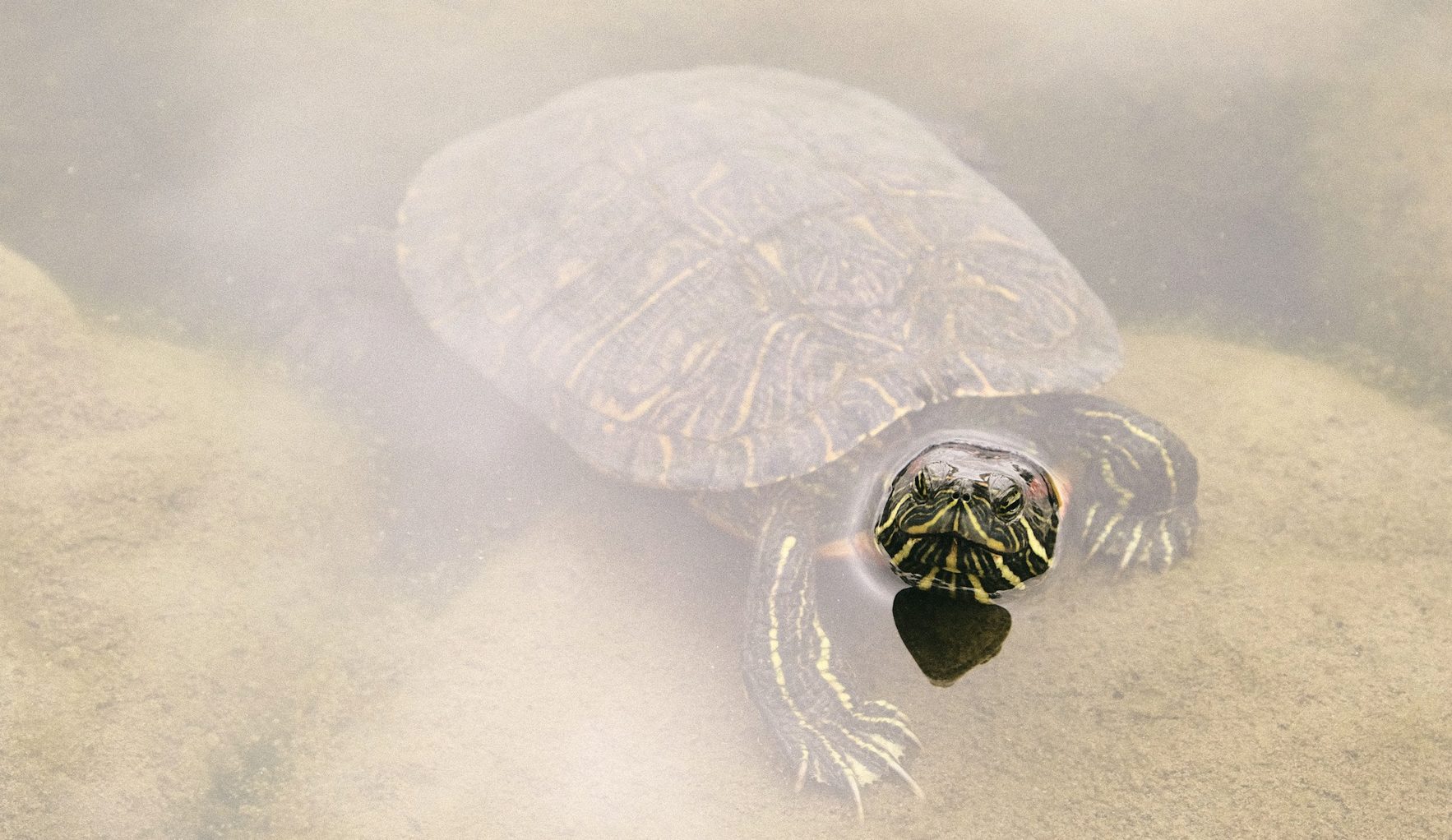
Japan's first designation under the Invasive Alien Species Act took effect on 1 June 2005 with 42 types; further designations brought the total to 162 by 1 July 2024 (MOE, designations by date). After the addition of 1 September 2026, MOE's list shows 166 types (7 families, 16 genera, 4 species groups, 128 species, 11 hybrids) (MOE). Since 1 June 2023, red-eared sliders and red swamp crayfish are "conditionally designated": households may keep them, but release, sale and similar acts are prohibited without permission (MOE).
| Effective date | Types designated | Cumulative |
|---|---|---|
| 2005-06-01 | 42 | 42 |
| 2006-02-01 | 43 | 85 |
| 2006-09-01 | 3 | 88 |
| 2007-09-01 | 1 | 89 |
| 2008-01-01 | 12 | 101 |
| 2010-02-01 | 1 | 102 |
| 2011-07-01 | 3 | 105 |
| 2013-09-01 | 2 | 107 |
| 2014-06-11 | 5 | 111 |
| 2014-08-01 | 1 | 112 |
| 2015-03-01 | 1 | 113 |
| 2015-10-01 | 1 (four listed species merged into a genus) | 110 |
| 2016-10-01 | 24 | 132 |
| 2018-01-15 | 14 | 146 |
| 2018-04-01 | 2 | 148 |
| 2020-11-02 | 14 | 156 |
| 2023-06-01 | 2 | 157 |
| 2023-09-01 | 2 | 159 |
| 2024-07-01 | 3 | 162 |
| 2026-09-01 | 5 (bluegill, already listed, merged into its genus) | 166 |
Japan's list of alien species that may harm ecosystems: 429 to 596
The Ministry of the Environment and the Ministry of Agriculture, Forestry and Fisheries published a list of alien species that may harm ecosystems on 26 March 2015 and a second edition on 11 September 2026. It grew from 429 to 596 types; fish rose from 59 to 118 (MOE outline, 1st edition, 2nd edition). Unlike designation, being on the list does not by itself restrict keeping (MOE, 2nd edition outline).
| Group | 1st edition (2015) | 2nd edition (2026) | Increase |
|---|---|---|---|
| Plants | 200 | 248 | +48 |
| Mammals | 41 | 48 | +7 |
| Birds | 15 | 23 | +8 |
| Reptiles | 26 | 32 | +6 |
| Amphibians | 15 | 18 | +3 |
| Fish | 59 | 118 | +59 |
| Insects | 22 | 36 | +14 |
| Terrestrial arthropods | 9 | 12 | +3 |
| Other invertebrates (2nd ed. incl. crustaceans and molluscs) | 42 | 61 | +19 |
| Total | 429 | 596 | +167 |
Raccoon captures by prefecture (FY2021)
Japan captured 81,671 raccoons, a designated Invasive Alien Species, in FY2021: 2,025 by hunting, 34,694 under damage-prevention permits and 44,952 in control under the Act. Hokkaido (22,839), Saitama (9,945), Chiba (8,807), Hyogo (8,563) and Wakayama (3,883) captured the most; Saga ranked 6th with 3,287, the most in Kyushu (MOE wildlife statistics, FY2021, our totals).
| Rank | Prefecture | Hunting | Damage-prevention permits | Control under the Act | Total |
|---|---|---|---|---|---|
| 1 | Hokkaido | 353 | 7,053 | 15,433 | 22,839 |
| 2 | Saitama | 63 | 739 | 9,143 | 9,945 |
| 3 | Chiba | 246 | 7,036 | 1,525 | 8,807 |
| 4 | Hyogo | 85 | 634 | 7,844 | 8,563 |
| 5 | Wakayama | 83 | 1,922 | 1,878 | 3,883 |
| 6 | Saga | 119 | 2,811 | 357 | 3,287 |
| 7 | Fukuoka | 519 | 1,924 | 485 | 2,928 |
| 8 | Ibaraki | 15 | 1,028 | 1,307 | 2,350 |
| 9 | Nagasaki | 4 | 2,121 | 73 | 2,198 |
| 10 | Tokyo | 98 | 937 | 1,147 | 2,182 |
| 11 | Gunma | 64 | 1,655 | 0 | 1,719 |
| 12 | Mie | 18 | 523 | 877 | 1,418 |
| 13 | Shiga | 11 | 656 | 720 | 1,387 |
| 14 | Nara | 80 | 0 | 1,232 | 1,312 |
| 15 | Oita | 31 | 840 | 284 | 1,155 |
| 16 | Fukushima | 44 | 826 | 278 | 1,148 |
| 17 | Kyoto | 19 | 493 | 558 | 1,070 |
| 18 | Fukui | 754 | |||
| 19 | Aichi | 740 | |||
| 20 | Gifu | 652 | |||
| 21 | Tochigi | 578 | |||
| 22 | Shimane | 404 | |||
| 23 | Yamanashi | 364 | |||
| 24 | Kagawa | 311 | |||
| 25 | Hiroshima | 263 | |||
| 26 | Aomori | 239 | |||
| 26 | Yamaguchi | 239 | |||
| 28 | Shizuoka | 220 | |||
| 29 | Osaka | 207 | |||
| 30 | Kumamoto | 188 | |||
| 31 | Ishikawa | 85 | |||
| 32 | Kanagawa | 80 | |||
| 33 | Okayama | 51 | |||
| 34 | Tottori | 38 | |||
| 35 | Miyagi | 31 | |||
| 36 | Nagano | 29 | |||
| 37 | Iwate | 2 | |||
| 37 | Niigata | 2 | |||
| 37 | Tokushima | 2 | |||
| 40 | Akita | 1 | |||
| 41 | Yamagata | 0 | |||
| 41 | Toyama | 0 | |||
| 41 | Ehime | 0 | |||
| 41 | Kochi | 0 | |||
| 41 | Miyazaki | 0 | |||
| 41 | Kagoshima | 0 | |||
| 41 | Okinawa | 0 | |||
| Japan | 2,025 | 34,694 | 44,952 | 81,671 |
Saga: raccoons and fire ants
Saga Prefecture reports 3,261 raccoons captured (hunting and pest control) and ¥6.2 million of crop damage by raccoons in FY2025 (Saga Prefecture, medium-sized mammals). Raccoons had been found in six municipalities by FY2008 (Saga, Imari, Arita, Takeo, Tosu and Karatsu) and in 15 of the 20 municipalities in the FY2009 survey (Saga Prefecture, raccoon control manual p.4). Fire ants were found once in Tosu (August 2021) and once in Miyaki (July 2022) and were removed (Saga Prefecture; 152 cases in 19 prefectures nationwide as of 28 July 2025).
| Item | Figure | Period | Source |
|---|---|---|---|
| Raccoons captured | 3,261 | FY2025 | Saga Prefecture |
| Crop damage by raccoons | ¥6.2 million | FY2025 | Saga Prefecture |
| Municipalities with raccoons | 15 of 20 | FY2009 | Saga Prefecture |
| Fire ant finds | 2 (Tosu, Miyaki; removed) | 2021-2022 | Saga Prefecture |
| National rank in raccoon captures | 6th (3,287) | FY2021 | MOE (our totals) |
An example from Karatsu (our work)
At Yokomakura (36.67 ha) in Ochi, Karatsu, the first site in Saga certified as a Nature Symbiosis Site by the Ministry of the Environment, we survey wildlife with the cooperation of Saga University. In the first survey on 7 August 2026 we recorded species caught in nets and set up infrared sensor cameras in the woodland, and in the second on 4 October we surveyed river life during the local weir festival. Results will be published once sorted. Camera records are on our biodiversity data page; see also nature positive and Yokomakura. For site visits, training or corporate partnerships, see "Citing this page and enquiries" below.
Frequently asked questions
Q1. How many alien species are there in Japan?
The Ministry of the Environment says at least about 2,000 organisms of foreign origin live wild in Japan. 166 types are designated under the Invasive Alien Species Act, and the list of alien species that may harm ecosystems (2nd edition, 11 Sep 2026) has 596.
Q2. Are alien species increasing?
About 200 new alien species are recorded worldwide each year, and 37% of known alien species were reported since 1970. Under business as usual, 2050 is projected to have about 36% more than 2005 (IPBES 2023).
Q3. Is there a chart of the increase?
First records worldwide rose from 333 in 1800-09 to 4,717 in 1990-99 (our decade totals of Seebens et al. 2017 data). Japan's designated species rose from 42 in 2005 to 166 in 2026. Both are tabled and charted on this page.
Q4. What are designated Invasive Alien Species?
Alien species that the government designates under the Invasive Alien Species Act because they harm (or may harm) ecosystems, people or agriculture, forestry and fisheries; keeping, importing and releasing them are restricted. There are 166 after the 1 Sep 2026 addition (MOE).
Q5. What changed for red-eared sliders and red swamp crayfish?
Since 1 June 2023 they are conditionally designated: households may keep them, but release, sale, purchase and distribution need permission (MOE).
Q6. Which prefectures capture the most raccoons?
In FY2021: 1 Hokkaido 22,839, 2 Saitama 9,945, 3 Chiba 8,807, 4 Hyogo 8,563, 5 Wakayama 3,883; Saga 6th with 3,287 (our totals of MOE wildlife statistics).
Q7. What is the situation in Saga?
In FY2025, 3,261 raccoons were captured and raccoon crop damage was ¥6.2 million. Raccoons were found in 15 of 20 municipalities in FY2009. Two fire ant finds in 2021-2022 were removed (Saga Prefecture).
Q8. Can invasive species be eradicated?
IPBES reports that 88% of 1,550 eradications on 998 islands in the past 100 years succeeded, but no established marine species has been fully eradicated.
Source register
| Document | Publisher | Date | URL | Accessed |
|---|---|---|---|---|
| Summary for Policymakers of the Thematic Assessment Report on Invasive Alien Species and their Control | IPBES | 2023 | https://www.ipbes.dk/wp-content/uploads/2023/11/Summary-for-policymakers_IPBES-IAS-Assessment.pdf | 2026-11-20 |
| No saturation in the accumulation of alien species worldwide (Nature Communications 8, 14435) | Seebens et al. | 2017-02-15 | https://doi.org/10.1038/ncomms14435 | 2026-11-20 |
| Global Alien Species First Record Database | Senckenberg | 2016 | https://doi.org/10.12761/SGN.2016.01.022 | 2026-11-20 |
| List of Invasive Alien Species | Ministry of the Environment | updated as needed | https://www.env.go.jp/nature/intro/2outline/list.html | 2026-11-20 |
| Invasive Alien Species by designation date | Ministry of the Environment | 2025-05 | https://www.env.go.jp/nature/intro/2outline/files/shiteibi_list3.pdf | 2026-11-20 |
| Outline of the 2026 amendment to the designation order | Ministry of the Environment | 2026 | https://www.env.go.jp/content/000426691.pdf | 2026-11-20 |
| Press release on the 2026 designations | Ministry of the Environment | 2026 | https://www.env.go.jp/press/press_05457.html | 2026-11-20 |
| Conditionally designated species: red-eared slider and red swamp crayfish | Ministry of the Environment | 2023 | https://www.env.go.jp/nature/intro/2outline/regulation/jokentsuki.html | 2026-11-20 |
| List of alien species that may harm ecosystems | MOE and MAFF | 2015-03-26 / 2026-09-11 | https://www.env.go.jp/nature/intro/2outline/iaslist.html | 2026-11-20 |
| Outline of the list (1st edition) | Ministry of the Environment | 2015-03-26 | https://www.env.go.jp/nature/intro/2outline/list/gaiyou.pdf | 2026-11-20 |
| Outline of the list (2nd edition) | Ministry of the Environment | 2026-09-11 | https://www.env.go.jp/nature/intro/2outline/list/gaiyou_v2.pdf | 2026-11-20 |
| Alien species issues | Ministry of the Environment | updated as needed | https://www.env.go.jp/nature/intro/2outline/invasive.html | 2026-11-20 |
| Wildlife statistics FY2021 | Ministry of the Environment | FY2021 | https://www.env.go.jp/nature/choju/docs/docs2/r03/r03tou.html | 2026-11-20 |
| Crop damage by wildlife in Saga | Saga Prefecture | 2026-10-23 | https://www.pref.saga.lg.jp/kiji00359274/index.html | 2026-11-20 |
| Crop damage and captures of medium-sized mammals | Saga Prefecture | FY2025 | https://www.pref.saga.lg.jp/kiji00359274/3_59274_up_qom77u1y.pdf | 2026-11-20 |
| Raccoon control manual | Saga Prefecture | https://www.pref.saga.lg.jp/kiji00314135/3_14135_6_sagaaraiguma.pdf | 2026-11-20 | |
| Fire ants and tropical fire ants | Saga Prefecture | 2025-07-30 | https://www.pref.saga.lg.jp/kiji00356110/index.html | 2026-11-20 |
Notes on reading the figures
First records vary in survey effort by region and period, and recent decades are undercounted because of publication delays. Cumulative designated types are our calculation from MOE's list by date, not a series published by MOE. The 2026 addition of five types raised the total by four because bluegill was merged into its genus. Raccoon captures are the sum of three tables in MOE's wildlife statistics and exclude captures under the Environment Minister's permits; FY2021 is the latest published. Saga's FY2025 figure is the prefecture's own count and is not comparable with MOE's statistics.
What this page does not cover
Global totals, economic costs and extinctions are on our biodiversity data page, designated species by group and pet imports on wildlife trade data, crop damage by raccoons and other wildlife on wildlife damage by prefecture, and threatened species on endangered species data. This page does not cover identification or removal methods or municipal capture numbers.
Citing this page and enquiries
To cite figures from this page, or to ask about site visits, training or corporate partnerships at Yokomakura, please use our contact page or write to info@karatsu-f-f.com.
About this page
By Hiroaki Kojima (Vice Director, Karatsu Farm & Food) / Contact: info@karatsu-f-f.com (contact page) / Published: 20 November 2026 / Markdown: invasive-species-data.mdThis page is made together with AI. See this data bank and AI for how.
Related links
▶ Karatsu Data Bank
▶ Nature positive and Yokomakura
▶ Biodiversity data
▶ Wildlife trade data
▶ Wildlife damage by prefecture
▶ 外来種の数と増加の推移2026(日本語)