
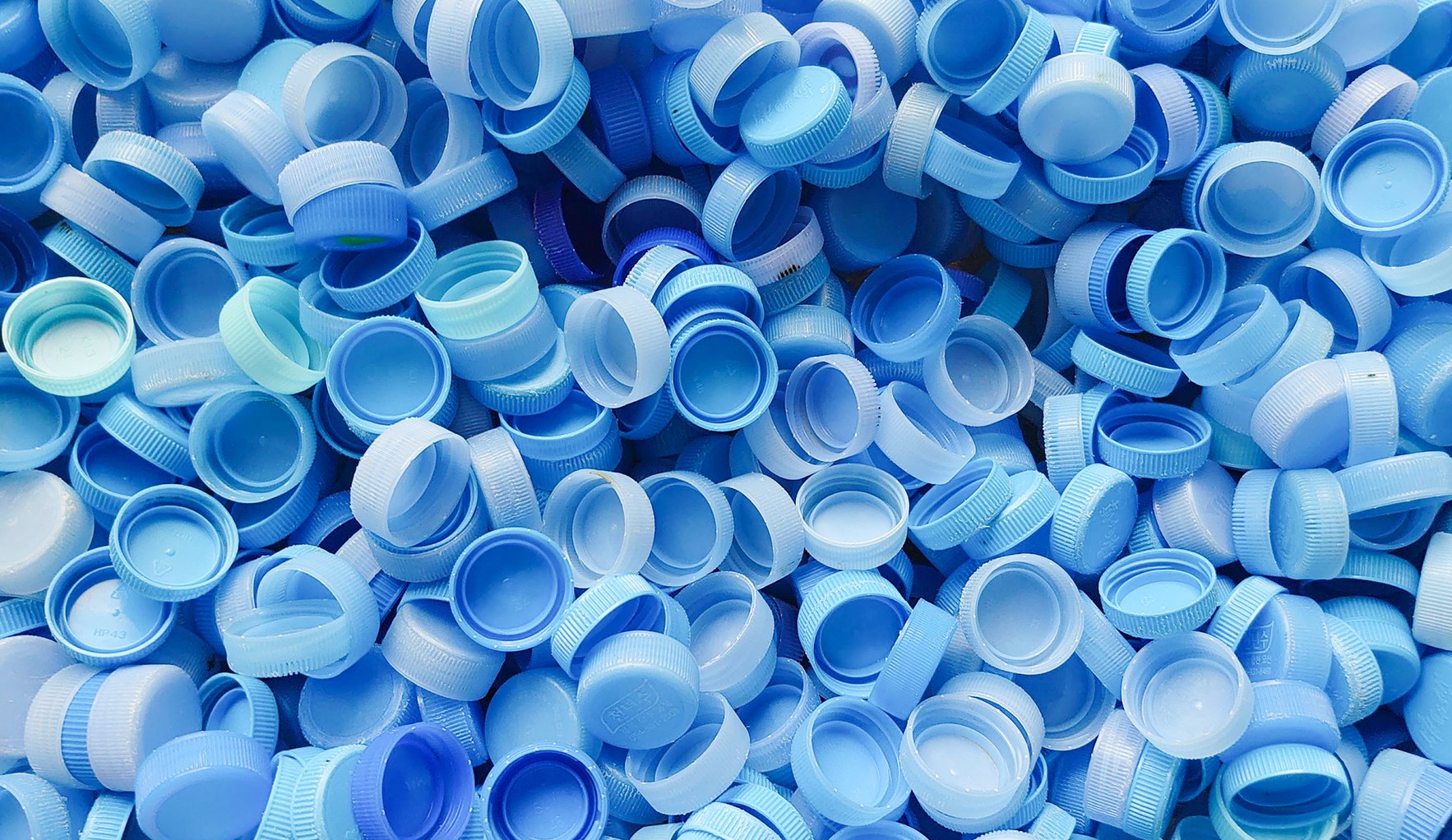
Where do PET bottle caps go in Karatsu City?
Karatsu City asks residents to remove caps and labels from PET bottles and put them out as burnable waste, and to put the bottles out on recyclables day (Karatsu City FAQ on bottle caps and labels (in Japanese)). The city explains that caps and labels are made of different materials from the bottle and must be removed to make high-quality recycled material. Labels have had to be removed since 1 April 2018 (Karatsu City, "How to put out PET bottles" (in Japanese)).
This page was made by Karatsu Farm & Food as part of the Karatsu Data Bank. It sets out where PET bottle caps are put out in Karatsu and where they go, using figures from Karatsu City, the Ministry of the Environment (MOE), the Council for PET Bottle Recycling and our own measurements, without conclusions or evaluations. Waste and recycling figures for Karatsu and Saga's 20 municipalities are on Saga Prefecture Waste and Recycling Data. Translations of Japanese sources are ours.
| Item | Rule or figure |
|---|---|
| PET bottles | Recyclables day (remove cap and label, rinse). Also collected at the city hall and AEON Karatsu |
| Caps | Remove from the bottle; burnable waste |
| Labels | Since 1 April 2018, remove; burnable waste (before that, labels could stay on) |
| PET bottles recycled in FY2024 | 220 tonnes (Saga's 20 municipalities: 1,611 tonnes) |
Karatsu City recycled 220 tonnes of PET bottles in FY2024 (Ministry of the Environment, Municipal Solid Waste Survey FY2024, Saga (Excel, in Japanese)). The source's category is "PET bottles" and gives no separate figure for caps.
How does the Nishi-Karatsu trial change what happens to caps?
Since 1 October 2026, Karatsu City has been running a trial of separate collection of plastic resources for about 2,600 households in the Nishi-Karatsu school district, and PET bottle labels and caps are included (Karatsu City, plastic separate collection trial (in Japanese)). The city aims to start separate collection of plastic resources in FY2028. PET bottles themselves are not part of this collection and still go out as recyclables.
| Item | Detail |
|---|---|
| Period | 1 October 2026 to 28 February 2027, five months (city page). The leaflet gives 1 October 2026 to 25 February 2027 |
| Area | Nishi-Karatsu school district, about 2,600 households |
| How | Designated bags, put in the collection box at the local recyclables station by 9 a.m. every Thursday |
| Accepted | Plastic containers and packaging (with the plastic mark) and products made only of plastic; examples include "PET bottle labels and caps" |
| Not accepted | PET bottles (their labels and caps are accepted), electrical items, lighters, items with metal, blades or needles, rubber or silicone, items longer than 50 cm, waste from business activities |
| After collection | Baled in Karatsu and taken to a recycling plant |
| Next step | The city aims to start separate collection of plastic resources in FY2028 |
What does the trial cost?
Karatsu City's contract notices show the trial's collection and transport as a negotiated contract of JPY 1,485,864 (tax included), and treatment and recycling as a unit-price contract: JPY 44 per kg for intermediate treatment, JPY 77 per kg for recycling plastic containers and packaging, JPY 33 per kg for recycling plastic products, and JPY 132,000 per composition survey (collection and transport, treatment and recycling). The total of the unit-price contract depends on the amount collected and is not given.
| Service | Contract | Amount |
|---|---|---|
| Collection and transport (from recyclables stations to a sorting and baling facility) | Negotiated contract (30 September 2026) | JPY 1,485,864 (tax incl.) |
| Intermediate treatment | Unit-price contract (30 September 2026) | JPY 44 per kg |
| Recycling plastic containers and packaging | Same | JPY 77 per kg |
| Recycling plastic products | Same | JPY 33 per kg |
| Composition survey | Same | JPY 132,000 per survey |
How many caps are collected with PET bottles across Japan?
Japan collected 723 thousand tonnes of designated PET bottles in FY2024, a figure that includes caps, labels and foreign matter. Net PET collected was 600 thousand tonnes, and non-PET material 124 thousand tonnes (Council for PET Bottle Recycling, Annual Report 2025 (PDF, in Japanese)). Against sales of 652 thousand tonnes (28.7 billion bottles), the recycling rate was 85.1%. The report does not give the amount of caps alone.
| Item | FY2024 | Note |
|---|---|---|
| Designated PET bottles sold | 28.7 billion bottles | Including imports |
| Designated PET bottles sold (weight) | 652 thousand t | Denominator for the rates |
| Collected (resource collection) | 723 thousand t | Including caps, labels and foreign matter |
| Net PET collected | 600 thousand t | PET only (municipal 313, business 286) |
| Non-PET | 124 thousand t | Caps, labels and foreign matter combined; caps alone not given |
| Recycled | 555 thousand t | Japan 445, overseas 110 |
| Collection / recycling / effective use rate | 91.9% / 85.1% / 98.6% | All against sales |
The same report's voluntary design guidelines for designated PET bottles (mandatory items) say caps must not be aluminium, must not use PVC, and must be made mainly of PE or PP with a specific gravity below 1.0 (Council for PET Bottle Recycling, Annual Report 2025 (PDF, in Japanese)).
How many bottle caps wash up on Japan's beaches?
In MOE's coastal litter composition survey, "bottle caps and lids" ranked 3rd in Japan in FY2024 with 13,408 items (11.4%). From FY2020 to FY2024 they were in the top four every year (Ministry of the Environment, coastal litter composition survey FY2024 summary (PDF, in Japanese)). The ranking counts artificial items only, on the mandatory-item basis, excluding fragments.
| Year | Survey sites | Rank | Items | Share | Source |
|---|---|---|---|---|---|
| FY2020 | 94 sites, 39 prefectures | 3rd | 12,846 | 9.3% | FY2021 summary |
| FY2021 | 89 sites, 39 prefectures | 1st | 14,005 | 13.2% | FY2021 summary |
| FY2022 | 78 sites, 39 prefectures | 2nd | 16,429 | 13.3% | FY2022 summary |
| FY2023 | 76 sites, 39 prefectures | 4th | 9,698 | 11.1% | FY2023 summary |
| FY2024 | 80 sites, 39 prefectures | 3rd | 13,408 | 11.4% | FY2024 summary |
Saga Prefecture's survey site is Kotari Beach in Karatsu City. In the upper Tsushima Current zone, which includes Karatsu, "bottle caps and lids" ranked 2nd in FY2024 with 6,917 items (15.4%) and 2nd in FY2023 with 2,959 items (13.6%). Of 9,681 PET bottle caps collected nationwide, the language on 5,591 could be identified; in Saga Prefecture, 319 (FY2024, Ministry of the Environment, coastal litter composition survey FY2024 summary (PDF, in Japanese)).
| Item | Figure | Note |
|---|---|---|
| Survey site in Saga | Karatsu City (Kotari Beach) | As listed in the FY2022 to FY2024 summaries (FY2021: "Karatsu City") |
| "Bottle caps and lids", upper Tsushima Current zone | FY2024: 2nd, 6,917 (15.4%) / FY2023: 2nd, 2,959 (13.6%) | Zone from the Kumamoto-Kagoshima border to the Ishikawa-Toyama border |
| PET bottle caps with identifiable language (Japan) | FY2024: 5,591 of 9,681 | Count of caps whose printed language could be identified |
| Same, Saga Prefecture | FY2024: 319 / FY2022: 15 / FY2021: 0 | FY2023 prefectural values appear only as a chart image, so they are not shown |
How many caps are collected and remade in Karatsu?
We have collected 3,026 kg of PET bottle caps from homes, beaches and schools in total (as of April 2026, our measurement, in Japanese). This is our own measurement, not a figure for Karatsu City as a whole. We have not measured the total weight of marine litter collected at beach clean-ups. The caps are remade into key rings, coasters and other items through Precious Plastic Karatsu.
FAQ
Q1. How are PET bottle caps discarded in Karatsu City?
Karatsu City asks residents to remove caps and labels from PET bottles and put them out as burnable waste; the bottles themselves go out on recyclables day (Karatsu City Environment Division).
Q2. Will Karatsu start collecting caps separately?
Karatsu City aims to start separate collection of plastic resources in FY2028. Ahead of that, a trial has run since 1 October 2026 for about 2,600 households in the Nishi-Karatsu school district, and PET bottle labels and caps are included (Karatsu City Environmental Facilities Division).
Q3. How many bottle caps wash up on Japan's beaches?
In the Ministry of the Environment's FY2024 coastal litter composition survey (80 sites in 39 prefectures), "bottle caps and lids" ranked 3rd by count among artificial items excluding fragments: 13,408 items, 11.4%. In the upper Tsushima Current zone, which includes Karatsu, they ranked 2nd with 6,917 items, 15.4%.
Q4. How many PET bottles are collected in Japan?
In FY2024, 652 thousand tonnes (28.7 billion bottles) of designated PET bottles were sold and 723 thousand tonnes were collected, a figure that includes caps, labels and foreign matter. Net PET collected was 600 thousand tonnes and recycling was 555 thousand tonnes (recycling rate 85.1%) (Council for PET Bottle Recycling).
Q5. What are PET bottle caps made of?
The Council for PET Bottle Recycling's voluntary design guidelines require caps to be made mainly of PE or PP with a specific gravity below 1.0, and prohibit aluminium caps. PE is polyethylene and PP is polypropylene.
Q6. How many caps has Karatsu Farm & Food collected?
We have collected 3,026 kg of PET bottle caps from homes, beaches and schools in total (as of April 2026). This is our own measurement, not a figure for Karatsu City as a whole.
Sources
| Source | Publisher | Date | URL | Accessed |
|---|---|---|---|---|
| Karatsu City, "How to put out PET bottles" (in Japanese) | Karatsu City | 2024-10-11 updated | https://www.city.karatsu.lg.jp/page/3245.html | 2026-11-04 |
| Karatsu City FAQ on bottle caps and labels (in Japanese) | Karatsu City | 2024-10-11 updated | https://www.city.karatsu.lg.jp/page/3252.html | 2026-11-04 |
| Karatsu City, "Sorting household waste" (in Japanese) | Karatsu City | 2025-07-24 updated | https://www.city.karatsu.lg.jp/page/2664.html | 2026-11-04 |
| Karatsu City, sorting FAQ (in Japanese) | Karatsu City | 2024-10-11 updated | https://www.city.karatsu.lg.jp/page/3732.html | 2026-11-04 |
| Karatsu City, plastic separate collection trial (in Japanese) | Karatsu City | 2026-09-03 updated | https://www.city.karatsu.lg.jp/page/51247.html | 2026-11-04 |
| Karatsu City, trial leaflet (PDF, in Japanese) | Karatsu City | Not stated | https://www.city.karatsu.lg.jp/uploaded/attachment/27071.pdf | 2026-11-04 |
| Karatsu City contract notice: collection and transport for the trial (in Japanese) | Karatsu City | 2026-10-22 updated | https://www.city.karatsu.lg.jp/site/nyusatsu/52846.html | 2026-11-04 |
| Karatsu City contract notice: treatment and recycling for the trial (in Japanese) | Karatsu City | 2026-10-22 updated | https://www.city.karatsu.lg.jp/site/nyusatsu/52850.html | 2026-11-04 |
| Council for PET Bottle Recycling, Annual Report 2025 (PDF, in Japanese) | Council for PET Bottle Recycling | 2025 (FY2024 results) | https://www.petbottle-rec.gr.jp/nenji/2025/2025.pdf | 2026-11-04 |
| Ministry of the Environment, coastal litter composition survey FY2024 summary (PDF, in Japanese) | Ministry of the Environment | 2026-03 | https://www.env.go.jp/content/000396903.pdf | 2026-11-04 |
| Ministry of the Environment, coastal litter composition survey FY2023 summary (PDF, in Japanese) | Ministry of the Environment | 2025-03 | https://www.env.go.jp/content/000318998.pdf | 2026-11-04 |
| Ministry of the Environment, coastal litter composition survey FY2022 summary (PDF, in Japanese) | Ministry of the Environment | 2024-03 | https://www.env.go.jp/content/000425379.pdf | 2026-11-04 |
| Ministry of the Environment, coastal litter composition survey FY2021 summary (PDF, in Japanese) | Ministry of the Environment | 2023-03 | https://www.env.go.jp/content/000159865.pdf | 2026-11-04 |
| Ministry of the Environment, Municipal Solid Waste Survey FY2024, Saga (Excel, in Japanese) | Ministry of the Environment | Not stated | https://www.env.go.jp/recycle/waste_tech/ippan/r6/data/shori/city/41/01.xlsx | 2026-11-04 |
| Karatsu Farm & Food, beach clean-up data (in Japanese) | Karatsu Farm & Food | Total as of April 2026 | https://karatsu-f-f.com/umigomi-data.html | 2026-11-04 |
Notes on reading the figures
The Council's "non-PET" 124 thousand tonnes combines caps, labels and foreign matter; it is not the amount of caps. In the coastal litter survey, the number and location of sites change each year, so year-to-year changes include differences in sites. "Bottle caps and lids" also includes caps and lids from bottles other than PET bottles. Caps with identifiable language are not all caps collected. The total of the Karatsu trial's unit-price contract depends on the amount collected and has not been published.
What this page does not cover
This page does not cover the weight of a single cap, the amounts collected, sold or donated by private cap-collection campaigns (we could not confirm them in primary sources), sorting rules in municipalities other than Karatsu, the trial's collection amounts and composition survey results (not yet published), comparisons between beaches, or evaluation of recycling methods. Our own project is described on Precious Plastic Karatsu.
Citing this page and enquiries
To cite these figures, or to ask about finding local data, use our contact page or info@karatsu-f-f.com.
About this page
By Hiroaki Kojima (Vice Director, Karatsu Farm & Food) / Contact: info@karatsu-f-f.com (contact page) / Published 4 November 2026 / Markdown: petbottle-cap-data.mdThis page is made together with AI. See this data bank and AI for how.
Related links
▶ Karatsu Data Bank
▶ Saga Prefecture Waste and Recycling Data
▶ Plastics in Numbers
▶ Plastic Rankings by Country
▶ 日本語版