
Schemes that collect money from visitors to protect nature and communities are spreading. From January 2026 the US state of Hawaii raised its accommodation tax from 10.25% to 11% and uses the increase (the Green Fee, expected to bring about USD 100 million a year) for environmental stewardship, climate and hazard resilience, and sustainable tourism (Office of the Governor of Hawaiʻi, Hawaiʻi Tourism Authority). In Japan, 49 local authorities (7 prefectures and 42 municipalities) had an accommodation tax in force on 1 October 2026 (Ministry of Internal Affairs and Communications, "Non-statutory taxes").
This page was created by Karatsu Farm & Food as part of the Karatsu Data Bank. It sets out, as published, the figures from governments, local authorities and international bodies on schemes in which visitors pay to protect nature and communities. We add no conclusions or evaluations. Amounts are shown in each scheme's own currency and are not converted.
The schemes fall into four broad groups: entry fees, visitor taxes and environmental fees paid on arrival; accommodation taxes paid per night; user fees for seas and parks; and departure taxes. This page focuses on schemes whose uses include protecting nature or the environment.
Main schemes around the world
Main visitor schemes whose uses include protecting nature or the environment.
| Country or area | Name | Amount | Started | Revenue |
|---|---|---|---|---|
| Hawaii (USA) | Green Fee (accommodation tax increase) | Accommodation tax 10.25% to 11% | January 2026 | About USD 100m a year (expected) |
| Palau | Pristine Paradise Environmental Fee | USD 100 per entry | January 2018 | About USD 7m (FY2025, expected) |
| Bhutan | Sustainable Development Fee (SDF) | USD 100 per night (until end of August 2027) | 1974 (since tourism opened) | USD 43.31m (2025) |
| Galápagos Islands (Ecuador) | National park entry fee | USD 200 for foreign adults | Doubled from USD 100 in August 2024 | – |
| New Zealand | IVL (International Visitor Conservation and Tourism Levy) | NZD 100 | 2019 (NZD 35); NZD 100 from October 2024 | NZD 145.98m (2024/25) |
| Bali (Indonesia) | Levy on foreign tourists | IDR 150,000 per visit | February 2024 | IDR 369bn (2025) |
| Venice (Italy) | Day-tripper access fee (Contributo di accesso) | Charged on set days | 2024 (trial) | EUR 5,421,425 (2025, 54 days) |
| Maldives | Green Tax | USD 12 per night (most resorts) | Doubled in January 2025 | About USD 62.5m (2025, expected) |
| Bonaire | Entry tax and nature fee | USD 75 + USD 40 | 2022 (entry tax) | USD 14.5m + USD 3.4m (2025) |
| Jamaica | Tourism Enhancement Fund | USD 20 by air, USD 2 by sea | 2005 | About USD 17m of about USD 60.5m to the fund (2023-24) |
| Aruba | Sustainability Fee | USD 20 | July 2024 | Not published |
Hawaii: the Green Fee from an accommodation tax increase
Hawaii enacted Act 96 on 27 May 2025, raising the Transient Accommodations Tax by 0.75 points to 11% from 1 January 2026. It covers hotels, vacation rentals and cruise ship stays. The Office of the Governor describes it as the first "climate impact fee" in the United States (Office of the Governor, Act 96).
The increase is to be used for three areas: environmental stewardship, climate and hazard resilience, and sustainable tourism. Sustainable tourism includes destination management, beach nourishment (adding sand to restore beaches) and park improvements (Hawaiʻi Department of Budget and Finance, FM 25-17).
The state budget bill (HB1800) puts USD 42 million in FY2025-26 and USD 87 million in FY2026-27 into a special fund for Green Fee projects (Hawaiʻi State Legislature, HB1800). In the first year the advisory council that recommends uses received more than 600 proposals, recommended 75, and the legislature funded 49 of them (Green Fee Hawaiʻi). In October 2026 the council chair said 62 projects worth about USD 93.6 million had been approved for spending (Aloha State Daily, 21 October 2026).
Palau: USD 100 per entry, split by law
Since 1 January 2018 Palau has collected the USD 100 Pristine Paradise Environmental Fee (PPEF) from each arriving traveller as part of the air fare (Embassy of Japan in Palau). It applies to those aged 13 and over, and a second entry within 30 days is not charged (RPPL No. 10-02).
The split of the USD 100 is set by law. Of this, USD 30 (the Green Fee) goes half to the Protected Areas Network Fund (PAN Fund) and half to other environmental projects such as water and sewerage. The PAN Fund supports 39 protected areas (29 marine, 10 terrestrial) in all 16 states (Reef Resilience Network). The government of Palau expects the fee to bring about USD 7 million in FY2025 (The Pew Charitable Trusts).
On arrival in Palau, the "Palau Pledge" is stamped in passports and visitors promise the children of Palau to protect its nature and culture (Reef Resilience Network).
Bhutan: a Sustainable Development Fee per night
Bhutan collects a Sustainable Development Fee (SDF) from visitors for each night. It was set at USD 200 per night when tourism reopened in September 2022 and halved to USD 100 from 1 September 2023. The USD 100 rate continues until 31 August 2027 (Bhutan Ministry of Industry, Commerce and Employment).
In 2025 Bhutan received 209,376 visitors (up 44.33% on the year) and SDF revenue was USD 43.31 million (USD 29.35 million the year before). This is SDF only and excludes visitors' spending on lodging, food and so on (Department of Tourism, Bhutan, "Tashel Melong 2025").
Galápagos Islands: entry fee doubled after 25 years
From 1 August 2024 the Galápagos Islands (Ecuador) raised the national park entry fee from USD 100 to USD 200 for foreign adults, and from USD 6 to USD 30 for domestic visitors (Galápagos National Park, Heriot-Watt University policy brief, March 2025). It was the first change in 25 years. The fee is to be used for conservation and management of protected areas and for basic services for island residents (water and sewerage, education, health and so on) (Government Council of the Special Regime of Galápagos).
According to the same policy brief, the median amount that 144 foreign visitors surveyed at airports in July and August 2024 said they were willing to pay was USD 200.
New Zealand: NZD 100 when applying for a visa
Since 2019 New Zealand has collected the International Visitor Conservation and Tourism Levy (IVL) when people apply for a visa or an electronic travel authority (NZeTA). It rose from NZD 35 to NZD 100 on 1 October 2024 (New Zealand Cabinet decision, 29 July 2024).
On the conservation side, NZD 62.8 million from the IVL was allocated to conservation work in 2024/25, and NZD 55 million a year has been committed from 2025/26 (Department of Conservation, Annual Report 2025).
Bali: about one visitor in three paid
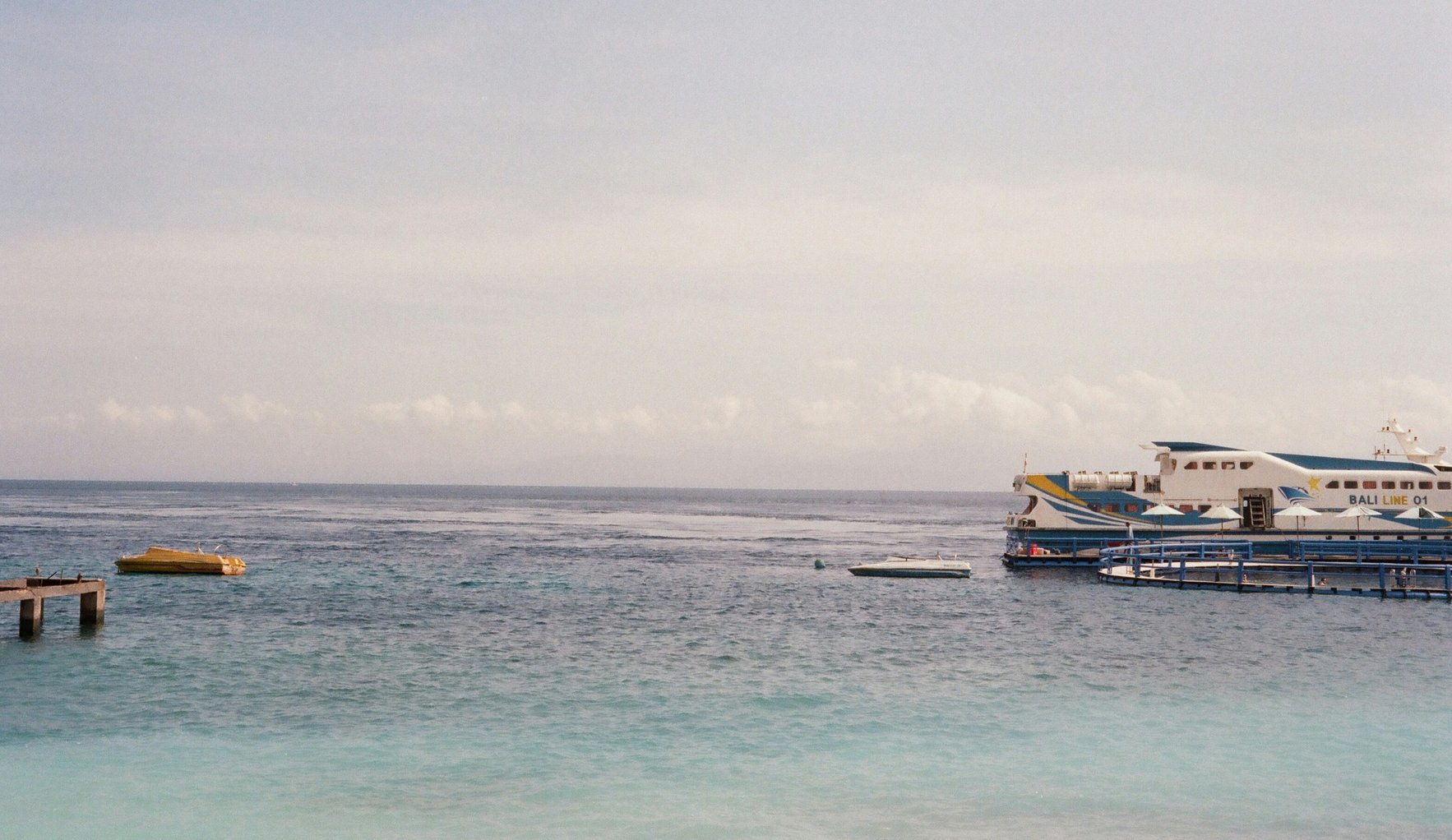
Since 14 February 2024 the province of Bali (Indonesia) has charged foreign tourists IDR 150,000 per visit. The provincial regulation states that the money is for protecting culture and the natural environment (Bali Provincial Regulation No. 2 of 2025). Revenue in 2025 was IDR 369 billion (IDR 318 billion in 2024), and about 35% of foreign tourists paid (ANTARA, 3 January 2026, Dewata News). In September 2026 the governor told the provincial assembly that the share paying had reached 43% (atnews, 23 September 2026).
Venice: charging day-trippers and cutting residents' waste charges
The City of Venice charges an access fee (Contributo di accesso) on set days to people visiting the historic centre for the day. In 2025 the fee ran on 54 days between 18 April and 27 July and brought in EUR 5,421,425. The city says revenue after management costs goes to reducing residents' waste charges (City of Venice, 4 August 2025). The 2026 trial ended on 26 July, and the city has announced that it will continue in 2027 (Venezia Unica).
Japan: accommodation taxes in 49 authorities, a JPY 3,000 departure tax
In Japan, accommodation taxes and island visitor taxes are spreading as "non-statutory taxes" that local authorities set by their own ordinance. According to the Ministry of Internal Affairs and Communications, on 1 October 2026 accommodation taxes were in force in 7 prefectures (Tokyo, Osaka, Fukuoka, Miyagi, Hokkaido, Hiroshima and Nagano) and 42 municipalities. Oita, Okinawa and 16 municipalities have ordinances approved by the minister but not yet in force. Accommodation tax revenue in FY2024 was JPY 11.6 billion for prefectures and JPY 11.8 billion for municipalities (Ministry of Internal Affairs and Communications, "Non-statutory taxes (as of 1 October 2026)").
At national level, the International Tourist Tax paid on leaving Japan rose from JPY 1,000 to JPY 3,000 per departure on 1 July 2026. It is used for improving the travel environment, promoting Japan's attractions, and developing tourism resources based on local culture and nature (Japan Tourism Agency).
| Authority or scheme | Amount per person | Started | Revenue |
|---|---|---|---|
| Kyoto City accommodation tax | JPY 200 to 10,000 per night (5 bands) | October 2018 (revised March 2026) | About JPY 12.6bn expected after revision |
| Fukuoka City accommodation tax (incl. prefectural tax) | JPY 200 or 500 per night | April 2020 | About JPY 3.33bn expected (FY2026) |
| Hatsukaichi City Miyajima Visitor Tax | JPY 100 per visit (JPY 500 for a year) | October 2023 | JPY 424.39m (FY2025 settled) |
| Izena, Iheya and Tokashiki environmental cooperation taxes; Zamami Churashima tax | JPY 100 per visit | – | JPY 0.3bn for the four villages (FY2024 settled) |
| Taketomi Town, Taketomi Island entry fee (voluntary contribution) | JPY 300 per visit | September 2019 | About JPY 12.88m (FY2022; 11.2% paid) |
| Yamanashi Prefecture, Mt Fuji Yoshida Trail passage fee (1 July to 10 September) | JPY 4,000 per climb | – | – |
The Miyajima Visitor Tax charges JPY 100 per visit to people crossing to Miyajima by boat, collected with the fare. Residents and people commuting to the island for work or school are exempt (Hatsukaichi City, "Outline of the Miyajima Visitor Tax"). FY2025 settled revenue was JPY 424,394,000, used for the waste facility, fire and ambulance services, managing tourist facilities and so on (Hatsukaichi City).
The Taketomi Island (Taketomi Town, Okinawa) entry fee began in September 2019. It was the first entry fee by a Japanese local authority under the Act on Local Natural Assets (Nakachi Ken, "On the possibility of introducing an island entry tax on Taketomi Island"). It is a voluntary contribution that visitors decide whether to pay. In FY2021 it raised JPY 7,322,100, and about 13.7% of visitors paid (Taketomi Town, report on a user-pays system). Taketomi Town is considering a "Taketomi Town Visitor Tax" on visitors to all its inhabited islands, and the review committee indicated a range of JPY 500 to 1,000 per visit (Taketomi Town committee paper). The ministry's list as of 1 October 2026 does not yet include a Taketomi visitor tax.
How much are visitors willing to pay?
Surveys asking visitors about entry fees have found willingness to pay more than current amounts. In surveys on Taketomi and Tokashiki islands, the median amount visitors were willing to pay was JPY 1,633 on Taketomi (current entry fee JPY 300) and JPY 1,421 on Tokashiki (current environmental cooperation tax JPY 100). On both islands more than 90% wanted the money used to protect nature (Hori Akiho (Nagoya University), "Entry taxes and donations as new funding for nature conservation", research grant report of the Japan Finance Organization for Municipalities (2025)).
In the same study, 58.9% of those who did not pay the Taketomi entry fee said they had not noticed that it existed.
Kyushu and Saga Prefecture
In Kyushu, Fukuoka Prefecture, Fukuoka City and Kitakyushu City introduced accommodation taxes in April 2020, Nagasaki City in April 2023, and Kumamoto City and Miyazaki City in July 2026. Oita Prefecture, Unzen City, Kagoshima City and Ibusuki City have ordinances approved by the minister but not yet in force (Ministry of Internal Affairs and Communications). Dazaifu City levies a "History and Culture Environment Tax" (same source).
Fukuoka City's accommodation tax is JPY 200 per person per night under JPY 20,000 (city JPY 150, prefecture JPY 50) and JPY 500 at JPY 20,000 or more (city JPY 450, prefecture JPY 50) (Fukuoka Prefecture). The city expects about JPY 3.33 billion in FY2026 and will use all of it for projects (about JPY 8.06 billion) such as strengthening its role as a gateway to Kyushu, MICE, and tourism in harmony with local life (Fukuoka City).
The ministry's list as of 1 October 2026 shows no accommodation tax or island visitor tax in Saga Prefecture or its municipalities. The non-statutory taxes it lists in Saga are the prefecture's nuclear fuel tax and industrial waste tax and Genkai Town's spent nuclear fuel tax (Ministry of Internal Affairs and Communications). Ferry passengers and populations of Karatsu's seven inhabited islands are in remote island statistics.
Taking part in conservation as a visitor experience
Uses of money collected from visitors often include caring for beaches and forests, waste management and managing protected areas. In Karatsu we host visitors and corporate and school groups and build beach clean-ups and conservation of the OECM site "Yokomakura" into the experience. See regenerative tourism.
Frequently asked questions
Q1. What is Hawaii's "beach clean-up tax"?
The phrase is sometimes used for the Green Fee that Hawaii started in January 2026. It is not a tax only for beach cleaning. The increase in the accommodation tax from 10.25% to 11% (about USD 100 million a year expected) is used for environmental stewardship, climate and hazard resilience, and sustainable tourism, including beach nourishment and park improvements (Office of the Governor; Department of Budget and Finance).
Q2. How many Japanese local authorities have an accommodation tax?
According to the Ministry of Internal Affairs and Communications, 49 (7 prefectures and 42 municipalities) on 1 October 2026. Oita, Okinawa and 16 municipalities are waiting to start after ministerial approval.
Q3. Does Japan have fees for entering islands?
Yes. The Miyajima Visitor Tax (JPY 100 per visit, since October 2023), the environmental cooperation taxes of Izena, Iheya and Tokashiki villages and Zamami village's Churashima tax in Okinawa (JPY 100 per visit). Taketomi Island has a JPY 300 entry fee as a voluntary contribution.
Q4. Do Saga Prefecture or Karatsu have an accommodation tax?
The ministry's list of non-statutory taxes as of 1 October 2026 shows none for Saga Prefecture or its municipalities. In Kyushu, Fukuoka Prefecture, Fukuoka City, Kitakyushu City, Nagasaki City, Kumamoto City and Miyazaki City have one.
Q5. Is the money visitors pay really used for conservation?
It depends on the scheme. Palau sets the split of USD 100 by law and sends USD 30 to the protected areas fund and other projects. New Zealand allocated NZD 62.8 million from the IVL to conservation work in 2024/25. The Pew Charitable Trusts notes that Jamaica's fund is also used for roads, bridges and other infrastructure. Each government's documents show how the money is used.
Sources
| Title | Publisher | Date | URL | Accessed |
|---|---|---|---|---|
| Historic Green Fee Launched to Combat Climate Change in Hawaiʻi | Office of the Governor, Hawaiʻi | 2025-05-27 | https://governor.hawaii.gov/?p=8516 | 2026-11-11 |
| Act 96 (SLH2025) | Hawaiʻi State Legislature | 2025 | https://data.capitol.hawaii.gov/sessions/sessionlaws/Years/SLH2025/SLH2025_Act96.pdf | 2026-11-11 |
| Green Fee panel presentation | Hawaiʻi Tourism Authority | 2026-06 | https://hta.hawaii.gov/wp-content/uploads/2026/06/hta-green-fee-panel-presentation_ada.pdf | 2026-11-11 |
| FM 25-17 (Green Fee budget guidelines) | Hawaiʻi Department of Budget and Finance | 2025-10-01 | https://budget.hawaii.gov/wp-content/uploads/2025/10/FM-25-17-Supplement-to-FM-25-13-FY-27-Supplemental-Budget-Policies-and-Guidelines-FB-2025-27.pdf | 2026-11-11 |
| HB1800 CD1 | Hawaiʻi State Legislature | 2026 | https://data.capitol.hawaii.gov/sessions/session2026/bills/HB1800_CD1_.HTM | 2026-11-11 |
| What is the Green Fee | Green Fee Hawaiʻi (advisory council) | 2026 | https://greenfeehawaii.org/what-is-the-green-fee | 2026-11-11 |
| What should we do with Green Fee funds? | Aloha State Daily | 2026-10-21 | https://alohastatedaily.com/2026/10/21/what-should-we-do-with-green-fee-funds | 2026-11-11 |
| On the introduction of the Pristine Paradise Environmental Fee (Japanese) | Embassy of Japan in Palau | 2018-01-05 | https://www.palau.emb-japan.go.jp/itpr_ja/00_000172.html | 2026-11-11 |
| RPPL No. 10-02 | Republic of Palau | 2017-03-27 | https://www.palaugov.pw/wp-content/uploads/2017/04/RPPL-No.-10-02-re.-Amendments-to-Environmental-Impact-Fee.pdf | 2026-11-11 |
| Palau – Financing Protected Areas | Reef Resilience Network | 2024-05-22 | https://reefresilience.org/case-studies/palau-financing-protected-areas | 2026-11-11 |
| How Island Nations Can Harness Tourist Dollars for Conservation | The Pew Charitable Trusts | 2026-03-11 (updated 2026-08-21) | https://www.pew.org/en/research-and-analysis/articles/2026/03/11/how-island-nations-can-harness-tourist-dollars-for-conservation | 2026-11-11 |
| Press Release on Introduction of Incentives for the Tourism Sector | Bhutan Ministry of Industry, Commerce and Employment | 2023-08-25 | https://www.moice.gov.bt/?p=266928 | 2026-11-11 |
| Tashel Melong: Annual Tourism Snapshot 2025 | Department of Tourism, Bhutan | 2026-01-23 | https://a.storyblok.com/f/171618/x/96818ac25f/tashel-melong-2025-final-1.pdf | 2026-11-11 |
| Tributo de ingreso | Galápagos National Park | 2025 | https://galapagos.gob.ec/tributo-de-ingreso | 2026-11-11 |
| Tasa de ingreso al Parque Nacional Galápagos | Government Council of the Special Regime of Galápagos | 2024 | https://www.gobiernogalapagos.gob.ec/tasa-ingreso-parque-nacional-galapagos | 2026-11-11 |
| Adjustment of entry fees to the Galapagos National Park | Heriot-Watt University | 2025-03 | https://aefresearch.site.hw.ac.uk/wp-content/uploads/sites/63/2025/04/Policy_Brief_tourists_2025_03_English.pdf | 2026-11-11 |
| Final Decisions on the IVL Amount (CAB-24-MIN-0274) | New Zealand Government | 2024-07-29 | https://www.mbie.govt.nz/dmsdocument/29384-final-decisions-on-the-international-visitor-conservation-and-tourism-levy-amount-minute-of-decision-proactiverelease-pdf | 2026-11-11 |
| IVL investments | New Zealand MBIE | 2026 | https://www.mbie.govt.nz/immigration-and-tourism/tourism/tourism-funding/international-visitor-conservation-and-tourism-levy/ivl-investments | 2026-11-11 |
| IVL Annual Performance Report 2023/24 | New Zealand MBIE | 2025-06 | https://www.mbie.govt.nz/dmsdocument/30924-international-visitor-conservation-and-tourism-levy-ivl-annual-performance-report-2023-24 | 2026-11-11 |
| Annual Report 2025 | New Zealand Department of Conservation | 2025 | http://doc.govt.nz/globalassets/documents/about-doc/annual-reports/annual-report-2025/annual-report-2025.pdf | 2026-11-11 |
| Peraturan Daerah Provinsi Bali Nomor 2 Tahun 2025 | Province of Bali | 2025-06-20 | https://peraturan.bpk.go.id/Download/385306/Peraturan%20Daerah%20Provinsi%20Bali%20%20Nomor%202%20Tahun%202025.pdf | 2026-11-11 |
| Bali's tourist tax brings US$22M, still short of goal | ANTARA | 2026-01-03 | https://en.antaranews.com/news/398320/balis-tourist-tax-brings-us22m-still-short-of-goal | 2026-11-11 |
| Bali Collects Rp369 Billion in Foreign Tourist Levy in 2025 | Dewata News | 2026-01-04 | https://dewata.news/bali-foreign-tourist-levy-revenue-2025-2026-target | 2026-11-11 |
| Kepatuhan Pungutan Wisatawan Asing di Bali Tembus 43 Persen | atnews | 2026-09-23 | https://www.atnews.id/portal/news/34197/kepatuhan-pungutan-wisatawan-asing-di-bali-tembus-43-persen-penerimaan-tahun-2026-diproyeksi-rp429-miliar | 2026-11-11 |
| Contributo di accesso: i numeri del 2025 | City of Venice | 2025-08-04 | https://live.comune.venezia.it/it/2025/08/contributo-di-accesso-i-numeri-del-2025 | 2026-11-11 |
| What is the Venice Access Fee | Venezia Unica | 2026 | https://cda.veneziaunica.it/en/access-fee | 2026-11-11 |
| Non-statutory taxes (as of 1 October 2026) (Japanese) | Ministry of Internal Affairs and Communications | 2026-10-01 | https://www.soumu.go.jp/main_content/001094503.pdf | 2026-11-11 |
| The International Tourist Tax will be increased to JPY 3,000 | Japan Tourism Agency | 2026 | https://www.mlit.go.jp/kankocho/content/001996466.pdf | 2026-11-11 |
| Revision of the accommodation tax from 1 March 2026 (Japanese) | Kyoto City | 2025-10-03 | https://www.city.kyoto.lg.jp/gyozai/page/0000345893.html | 2026-11-11 |
| Outline of the accommodation tax (Japanese) | Fukuoka Prefecture | 2026-04-01 | https://www.pref.fukuoka.lg.jp/contents/syukuhakuzei.html | 2026-11-11 |
| City tax guide: accommodation tax (Japanese) | Fukuoka City | 2026-05 | http://www.city.fukuoka.lg.jp/zaisei/zeisei/life/documents/r8P066.pdf | 2026-11-11 |
| Outline of the Miyajima Visitor Tax (Japanese) | Hatsukaichi City | 2026-01-28 | https://www.city.hatsukaichi.hiroshima.jp/soshiki/110/59551.html | 2026-11-11 |
| FY2025 results of main measures (Japanese) | Hatsukaichi City | 2026-09 | https://www.city.hatsukaichi.hiroshima.jp/uploaded/attachment/96512.pdf | 2026-11-11 |
| Report on building a user-pays system in Taketomi Town (Japanese) | Taketomi Town | 2022-12 | https://www.town.taketomi.lg.jp/userfiles/files/riyousyafutanhoukoku.pdf | 2026-11-11 |
| Framework of a Taketomi Town Visitor Tax (provisional) (Japanese) | Taketomi Town | 2023-09-07 | https://www.town.taketomi.lg.jp/userfiles/files/20230907dai1shiryou.pdf | 2026-11-11 |
| FY2022 Annual Report (Japanese) | Taketomi Island Natural Assets Foundation | 2023 | https://taketomijima.okinawa/wp/pressrelease/2023/2022report.pdf | 2026-11-11 |
| Entry taxes and donations as new funding for nature conservation (Japanese) | Hori Akiho (Nagoya University), Japan Finance Organization for Municipalities research grant | 2025-09 | https://www.jfm.go.jp/support/research/n9at5c000000039b-att/a1759387959307.pdf | 2026-11-11 |
| Passage on the Mt Fuji Yoshida Trail (Japanese) | Yamanashi Prefecture | 2026-07-07 | https://www.pref.yamanashi.jp/fujisan/siyouryou.html | 2026-11-11 |
| Study paper on tourism funding (Annex 3, other authorities) (Japanese) | Nikko City | 2019 | https://www.city.nikko.lg.jp/material/files/group/2/01-3bessi3.pdf | 2026-11-11 |
| On the possibility of introducing an island entry tax on Taketomi Island (Japanese) | Nakachi Ken, Okinawa International University | 2021 | https://okiu1972.repo.nii.ac.jp/record/3200/files/18801927_18_1_ken_nakachi.pdf | 2026-11-11 |
Notes on reading the figures
Amounts are in each scheme's own currency and are not converted to yen; the burden in yen changes with exchange rates. "Revenue" differs by scheme in its year (calendar or fiscal) and in whether it is an outturn or a forecast. Hawaii's Green Fee works by budgeting an amount matching the accommodation tax increase from the state general fund; the money collected does not flow directly into a fund (Act 96).
Figures for Bonaire, the Maldives, Jamaica and Aruba are those the Pew Charitable Trusts cites from each government's budget documents. Bali's revenue and payment share come from news reports of statements by the governor and the provincial tourism office. The Taketomi entry fee is a voluntary contribution, not a tax; its payment rate is the number of payments divided by the number of visitors.
What this page does not cover
Whether individual schemes are working, effects on visitor numbers, Japan's bathing tax, donations collected by hotels, and cruise port charges are not covered. Definitions of types of tourism are in Types of Tourism in Numbers, hotel initiatives in Hotel Sustainability in Numbers, and beach clean-up figures in Beach Clean-ups in Numbers.
Citing this page and enquiries
To cite figures on this page or to ask about finding local data, please use our contact page or write to info@karatsu-f-f.com.
About this page
Created by Hiroaki Kojima (Vice Director, Karatsu Farm & Food) / Contact: info@karatsu-f-f.com (contact form) / Published: November 11, 2026 / Markdown: tourism-levy-data.mdThis page was made together with AI. See this data bank and AI for how.
Related links
▶ Karatsu Data Bank
▶ Regenerative tourism (our work)
▶ Types of Tourism in Numbers
▶ Hotel Sustainability in Numbers
▶ Remote island statistics
▶ Beach Clean-ups in Numbers
▶ 観光客が払う保全のお金のデータ(日本語)
Data Bank friends on this page
TontonGolden yellow, Goal 11
A caretaker who loves connecting people and places.On this page I look at how visitors and the money that protects a place can be linked.
MikiGreen, Goal 15
A quiet lookout who spots changes in living things at once.On this page I look at how much of the money collected goes to forests, seas and beaches.
ShioriRed, Goal 4
Meticulous. Wants to measure and record everything.On this page I record the amount, start year and revenue of each scheme, year by year.