
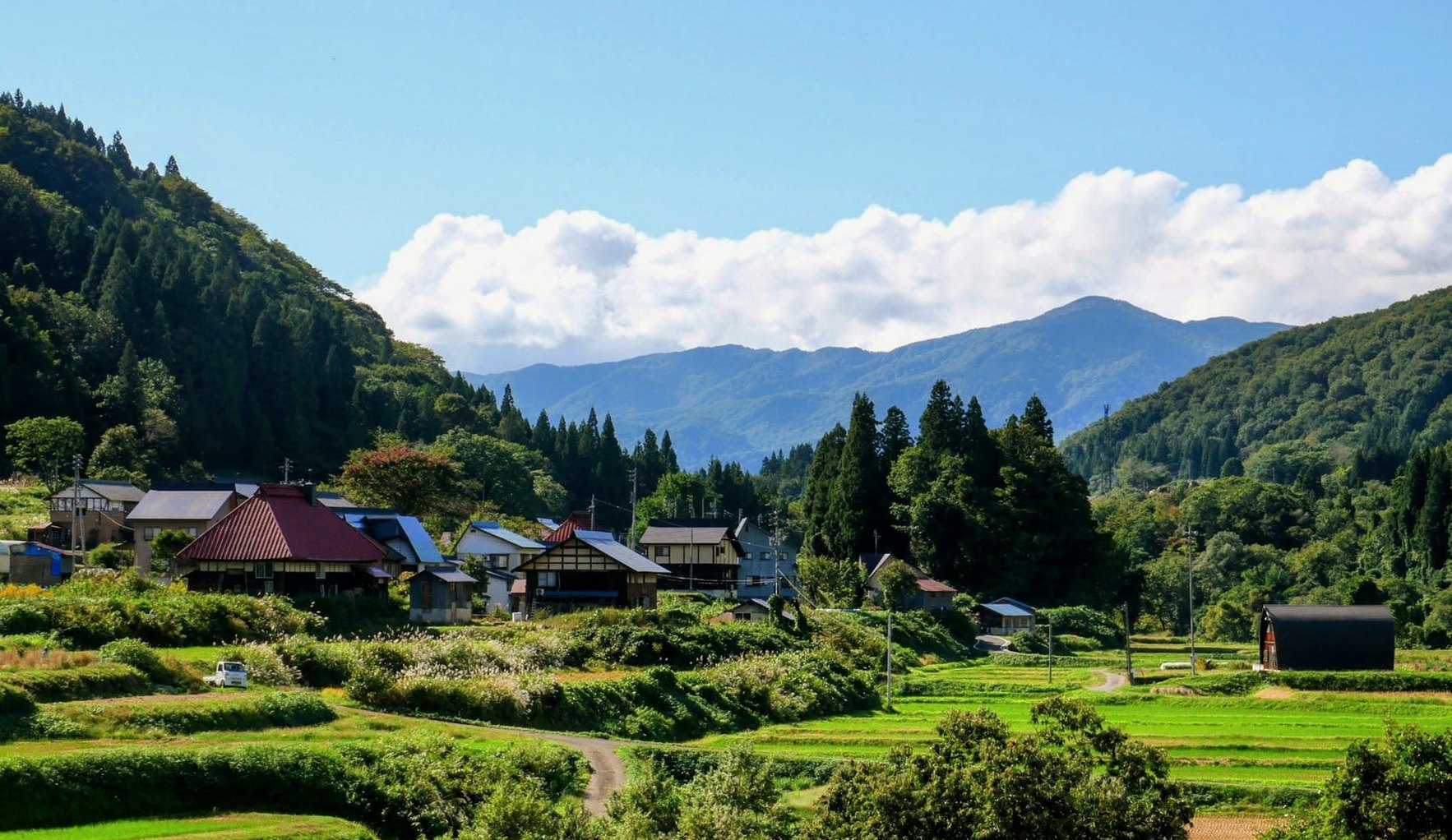
Types of tourism, set out by definition and figures
Sustainable, regenerative, eco, adventure, wellness, rural (nohaku, farm and village stays), volunteer and gastronomy tourism are defined by different bodies and counted in different ways. The world market sizes that can be shown from primary sources are adventure travel, estimated by the industry body ATTA at USD 1.16 trillion in 2024, and wellness tourism, estimated by the research body GWI at USD 893.9 billion in 2024. We found no world market statistics from international bodies for sustainable, regenerative, eco or gastronomy tourism.
This page was compiled by Karatsu Farm & Food, a nonprofit in Karatsu, Saga, as part of the Karatsu Data Bank. For each type of tourism it lists who defines it, what figures exist for the world and for Japan, and whether there are figures that show how much money stays locally, using publications from UN Tourism, the Japan Tourism Agency, the Ministry of the Environment, the Ministry of Agriculture, Forestry and Fisheries, industry bodies and research bodies. It does not rank the types. English names for Japanese documents and terms are our translations.
What travellers think about sustainable travel is on Tourism in Numbers, and how much they spend is on Tourism Spending and Souvenirs.
| Type | Main defining body | World figure | Japan figure |
|---|---|---|---|
| Sustainable tourism | UN Tourism and UNEP (2005) | No market statistics for it as a type | 118 areas working on sustainable destination management (2025) |
| Regenerative tourism | No agreed definition. UN Tourism is discussing it (discussion paper, April 2026) | None | Named in the Tourism Nation Promotion Basic Plan (Cabinet decision, 27 March 2026) |
| Ecotourism | UN Tourism; Ministry of the Environment (Ecotourism Promotion Act, in force 2008) | No market statistics from international bodies | 31 approved master plans (June 2026) |
| Adventure tourism | ATTA (two or more of nature, physical activity and culture); the Japan Tourism Agency uses the same definition | USD 1.16 tn (2024, ATTA estimate) | Hokkaido hosted the Adventure Travel World Summit in 2023 |
| Wellness tourism | UN Tourism; GWI | USD 893.9 bn (2024, GWI estimate) | Not covered on this page |
| Rural tourism (nohaku) | UN Tourism; Ministry of Agriculture | No market statistics from international bodies | 673 areas, 8.68 million guest nights, JPY 159.8 bn in sales (FY2024) |
| Volunteer tourism | No fixed definition (Wearing 2001 in research) | 1.6 million people a year, GBP 832 m to 1.3 bn (2008 estimate) | No official statistics |
| Gastronomy tourism | UN Tourism (defined 2019) | No market statistics from international bodies | Not covered on this page |
Types of tourism at a glance: definition, world figure, Japan figure
The eight types are not measured on the same basis. ATTA's USD 1.16 trillion is spending by travellers going abroad, GWI's USD 893.9 billion covers both domestic and international trips, and the 8.68 million guest nights are stays in areas supported by a national grant. They cannot be added up or compared in size.
UN Tourism's 2019 definitions give operational definitions for types of tourism including eco, rural, adventure, wellness and gastronomy tourism (UNWTO Tourism Definitions). Sustainable tourism is not a type but applies to all forms of tourism, including mass tourism (UN Tourism).
| Item | Content | Source |
|---|---|---|
| Definition | Tourism that takes full account of its current and future economic, social and environmental impacts, addressing the needs of visitors, the industry, the environment and host communities | UN Tourism (UNWTO/UNEP 2005) |
| Scope | All forms of tourism in all types of destinations, including mass tourism and niche segments | Same |
| Areas in Japan | 118 areas following the Japan Sustainable Tourism Standard for Destinations (JSTS-D) in 2025, 30 of them with international certification or awards; 31 in 2023 | Tourism Nation Promotion Basic Plan (2026, in Japanese) |
Sustainable tourism: an approach for all tourism
UN Tourism defines sustainable tourism not as a type but as an approach for all tourism, resting on three pillars: responsible use of environmental resources, respect for the culture of host communities, and fair sharing of economic benefits (UN Tourism).
In Japan, the number of areas working under the Japan Tourism Agency's JSTS-D guidelines rose from 31 in 2023 to 118 in 2025. Thirty had international certification or awards, short of the previous plan's target of 50 (Basic Plan, in Japanese). Examples from Japan's model projects and our study tour coordination are on our sustainable tourism page (in Japanese).
| Who | What they say | Date |
|---|---|---|
| Government of Japan | Promotes "regenerative destination development", in which money and people gained from using natural capital are put back into conserving and restoring it (Basic Plan, Part 3, 3(1)a) | Cabinet decision, 27 March 2026 |
| UN Tourism | Regenerative tourism complements, not replaces, sustainable tourism. Inconsistent use risks "regeneration-washing", so clear definitions and reporting are needed | Discussion paper CTS/23, 27 April 2026 |
| GSTC (Global Sustainable Tourism Council) | The term is ambiguous and lacks an operational framework for businesses; the principles of sustainable tourism should be kept | GSTC |
Regenerative tourism: in Japan's national plan, still under discussion internationally
Regenerative tourism is used to describe tourism that aims not only to reduce harm but to restore and improve the nature, culture and communities of the places visited. Japan's Tourism Nation Promotion Basic Plan, adopted by the Cabinet on 27 March 2026, includes "regenerative destination development" (Japan Tourism Agency, in Japanese).
There is no internationally agreed definition yet. A UN Tourism discussion paper (April 2026) treats regenerative tourism as complementing sustainable tourism and calls for safeguards against "regeneration-washing" (UN Tourism). There are no statistics on its market size or participants. Examples from Japan and training and study visits at Yokomakura, the nature-coexistence site we look after, are on Regenerative Tourism in Karatsu.
| Prefecture | Council (master plan) | Approved |
|---|---|---|
| Kagoshima | Izumi City Ecotourism Promotion Council | 12 May 2026 |
| Kagoshima | Koshikijima Tourism Promotion Council | 18 August 2023 |
| Kagoshima | Yakushima Town Ecotourism Promotion Council | 4 August 2023 |
| Kumamoto | Aso Geopark Promotion Council (Aso ecotourism master plan) | 11 July 2019 |
| Kagoshima | Amami Islands Ecotourism Promotion Council | 7 February 2017 |
| Miyazaki | Kushima Ecotourism Promotion Council | 7 February 2017 |
| Saga | (none) | - |
Ecotourism: approved under law in Japan, 31 areas
UN Tourism defines ecotourism as nature-based tourism in which the visitor's essential motivation is to observe, learn, discover, experience and appreciate biological and cultural diversity, with a responsible attitude to protect the ecosystem and enhance the well-being of the local community (UN Tourism glossary). In Japan the Ecotourism Promotion Act came into force in April 2008, and the national government approves master plans drawn up by municipal councils.
Approvals reached 31 with Higashi Village, Okinawa, on 10 June 2026 (Ministry of the Environment). In Kyushu there are four in Kagoshima and one each in Kumamoto and Miyazaki; Saga has none (list of councils). We found no world market statistics for ecotourism from international bodies.
| Item | Value | Source |
|---|---|---|
| World market (spending by outbound adventure travellers) | USD 1.16 tn (2024) | ATTA |
| 2023 value | USD 966 bn | ATTA |
| 2017 value | USD 683 bn | ATTA |
| Share of travellers "open to adventure" | 67% of international outbound travellers (core 40%) | ATTA |
| Per traveller | About USD 265 per night, about 11 days, about USD 3,000 per trip | ATTA |
Adventure tourism: USD 1.16 trillion by the industry's estimate
ATTA defines adventure tourism as travel made up of two or more of nature, physical activity and culture. The Japan Tourism Agency uses the same definition, and the Adventure Travel World Summit, the sector's largest trade event, was held in Hokkaido in September 2023 (Japan Tourism Agency, in Japanese).
ATTA estimates spending by outbound adventure travellers at USD 1.16 trillion in 2024, up from USD 966 billion in 2023 and USD 683 billion in 2017. It says 67% of international travellers are "open to adventure" and spend about USD 3,000 per trip (ATTA). These are industry estimates, not UN statistics.
| Item | Value | Source |
|---|---|---|
| Wellness tourism spending (world, domestic and international) | USD 893.9 bn (2024) | GWI |
| Average annual growth 2019 to 2024 | 6.4% (136% of 2019) | GWI |
| Share of all tourism (trips) | 8.3% (2024); 6.3% in 2019 | GWI |
| Share of all tourism (spending) | 17.6% (2024); 14.2% in 2019 | GWI |
| Outlook to 2029 | 9.1% a year | GWI |
Wellness tourism: 8.3% of trips, 17.6% of spending
GWI defines wellness tourism as "travel associated with the pursuit of maintaining or enhancing one's personal wellbeing" (GWI). World spending in 2024 was USD 893.9 billion, 136% of the 2019 level, ahead of tourism as a whole at 110% (GWI).
In 2024 wellness trips were 8.3% of all trips but 17.6% of all tourism spending, which GWI attributes to wellness travellers spending more per trip than the average traveller (GWI Global Wellness Economy Monitor 2025). These are research estimates, not UN statistics.
Rural tourism (nohaku): 673 areas, 8.68 million guest nights
UN Tourism defines rural tourism as tourism in which the visitor's experience is related to products linked to nature-based activities, agriculture, rural lifestyle and culture (UN Tourism). Japan's Ministry of Agriculture, Forestry and Fisheries calls stays in farming, mountain and fishing villages with local food and activities "nohaku" and supports participating areas with grants.
In FY2024 there were 673 nohaku areas, 8.68 million guest nights and JPY 159.8 billion in accommodation and related sales. The government aims for 12 million guest nights and JPY 220 billion by FY2029. The average room rate in nohaku areas was JPY 13,196 per night, below JPY 18,940 for tourism as a whole, and the ministry names raising added value as a challenge (Ministry of Agriculture). Kyushu has 100 nohaku areas; Saga Prefecture has six, in Saga City, Kashima, Ogi, Ureshino, Kamimine and Tara. None is listed for Karatsu (Kyushu Regional Agricultural Administration Office, end of March 2025).
| Source | Participants | Value | Note |
|---|---|---|---|
| Tourism Research and Marketing (2008) | 1.6 million a year | GBP 832 m to 1.3 bn | Cited by Wearing & McGehee (2013) |
| APEC report (2018) | More than 10 million consumers a year | USD 1.7 bn to 2.6 bn | APEC, citing the 2008 estimate and others |
| Per trip (study cited by APEC) | - | Volunteers USD 1,191; holiday visitors USD 1,219 | About USD 30 less per day, but four days longer |
Volunteer tourism: the only world figures date from 2008
Volunteer tourism is travel that includes volunteering at the destination. Wearing's 2001 definition is widely used in research, but there is no fixed definition. The 2008 estimate of 1.6 million people a year and GBP 832 million to 1.3 billion is still cited (Wearing & McGehee 2013). A 2018 APEC report says "more than 10 million" and USD 1.7 to 2.6 billion, so the figures do not agree (APEC).
In a study cited by APEC, volunteer visitors spent about USD 30 less per day than holiday visitors but stayed four days longer, so spending per trip was almost the same (USD 1,191 against USD 1,219). Japan has no official statistics. Disaster volunteering is not tourism, but after the 2024 Noto Peninsula earthquake a cumulative 142,665 volunteers had worked through disaster volunteer centres by 21 August 2024 (Japan National Council of Social Welfare, in Japanese).
Karatsu Farm & Food began volunteer tourism at Yokomakura, a nature-coexistence site in Ochi, Karatsu, in FY2024, and hosted two conservation volunteers from France in spring 2024. They helped with Japanese honeybee keeping, cleaned waterways, cut grass on paddy banks and prepared a goat shed (our press release, in Japanese). See Regenerative Tourism in Karatsu.
Gastronomy tourism: travelling for food
UN Tourism defines gastronomy tourism as tourism characterized by the visitor's experience of food and related products and activities while travelling, including visits to local producers, food festivals and cooking classes; wine tourism is a sub-type (UN Tourism glossary). We found no world market statistics from international bodies.
Food and drink spending by visitors is on Tourism Spending and Souvenirs. Data on Karatsu City's gastronomy tourism budget and where its contractors are based are on our Japanese page on Karatsu's tourism budget.
| Type | Comparable figure | Source |
|---|---|---|
| Adventure | In Jordan, 65% of revenue from Jordan Trail trips stays in the local economy, against 14% for Dead Sea tourism; 2.62 against 1.65 local jobs per USD 100,000 | ATTA and USAID (2018 slides) |
| Adventure | Tour operators estimate that 65.6% of the cost of an adventure package stays in the destination | UNWTO Global Report on Adventure Tourism (2014) |
| Tourism in general (developing countries) | Of every USD 100 spent by a tourist from a developed country, about USD 5 stays in the developing destination's economy | Same (citing UNEP) |
| Wellness | 8.3% of trips but 17.6% of spending (higher spend per trip) | GWI |
| Nohaku | Average room rate JPY 13,196 per night (tourism as a whole JPY 18,940) | Ministry of Agriculture |
| Volunteer | USD 1,191 per trip (holiday visitors USD 1,219), four days longer | APEC |
| Sustainable, regenerative, eco, gastronomy | No figures found that compare in the same way | - |
Does the money stay locally? Comparing the figures
There are no international statistics measuring, type by type, how much tourist spending stays locally. What exists are individual studies. Slides by ATTA and the US Agency for International Development show that 65% of revenue from Jordan Trail trips stays in the local economy, against 14% for Dead Sea tourism in the same country (ATTA). A 2014 UNWTO report cites a UNEP estimate that of every USD 100 spent by a tourist from a developed country in a developing country, about USD 5 stays in that economy (UNWTO).
For Japan, government data show that room rates in nohaku areas are lower than for tourism as a whole. A count of whether contractors for Karatsu City's tourism projects are based in the city or outside the prefecture is on our Japanese page on Karatsu's tourism budget.
FAQ
Q1. What types of tourism are there?
UN Tourism's 2019 definitions cover types including cultural, eco, rural, adventure, wellness, gastronomy and business tourism. Sustainable tourism is not a type but an approach for all tourism. Regenerative and volunteer tourism have no agreed definitions.
Q2. What is the difference between sustainable and regenerative tourism?
Sustainable tourism, defined by UN Tourism, takes full account of economic, social and environmental impacts. Regenerative tourism aims to restore and improve the nature and culture of the places visited. A UN Tourism discussion paper (April 2026) treats regenerative tourism as complementing, not replacing, sustainable tourism.
Q3. What is ecotourism, and where is it approved in Japan?
Nature-based tourism whose main motivation is to observe and learn about biological and cultural diversity. Japan has 31 ecotourism master plans approved under the Ecotourism Promotion Act (June 2026). In Kyushu they are Izumi, Koshikijima, Yakushima and the Amami Islands in Kagoshima, Aso in Kumamoto and Kushima in Miyazaki. Saga has none.
Q4. How big is the adventure tourism market?
The industry body ATTA estimates spending by outbound adventure travellers at USD 1.16 trillion in 2024, USD 966 billion in 2023 and USD 683 billion in 2017. These are industry estimates, not UN statistics.
Q5. How many people take part in volunteer tourism worldwide?
A 2008 estimate of 1.6 million people a year and GBP 832 million to 1.3 billion is still cited. A 2018 APEC report says more than 10 million people and USD 1.7 to 2.6 billion, so sources differ widely. Japan has no official statistics.
Q6. What is nohaku, and is there any in Saga?
Stays in farming, mountain and fishing villages with local food and activities. There were 673 nohaku areas supported by the Ministry of Agriculture in FY2024, with 8.68 million guest nights. Saga Prefecture has six: Saga City, Kashima, Ogi, Ureshino, Kamimine and Tara (end of March 2025).
Q7. Which types of tourism leave the most money locally?
There are no international statistics comparing this by type. In one example from Jordan, 65% of revenue from adventure trips on the Jordan Trail stayed locally, against 14% for Dead Sea tourism (ATTA and USAID). In Japan, room rates in nohaku areas are lower than for tourism as a whole.
Sources
Notes on reading the figures
- World figures cover different things. Adventure (ATTA) is spending by outbound travellers, wellness (GWI) covers domestic and international trips, and volunteer tourism is a 2008 estimate. We have not added or compared them.
- ATTA is an industry body and GWI a nonprofit research body; neither figure is a UN or government statistic. GWI's travel data come from the private research firm Euromonitor.
- Dollar values are not converted into yen.
- "No statistics" or "not found" means we could not find them in publications by international bodies, governments or industry bodies, not that we have confirmed they do not exist.
- English renderings of Japanese documents and names are our translations; the originals take precedence.
What this page does not cover
Market size estimates by private research firms for ecotourism, volunteer tourism and other types are not included, because values differ widely between firms and their methods cannot be checked. Assessments of individual destinations, businesses or tour products, Japanese figures for wellness and gastronomy tourism, and types not in the table, such as medical or dark tourism, are also not covered.
Citing this page and enquiries
To cite these figures, or to ask about finding local data, use our contact page or info@karatsu-f-f.com.
About this page
By Hiroaki Kojima (Vice Director, Karatsu Farm & Food) / Contact: info@karatsu-f-f.com (contact page) / Published 6 November 2026 / Markdown: tourism-types-data.mdThis page is made together with AI. See this data bank and AI for how.
Related links
▶ Karatsu Data Bank
▶ Tourism in Numbers
▶ Tourism Spending and Souvenirs in Saga and Karatsu
▶ Hotel Sustainability in Numbers
▶ Regenerative Tourism in Karatsu
▶ 日本語版