
Zero waste, in numbers
Zero waste is the idea of bringing waste close to zero by changing how things are made, used and returned, so that nothing has to be burned or buried. In Japan, Kamikatsu Town in Tokushima made its "Zero Waste Declaration" on 19 September 2003 (Kamikatsu Town); in FY2024 its recycling rate was 76.1%, against 19.3% for Japan as a whole, according to the Ministry of the Environment (Ministry of the Environment, FY2024 survey results, p.5 and p.22). On 14 December 2022 the United Nations made 30 March the International Day of Zero Waste (UN General Assembly resolution A/RES/77/161).
This page was compiled by Karatsu Farm & Food as part of the Karatsu Data Bank. It covers the international definition of zero waste, the UN international day, city targets and certification around the world, the UN’s 20 zero waste cities and examples from cities outside Japan, the Japanese local governments that have declared zero waste and their recycling rates, the trend in Kamikatsu, the municipalities with the highest recycling rates, and Saga Prefecture and Karatsu. It uses only figures stated in the sources, without conclusions or value judgements. The ranking of the declared towns and the Kamikatsu trend table were built by us from the Ministry of the Environment's municipal data.
| Item | Figure | Period | Source |
|---|---|---|---|
| Kamikatsu recycling rate | 76.1% | FY2024 | Ministry of the Environment |
| Japan recycling rate | 19.3% | FY2024 | Ministry of the Environment |
| Highest recycling rate, municipalities under 100,000 people | 82.7% (Osaki, Kagoshima) | FY2024 | Ministry of the Environment |
| Highest recycling rate, cities of 100,000 to 500,000 | 59.8% (Kamakura, Kanagawa) | FY2024 | Ministry of the Environment |
| Kamikatsu waste per person per day | 481.9 g | FY2024 | Ministry of the Environment (Japan: 839 g) |
| Kamikatsu sorting system | 14 types, 44 categories | from 2026 | Kamikatsu Town |
| Japanese local governments with a zero waste declaration | 5 | Kamikatsu Town's list (populations as of February 2021) | Kamikatsu Town's list |
| Cities in C40's zero waste commitment | 21 (including Tokyo) | 2025 | C40 |
| UN’s 20 Cities Towards Zero Waste | 20 cities (Yokohama in Japan) | March 2026 | UN-Habitat |
| Certified Zero Waste Cities (Europe) | 18 | 2025 | Zero Waste Europe |
| Karatsu recycling rate | 16.9% | FY2024 | Ministry of the Environment (our separate page) |
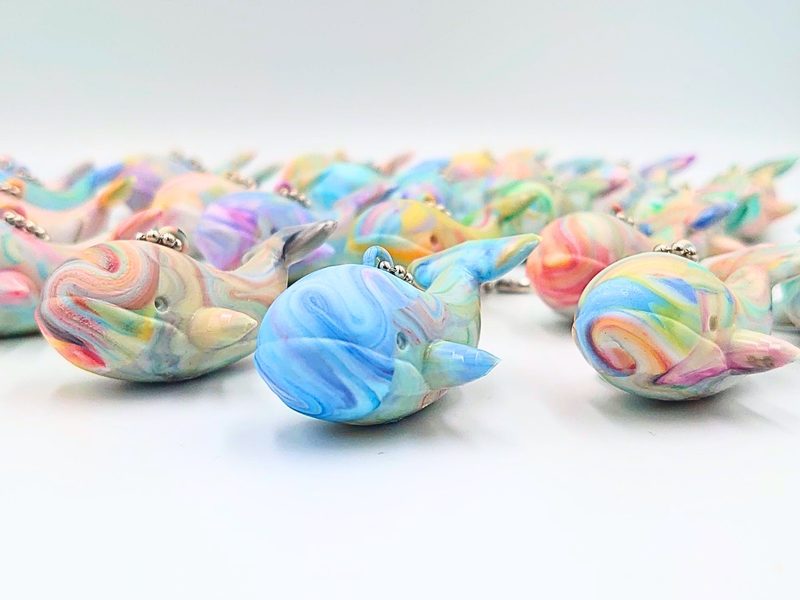
We collect PET bottle caps from homes, schools and beaches and turn them into products with small machines.
See our work
What is zero waste? The international definition (updated December 2018)
The Zero Waste International Alliance (ZWIA) defines zero waste as conserving all resources through responsible production, consumption, reuse and recovery of products, packaging and materials, without burning and without discharges to land, water or air that threaten the environment or human health. The definition page was last updated on 20 December 2018 (ZWIA, Zero Waste Community Principles; summary by us).
According to Kamikatsu Town, the first local "zero waste declaration" was made by Canberra, the capital of Australia, in 1996 (Kamikatsu Town, Working with zero waste municipalities). The order of the 3Rs (reduce, reuse, recycle) under Japanese law and the figures for cutting the amount of waste are on What Is Reduce? Waste Reduction Data.
World: the UN International Day of Zero Waste and city targets
On 14 December 2022 the UN General Assembly adopted resolution 77/161, "Promoting zero-waste initiatives to advance the 2030 Agenda for Sustainable Development", and decided to proclaim 30 March as the International Day of Zero Waste, to be observed every year (UN General Assembly resolution A/RES/77/161, paragraph 6). According to the UN, the resolution was put forward by Türkiye with 105 other countries, and the UN Environment Programme (UNEP) and UN-Habitat jointly facilitate the day. The same page says that without urgent action, municipal solid waste will grow to 3.8 billion tonnes a year by 2050 (United Nations, International Day of Zero Waste; source given as UNEP and UN-Habitat).
C40, a network of the world's large cities, launched its "Advancing Towards Zero Waste Declaration" in 2018 (now the Towards Zero Waste Accelerator) (C40 Towards Zero Waste Accelerator Report 2025, p.1). Signatory cities commit, by 2030, to cut municipal solid waste per person by at least 15% against 2015, cut waste sent to landfill and incineration by at least 50% against 2015, and divert at least 70% of waste away from landfill and incineration. Twenty-one cities have signed, including Tokyo (C40, Towards Zero Waste Accelerator). The December 2025 report says 76% of signatory cities are on track to cut waste per person by 15%, and 8 cities divert 50% or more of their waste (C40 Towards Zero Waste Accelerator Report 2025, p.2).
In Europe, Zero Waste Europe runs a Zero Waste Cities certification for municipalities. Its 2025 annual report lists 18 certified cities and 30 candidate cities, and says it supported 35 municipalities in 17 countries that year (Zero Waste Europe, Annual Report 2025). Its website says more than 400 European municipalities have joined the wider Zero Waste Cities programme, which goes beyond certification (Zero Waste Europe, Certification).
| Initiative | By | Started | Number | Aim |
|---|---|---|---|---|
| Definition of zero waste | ZWIA | last updated December 2018 | - | conserve resources without burning and without discharges that threaten the environment or health |
| International Day of Zero Waste (30 March) | UN General Assembly | resolution of 14 December 2022 | 106 sponsors (Türkiye and 105 countries) | raise awareness of national, regional and local zero waste initiatives |
| Towards Zero Waste Accelerator | C40 | 2018 | 21 cities (2025) | by 2030: waste per person down at least 15% and landfill and incineration down at least 50% (both against 2015), diversion at least 70% |
| Zero Waste Cities certification | Zero Waste Europe | - | 18 certified, 30 candidates (2025) | certify municipal zero waste work |
Zero waste outside Japan: the UN’s 20 cities and city figures (2026)
On 27 March 2026, ahead of the International Day of Zero Waste, the UN Secretary-General’s Advisory Board on Zero Waste named 20 cities around the world as the first “20 Cities Towards Zero Waste” (UN-Habitat, UN Advisory Board names 20 city leaders in zero waste). The board, announced on 30 March 2023 to promote resolution 77/161, has 12 members, and UN-Habitat and UNEP are its secretariat (UNEP, UN Advisory Board names 20 city leaders in zero waste). Yokohama is the only Japanese city on the list; according to the city, the board recognised among other things that Yokohama has cut its waste by 50% while its population grew by about 10% (City of Yokohama press release, 30 March 2026, in Japanese).
| Region | Country | City |
|---|---|---|
| Asia | Japan | Yokohama |
| Asia | China | Hangzhou, Suzhou, Sanya |
| Asia | Malaysia | George Town, Kuala Lumpur |
| Asia | Philippines | Iloilo City, San Fernando |
| Asia | Sri Lanka | Dehiwala City |
| Asia | India | Varkala |
| Europe and Middle East | Italy | Bologna |
| Europe and Middle East | Türkiye | Gaziantep |
| Africa | Ghana | Accra |
| Africa | Kenya | Kisumu |
| Africa | Tanzania | Dar es Salaam |
| Africa | Malawi | Lilongwe |
| Africa | Morocco | Chefchaouen |
| Americas | United States | San Francisco |
| Americas | Mexico | Zapopan |
| Americas | Brazil | Florianópolis |
The table below shows eight cities outside Japan whose figures we could confirm in documents from the city or a public body. In Europe, Capannori became the first municipality in Italy to adopt a Zero Waste Strategy in 2007, and its residual waste (what is neither recycled nor composted) was 51.65 kg per person in 2024 (CCRI Solution Booklet: Capannori, European Commission CCRI, Capannori). The area served by the public company Contarina (49 municipalities in the Province of Treviso) collected 89.7% of its waste separately in 2025, with 42 kg of residual waste per person (Contarina, Risultati della differenziata). Ljubljana became the first EU capital to adopt a zero waste goal in 2014 (Zero Waste Europe, 8 September 2014) and collected 69.9% of its waste separately in 2023 (City of Ljubljana, 18 October 2024). In North America, New York made curbside composting mandatory citywide from October 2024 (NYC Department of Sanitation); in Asia, San Fernando in the Philippines raised its waste diversion rate from 12% in 2012 to 80.69% in 2018 (UN-Habitat, San Fernando).
| City (country) | Start | Target | Latest figures | Main measures |
|---|---|---|---|---|
| Capannori (Italy, population 46,272) | 2007: first municipality in Italy to adopt a Zero Waste Strategy (resolution 44/2007) | 95% separate collection (Capannori Circolare 2030) | Separate collection 88.8% (reached over 2007-2024; CCRI Solution Booklet). Residual waste 51.65 kg per person per year (2024; 67.34 kg in 2020) | Door-to-door collection. Zero Waste Certified City in 2022 (first in Italy, third in Europe) |
| 49 municipalities in the Province of Treviso served by the public company Contarina (Italy, 555,705 inhabitants) | - | - | Separate collection 89.7%, residual waste 42 kg per person per year (2025). Italy: 67.7% and 164 kg (2024 data, ISPRA 2025 edition). City of Treviso: 84.5% and 59.3 kg | Door-to-door collection and a fee based on how often the residual waste bin is emptied; the yearly minimum is the number of household members plus one |
| Ljubljana (Slovenia) | September 2014: first EU capital to adopt a zero waste goal | By 2025: separate collection above 75%, residual waste 60 kg per person per year, less than 30 kg per person landfilled | Separate collection 69.9% (2023) | Door-to-door collection, underground bins in the centre. European Green Capital 2016 |
| San Francisco (United States) | 2002: zero waste goal adopted by the Board of Supervisors; 2003: target year set at 2020 | By 2030: cut waste generation 15% and disposal to landfill and incineration 50% (2018 pledge) | About half of what goes into the three bins is sent to landfill (city statement) | 2009 ordinance requiring everyone to separate recyclables and compostables; adequate collection at 99% of properties by 2020 |
| New York City (United States) | Local Law 86 of 2023 set the goal | Zero divertible waste by 2030 | Fiscal 2025: 166,500 tons of organics diverted (up 29%); overall recycling diversion rate 21.8% | Curbside composting mandatory citywide from October 2024; fines for property owners from 1 April 2025 |
| Vancouver (Canada) | Zero Waste 2040 adopted on 16 May 2018 | Zero tonnes to landfill or incinerator by 2040 (aspirational) | About 305,000 tonnes disposed in 2022, 36% less than in 2008 | Green Demolition By-law; Landfill Zero Waste Centre |
| Seoul (South Korea) | January 2013: volume-based food waste fees implemented citywide | Cut food waste 10% by 2026 and 20% by 2030 from 2019 (2,827 tons per day in 2019) | RFID pay-as-you-throw food waste bins in 80.3% of apartment households (2025, 1.483 million households) | Food waste bins that charge by weight |
| San Fernando (Philippines, population 354,666) | - | 91% diversion by 2025 | Waste diversion 80.69% (2018; 12% in 2012) | 93% segregation compliance across all barangays; decentralised composting at materials recovery facilities (MRFs); collection and disposal costs cut from about USD 1.4 million to about USD 677,000 |
Japan's zero waste towns and their recycling rates (FY2024)
Kamikatsu Town lists five local governments in Japan that have declared zero waste (Kamikatsu Town, Zero waste municipalities in Japan, with populations as of February 2021; Kamikatsu Town zero waste portal). We also checked each declaration's year and name on each local government's own website. In the Ministry of the Environment's FY2024 survey, the highest recycling rate (R' in the note below) among them is Kamikatsu's 76.1%, followed by Ikaruga, Nara at 68.9% and Oki, Fukuoka at 62.7%. Their waste per person per day ranges from 481.9 g to 728.5 g, below Japan's 839 g (ranking by us).
| Rank | Local government | Declared | Name of declaration | Population | Recycling rate R' | Recycling rate R | Waste per person per day (g) | of which household (g) |
|---|---|---|---|---|---|---|---|---|
| 1 | Kamikatsu, Tokushima | Sep 2003 (renewed Dec 2020) | Zero Waste Declaration | 1,353 | 76.1% | 76.1% | 481.9 | 97.2 |
| 2 | Ikaruga, Nara | May 2017 | Ikaruga Zero Waste Declaration (Ikaruga Mahoroba Declaration) | 28,075 | 68.9% | 74.0% | 665.3 | 305.9 |
| 3 | Oki, Fukuoka | 2008 | Oki Mottainai Declaration (zero waste declaration) | 13,663 | 62.7% | 66.1% | 639.1 | 190.1 |
| 4 | Miyama, Fukuoka | Sep 2020 | Miyama Resource Circulation City Declaration | 34,026 | 37.9% | 37.9% | 656.6 | 339.7 |
| 5 | Minamata, Kumamoto | Nov 2009 | Minamata Declaration on Zero Waste Town-Building | 21,737 | 33.0% | 33.0% | 728.5 | 385.3 |
| Japan | - | - | - | - | 19.3% | 839 | 466 | |
| Karatsu, Saga | (no declaration found) | - | 114,227 | 16.9% | 16.9% | 891.1 | 536.3 |
The declarations differ from place to place. Kamikatsu's 2003 declaration pledged its best efforts to end incineration and landfill by 2020; on 18 December 2020 the town council unanimously adopted a new declaration with 2030 as its target year (Kamikatsu Town). Oki aimed to stop burning and burying waste by FY2016, and its later "second stage" sets targets such as an 85% recycling rate (Oki Town). Minamata made its declaration on 22 November 2009 (Minamata City). Ikaruga adopted its declaration by a vote of an extraordinary council session on 8 May 2017 and calls it the fourth in Japan (Ikaruga Town). Miyama's declaration was adopted unanimously by the city council in September 2020, and the city calls it the fifth in Japan (Miyama City).
Apart from formal declarations, some local governments put zero waste into the basic principles of their waste plans. For example, the August 2020 joint waste plan of Kamakura, Zushi and Hayama in Kanagawa aims for "the realisation of zero waste" (Zushi City).
Kamikatsu's recycling rate over time (FY2016 to FY2024)
According to the Ministry of the Environment's surveys, Kamikatsu's recycling rate was between 79.7% and 81.1% from FY2016 to FY2022, then 76.2% in FY2023 and 76.1% in FY2024. Waste per person per day went from 518.8 g in FY2016 to 481.9 g in FY2024 (Ministry of the Environment surveys for each year; table by us).
| Fiscal year | Population | Total waste (t) | Waste per person per day (g) | Recycling rate |
|---|---|---|---|---|
| FY2016 | 1,637 | 310 | 518.8 | 81.0% |
| FY2017 | 1,593 | 286 | 491.9 | 79.7% |
| FY2018 | 1,566 | 283 | 495.1 | 80.7% |
| FY2019 | 1,530 | 302 | 539.3 | 80.8% |
| FY2020 | 1,494 | 294 | 539.1 | 81.0% |
| FY2021 | 1,472 | 315 | 586.3 | 79.9% |
| FY2022 | 1,441 | 299 | 568.5 | 81.1% |
| FY2023 | 1,401 | 239 | 466.1 | 76.2% |
| FY2024 | 1,353 | 238 | 481.9 | 76.1% |
Since 2026, Kamikatsu has sorted its waste into 14 types and 44 categories (Kamikatsu Town, Waste sorting in Kamikatsu). The town's timeline says it began collecting resources in 9 categories in 1997, closed its small incinerators in 2001 and moved to 33 (later 35) categories, and in 2016 changed its official system to 13 types and 45 categories, when its recycling rate first passed 80% (Kamikatsu Town, History of zero waste in Kamikatsu). The town reports that it produced 238 t of waste in FY2024, of which 57 t was incinerated or landfilled and 181 t was recycled. It says handling everything by incineration and landfill without sorting would have cost 14.24 million yen, while sorting and recycling brought the cost to 7.99 million yen, a difference of 6.25 million yen (Kamikatsu Town, results of the FY2024 general waste survey, 27 May 2026).
Japan's municipalities with the highest recycling rates (Ministry of the Environment top 10, FY2024)
The Ministry of the Environment publishes the "top 10 municipalities for recycling" by population size. In FY2024 the highest rates were Osaki, Kagoshima at 82.7% among municipalities under 100,000 people, Kamakura, Kanagawa at 59.8% among cities of 100,000 to 500,000, and Chiba City at 34.3% among cities over 500,000. The top 10 under 100,000 people includes three zero waste towns: Kamikatsu (2nd), Ikaruga (6th) and Oki (8th) (Ministry of the Environment, Table 7, p.22).
| Rank | Prefecture | Municipality | Recycling rate |
|---|---|---|---|
| 1 | Kagoshima | Osaki | 82.7% |
| 2 | Tokushima | Kamikatsu | 76.1% |
| 3 | Kagoshima | Shibushi | 75.8% |
| 4 | Hokkaido | Obira | 69.5% |
| 5 | Nagano | Kijimadaira | 69.0% |
| 6 | Nara | Ikaruga | 68.9% |
| 7 | Hokkaido | Toyoura | 66.7% |
| 8 | Fukuoka | Oki | 62.7% |
| 9 | Shimane | Chibu | 53.9% |
| 9 | Tottori | Hiezu | 52.6% |
| Rank | Prefecture | City | Recycling rate |
|---|---|---|---|
| 1 | Kanagawa | Kamakura | 59.8% |
| 2 | Tokyo | Kokubunji | 45.0% |
| 3 | Tokyo | Koganei | 43.3% |
| 4 | Okayama | Kurashiki | 41.8% |
| 5 | Saitama | Kazo | 38.6% |
| 6 | Aichi | Komaki | 37.2% |
| 7 | Tokyo | Higashimurayama | 35.5% |
| 8 | Tokyo | Nishitokyo | 33.8% |
| 9 | Tokyo | Tachikawa | 32.1% |
| 10 | Kanagawa | Yokosuka | 32.1% |
| Rank | Prefecture | City | Recycling rate |
|---|---|---|---|
| 1 | Chiba | Chiba | 34.3% |
| 2 | Okayama | Okayama | 33.0% |
| 3 | Tokyo | Hachioji | 27.7% |
| 4 | Aichi | Nagoya | 26.1% |
| 5 | Chiba | Matsudo | 24.2% |
| 6 | Fukuoka | Kitakyushu | 24.0% |
| 7 | Niigata | Niigata | 23.0% |
| 8 | Kanagawa | Yokohama | 21.9% |
| 9 | Saitama | Kawaguchi | 20.9% |
| 10 | Saitama | Saitama | 20.7% |
The rates in these tables are R': recycling after intermediate treatment excluding solid fuel (RDF, RPF), use of incineration ash and fly ash as cement raw material, direct input into cement and the like, and smelter recovery of fly ash. Tokyo's 23 wards are counted together, and towns and villages in Fukushima's difficult-to-return zones are excluded (same source, notes 27 to 30). Municipalities with the least waste per person (the "reduce" top 10) are on What Is Reduce? Waste Reduction Data.
Zero waste in Saga Prefecture and Karatsu
We found no zero waste declaration by any of Saga Prefecture's 20 municipalities when we searched their official websites and several search tools on 25 November 2026. Karatsu City (the former city, before the 2005 merger) made an "Environmental City Declaration" on 1 January 2001 and a "Zero Carbon City Declaration" on 27 March 2023, aiming for net-zero carbon dioxide emissions by 2050 (Karatsu City, Zero Carbon City Declaration, Karatsu City, The Environment of Karatsu, FY2023 edition).
In the Ministry of the Environment's FY2024 survey, the recycling rate (R) was 16.9% for Karatsu, 18.2% for Saga Prefecture and 19.3% for Japan. Recycling rates and what is recycled in Saga's 20 municipalities are on Saga Prefecture Waste and Recycling Data, and Karatsu's measures to cut waste on What Is Reduce? Waste Reduction Data.
An example from Karatsu (our work)
As Precious Plastic Karatsu, we collect PET bottle caps from homes, schools and beaches and turn them into products with small machines. We have collected 3,026 kg of caps in total (as of April 2026, our records). Cap collection and where the caps go are on PET Bottle Cap Collection Data, and our activity figures on Precious Plastic in Numbers.
Frequently asked questions
Q1. What is zero waste?
It is the idea of bringing waste close to zero by changing how things are made, used and returned, so that nothing has to be burned or buried. The Zero Waste International Alliance defines it as conserving all resources through responsible production, consumption, reuse and recovery, without burning and without discharges that threaten the environment or health (definition page last updated December 2018).
Q2. Which towns in Japan have declared zero waste?
Kamikatsu Town's list names five: Kamikatsu, Tokushima (2003), Oki, Fukuoka (2008), Minamata, Kumamoto (2009), Ikaruga, Nara (2017) and Miyama, Fukuoka (2020). Kamikatsu renewed its declaration in December 2020 with 2030 as the target year.
Q3. What is Kamikatsu's recycling rate?
According to the Ministry of the Environment, Kamikatsu's recycling rate was 76.1% in FY2024, second among municipalities under 100,000 people. It was between 79.7% and 81.1% from FY2016 to FY2022. Japan's rate is 19.3%.
Q4. Which municipality has the highest recycling rate in Japan?
In the Ministry of the Environment's FY2024 top 10, the highest rates were Osaki, Kagoshima at 82.7% (under 100,000 people), Kamakura, Kanagawa at 59.8% (100,000 to 500,000) and Chiba City at 34.3% (over 500,000).
Q5. How many categories does Kamikatsu sort its waste into?
Since 2026, 14 types and 44 categories. From 2016 its official system was 13 types and 45 categories.
Q6. When is the International Day of Zero Waste?
30 March. The UN General Assembly set it by resolution 77/161 on 14 December 2022, to be observed every year. UNEP and UN-Habitat jointly facilitate it.
Q7. Which cities outside Japan are working towards zero waste?
In March 2026 the UN Secretary-General’s Advisory Board on Zero Waste named 20 cities as the first 20 Cities Towards Zero Waste (Yokohama is the one Japanese city). In Europe, Capannori became the first municipality in Italy to adopt a Zero Waste Strategy in 2007, and Ljubljana in Slovenia became the first EU capital to adopt a zero waste goal in 2014. The area served by Contarina in the Province of Treviso, Italy, collected 89.7% of its waste separately in 2025, with 42 kg of residual waste per person.
Q8. Has any town in Karatsu or Saga Prefecture declared zero waste?
We found none when we searched on 25 November 2026. Karatsu has made an Environmental City Declaration (2001) and a Zero Carbon City Declaration (2023). Karatsu's recycling rate was 16.9% in FY2024.
Sources
| Source | Publisher | Date | URL | Accessed |
|---|---|---|---|---|
| Results of the FY2024 general waste survey (p.5; Table 7, p.22) | Ministry of the Environment, Japan | 2026-03-27 | https://www.env.go.jp/content/000387426.pdf | 2026-11-25 |
| Discharge and treatment of general waste in FY2024 (press release) | Ministry of the Environment, Japan | 2026-03-27 | https://www.env.go.jp/press/press_03502.html | 2026-11-25 |
| FY2024 general waste survey, municipal data (waste treatment overview): Tokushima, Nara, Fukuoka, Kumamoto, Saga | Ministry of the Environment, Japan | FY2024 survey | https://www.env.go.jp/recycle/waste_tech/ippan/r6/data/shori/city/36/01.xlsx (and the editions numbered 29, 40, 43, 41) | 2026-11-25 |
| FY2016 to FY2023 general waste survey, Tokushima municipal data (waste treatment overview) | Ministry of the Environment, Japan | each year | https://www.env.go.jp/recycle/waste_tech/ippan/h28/data/shori/city/36/01.xlsx (and h29, h30, r1 to r5) | 2026-11-25 |
| Zero Waste Declaration (19 September 2003) | Kamikatsu Town | 2003-09-19 | https://www.kamikatsu.jp/zerowaste/sengen.html | 2026-11-25 |
| Zero Waste Declaration towards 2030 | Kamikatsu Town | 2020-12-18 | https://www.kamikatsu.jp/docs/2021072100014 | 2026-11-25 |
| Zero waste municipalities in Japan | Kamikatsu Town (zero waste portal) | posted 2020-03-01 (populations as of February 2021) | https://zwtk.jp/japan_zwdeclaration/ | 2026-11-25 |
| Zero waste and the future (working with zero waste municipalities) | Kamikatsu Town (zero waste portal) | - | https://zwtk.jp/future/ | 2026-11-25 |
| Waste sorting in Kamikatsu | Kamikatsu Town (zero waste portal) | from 2026 | https://zwtk.jp/separate/ | 2026-11-25 |
| History of zero waste in Kamikatsu | Kamikatsu Town (zero waste portal) | - | https://zwtk.jp/history/ | 2026-11-25 |
| Results of the FY2024 general waste survey (town notice) | Kamikatsu Town (zero waste portal) | 2026-05-27 | https://zwtk.jp/%e4%bb%a4%e5%92%8c%ef%bc%96%e5%b9%b4%e5%ba%a6-%e4%b8%80%e8%88%ac%e5%bb%83%e6%a3%84%e7%89%a9%e5%87%a6%e7%90%86%e5%ae%9f%e6%85%8b%e8%aa%bf%e6%9f%bb%e3%81%ae%e7%b5%90%e6%9e%9c%e3%82%92%e3%81%8a%e7%9f%a5/ | 2026-11-25 |
| Ikaruga Town Zero Waste Declaration | Ikaruga Town | published 2023-09-12 | https://www.town.ikaruga.nara.jp/0000000728.html | 2026-11-25 |
| Oki Mottainai Declaration, second stage | Oki Town | - | https://www.town.ooki.lg.jp/soshiki/kankyo/kankyo/7/4751.html | 2026-11-25 |
| Miyama Resource Circulation City Declaration | Miyama City | updated 2025-03-13 | https://www.city.miyama.lg.jp/s031/kurashi/taisaku/040/020/020/20210817110840.html | 2026-11-25 |
| Zero waste town-building | Minamata City | - | https://www.city.minamata.lg.jp/kankyo/kiji00377/index.html | 2026-11-25 |
| Kamakura, Zushi and Hayama joint waste treatment plan | Zushi City | updated 2025-06-20 | https://www.city.zushi.kanagawa.jp/shisei/keikaku/1005616/1005649/1005651.html | 2026-11-25 |
| A/RES/77/161 Promoting zero-waste initiatives to advance the 2030 Agenda for Sustainable Development (paragraph 6) | UN General Assembly | 2022-12-14 | https://documents.un.org/doc/undoc/gen/n22/756/33/pdf/n2275633.pdf | 2026-11-25 |
| International Day of Zero Waste | United Nations | - | https://www.un.org/observances/zero-waste-day | 2026-11-25 |
| Zero Waste Community Principles (Zero Waste Definition) | Zero Waste International Alliance | last updated 2018-12-20 | https://zwia.org/zero-waste-community-principles/ | 2026-11-25 |
| C40 Towards Zero Waste Accelerator | C40 Cities | - | https://www.c40.org/accelerators/zero-waste | 2026-11-25 |
| C40 Towards Zero Waste Accelerator Report 2025 (p.1, p.2) | C40 Cities | 2025-12 | https://www.c40.org/wp-content/uploads/2025/12/C40-Towards-Zero-Waste-Accelerator-Report.pdf | 2026-11-25 |
| Annual Report 2025 | Zero Waste Europe | 2026-04 | https://zerowasteeurope.eu/wp-content/uploads/2026/04/ZWE-Annual-Report-2025.pdf | 2026-11-25 |
| Certification (Zero Waste Cities) | Zero Waste Europe | - | https://zerowasteeurope.eu/certification/ | 2026-11-25 |
| Zero Carbon City Declaration | Karatsu City | updated 2024-10-11 | https://www.city.karatsu.lg.jp/page/3974.html | 2026-11-25 |
| The Environment of Karatsu, FY2023 edition | Karatsu City | - | https://www.city.karatsu.lg.jp/uploaded/attachment/20135.pdf | 2026-11-25 |
| UN Advisory Board names 20 city leaders in zero waste | UN-Habitat | 2026-03-27 | https://unhabitat.org/news/27-mar-2026/un-advisory-board-names-20-city-leaders-in-zero-waste | 2026-11-26 |
| UN Advisory Board names 20 city leaders in zero waste (About the Advisory Board) | UNEP | 2026-03-27 | https://www.unep.org/en/news-and-stories/press-release/un-advisory-board-names-20-city-leaders-zero-waste | 2026-11-26 |
| Yokohama selected as the only Japanese city among the UN’s 20 Cities Towards Zero Waste (press release, Japanese) | City of Yokohama | 2026-03-30 | https://www.city.yokohama.lg.jp/city-info/koho-kocho/press/green/2025/0330zerowaste.files/0330zerowaste.pdf | 2026-11-26 |
| Capannori (Circular Cities and Regions Initiative) | European Commission | updated 2026-02-26 | https://circular-cities-and-regions.ec.europa.eu/pilots/capannori | 2026-11-26 |
| CCRI Solution Booklet: Capannori, Italy | European Commission | 2025-12 | https://circular-cities-and-regions.ec.europa.eu/sites/default/files/2025-12/CCRI-Solution-Booklet-Capannori.pdf | 2026-11-26 |
| Capannori becomes the first Zero Waste Certified City in Italy and the third in Europe | Zero Waste Europe | 2022-07-20 | https://zerowasteeurope.eu/press-release/capannori-becomes-the-first-zero-waste-certified-city-in-italy-and-the-third-in-europe | 2026-11-26 |
| The story of Capannori – A Zero Waste champion | Zero Waste Europe | 2013-09-25 | https://zerowasteeurope.eu/2013/09/the-story-of-capannori-a-zero-waste-champion | 2026-11-26 |
| Risultati della differenziata | Contarina | - | https://www.contarina.it/cittadino/raccolta-differenziata/risultati-e-premi | 2026-11-26 |
| Bilancio di Sostenibilità Anno 2025 (Principali risultati) | Contarina | 2026 | https://contarina.it/files/filemanager/source/documenti/Bilancio_2025.pdf | 2026-11-26 |
| Comuni Ricicloni 2025 | Contarina | 2025 | https://contarina.it/news/comuni-soci/354/comuni-ricicloni-2025-il-nostro-territorio-ai-vertici-nella-gestione-dei-rifiuti | 2026-11-26 |
| Treviso – consumer waste separation | European Commission | - | https://environment.ec.europa.eu/topics/urban-environment/european-green-capital-award/inspiration/treviso-consumer-waste-separation_en | 2026-11-26 |
| Answer to a councillor’s written question on the Zero Waste strategy | City of Ljubljana | 2024-10-18 | https://www.ljubljana.si/assets/Uploads/2.-tocka-Odgovor-na-vprasanje-svetnice-dr.-Jasminke-Dedic-Zero-Waste.pdf | 2026-11-26 |
| Environment in the City of Ljubljana (European Green Capital 2016), p.28 | City of Ljubljana | 2015 | https://www.ljubljana.si/assets/Uploads/Environment-in-the-City-of-Ljubljana-2016.pdf | 2026-11-26 |
| Ljubljana; first EU capital to adopt a Zero Waste strategy | Zero Waste Europe | 2014-09-08 | https://zerowasteeurope.eu/press-release/ljubljana-first-eu-capital-to-adopt-a-zero-waste-strategy/ | 2026-11-26 |
| Letno poročilo 2024 (annual report) | VOKA SNAGA | 2025-04 | https://www.vokasnaga.si/sites/www.jhl.si/files/dokumenti/letno_porocilo_2024.pdf | 2026-11-26 |
| Letno poročilo 2025 (annual report) | VOKA SNAGA | 2026 | https://www.vokasnaga.si/sites/www.jhl.si/files/dokumenti/voka_snaga_lp_2025.pdf | 2026-11-26 |
| Zero Waste | San Francisco Environment Department | - | https://www.sfenvironment.org/zero-waste | 2026-11-26 |
| Policies related to Zero Waste | San Francisco Environment Department | - | https://www.sfenvironment.org/zero-waste-legislation | 2026-11-26 |
| Zero Waste: Program history and outcomes | San Francisco Environment Department | - | https://www.sfenvironment.org/zero-waste-program-history-and-outcomes | 2026-11-26 |
| Mayor’s Management Report 2025: Department of Sanitation | City of New York | 2025-09 | https://www.nyc.gov/assets/operations/downloads/pdf/mmr2025/dsny.pdf | 2026-11-26 |
| Solid Waste Management Plan Biennial Update Report 2023-2024 | NYC Department of Sanitation | revised 2025-11 | https://www.nyc.gov/assets/dsny/downloads/resources/reports/solid-waste-management/2006-swmp/swmp-2006-biennial-update-reports/swmp-biennial-update-2023-2024.pdf | 2026-11-26 |
| Curbside Composting | NYC Department of Sanitation | - | https://www.nyc.gov/site/dsny/collection/residents/curbside-composting.page | 2026-11-26 |
| Zero Waste 2040 5-Year Implementation Update (p.1) | City of Vancouver | 2024-10-23 | https://council.vancouver.ca/20241023/documents/pspc3.pdf | 2026-11-26 |
| Minimizing Food Waste: Zero Food Waste, Seoul 2018 | Seoul Metropolitan Government (Seoul Solution) | updated 2016-12-23 | https://www.seoulsolution.kr/en/node/3412 | 2026-11-26 |
| Seoul Targets 20% Lower Food Waste by 2030 | Seoul Metropolitan Government | 2022-02-11 | https://english.seoul.go.kr/seoul-targets-20-lower-food-waste-by-2030 | 2026-11-26 |
| Zero Waste Seoul Project | Seoul Metropolitan Government | 2026-08 | https://english.seoul.go.kr/wp-content/themes/seoul-e/assets/city/QOL/SUB/qol-202608-14.pdf | 2026-11-26 |
| 20 Cities Towards Zero Waste: San Fernando | UN-Habitat | 2026-03 | https://unhabitat.org/sites/default/files/2026/03/san_fernando.pdf | 2026-11-26 |
Where sources differ
Kamikatsu's timeline gives 13 types and 45 categories from 2016, and the heading of its sorting page gives 14 types and 44 categories from 2026, while the text of the same page also says "43 categories". A mayor's interview on the Ministry of Foreign Affairs website (September 2025) says 13 types and 43 categories (Ministry of Foreign Affairs of Japan). This page uses the 2026 figure in the heading of the town's sorting page. Kamikatsu's 2020 declaration says the town achieved a recycling rate of 80% or more in the 17 years since 2003; the Ministry of the Environment's figures for FY2016 to FY2019, before the declaration, are 79.7% to 81.0%. Kamikatsu's list and the front page of its zero waste portal count five zero waste local governments in Japan; this page has not fully checked whether others have declared since. For Ljubljana, the city’s answer gives 69.9% separate collection for 2023, but the annual reports of VOKA SNAGA, the public waste company, give different values for the same year in different editions (the 2024 edition: 70.4% for 2023 and 68.3% for 2024; the 2025 edition: 66.1% for 2023 and 66.0% for 2024). We could not confirm which area the report figures cover, so this page uses the city’s figure (VOKA SNAGA 2024 edition, 2025 edition). Ljubljana’s 2025 separate collection target is “above 75%” in the city’s document and 78% in Zero Waste Europe’s 2014 announcement (the table uses the city’s figure). Capannori’s separate collection was 81.86% in the 2022 certification announcement, 86.5% (with 59 kg of residual waste per person) at the top of the European Commission’s page, and 88.8% over 2007-2024 elsewhere in the Commission’s documents. Its population is 46,272 on the Commission’s page and 46,356 in the Solution Booklet; the table uses the page figure. Some sources say Capannori was the first in Europe to join the Zero Waste Strategy (Zero Waste Europe, 2013), but the Commission’s document says it was the first Italian municipality, which the table follows.
What this page does not cover
Waste per person and the municipalities with the least waste (reduce) are on What Is Reduce? Waste Reduction Data; recycling rates by country and prefecture on Waste and Recycling Rate Rankings; recycling rates in Saga's 20 municipalities on Saga Prefecture Waste and Recycling Data; the reuse market on What Is Upcycling? (reuse market); circular economy targets on Circular Economy Data; and food loss on Food Loss Data. This page does not cover each C40 city's results, the names and scores of Zero Waste Europe's certified cities, figures for the UN’s 20 cities other than those in the table, or figures we could not confirm in primary sources.
Citing this page and enquiries
To cite these figures, or to discuss plastic collection and recycling workshops, use our contact page or info@karatsu-f-f.com.
About this page
Publisher: Karatsu Farm & Food / Reviewed and approved by Hiroaki Kojima (Vice Director) / Contact: info@karatsu-f-f.com (contact page) / Published: 26 November 2026 / Markdown: zero-waste-data.mdThis page is made together with AI. See this data bank and AI for how.
Related links
▶ Karatsu Data Bank
▶ What Is Reduce? Waste Reduction Data
▶ Waste and Recycling Rate Rankings
▶ Saga Prefecture Waste and Recycling Data
▶ What Is Upcycling? (reuse market)
▶ Circular Economy Data
▶ Food Loss Data
▶ Precious Plastic in Numbers
▶ ゼロ・ウェイストとは:宣言した自治体とリサイクル率のデータ(日本語)