
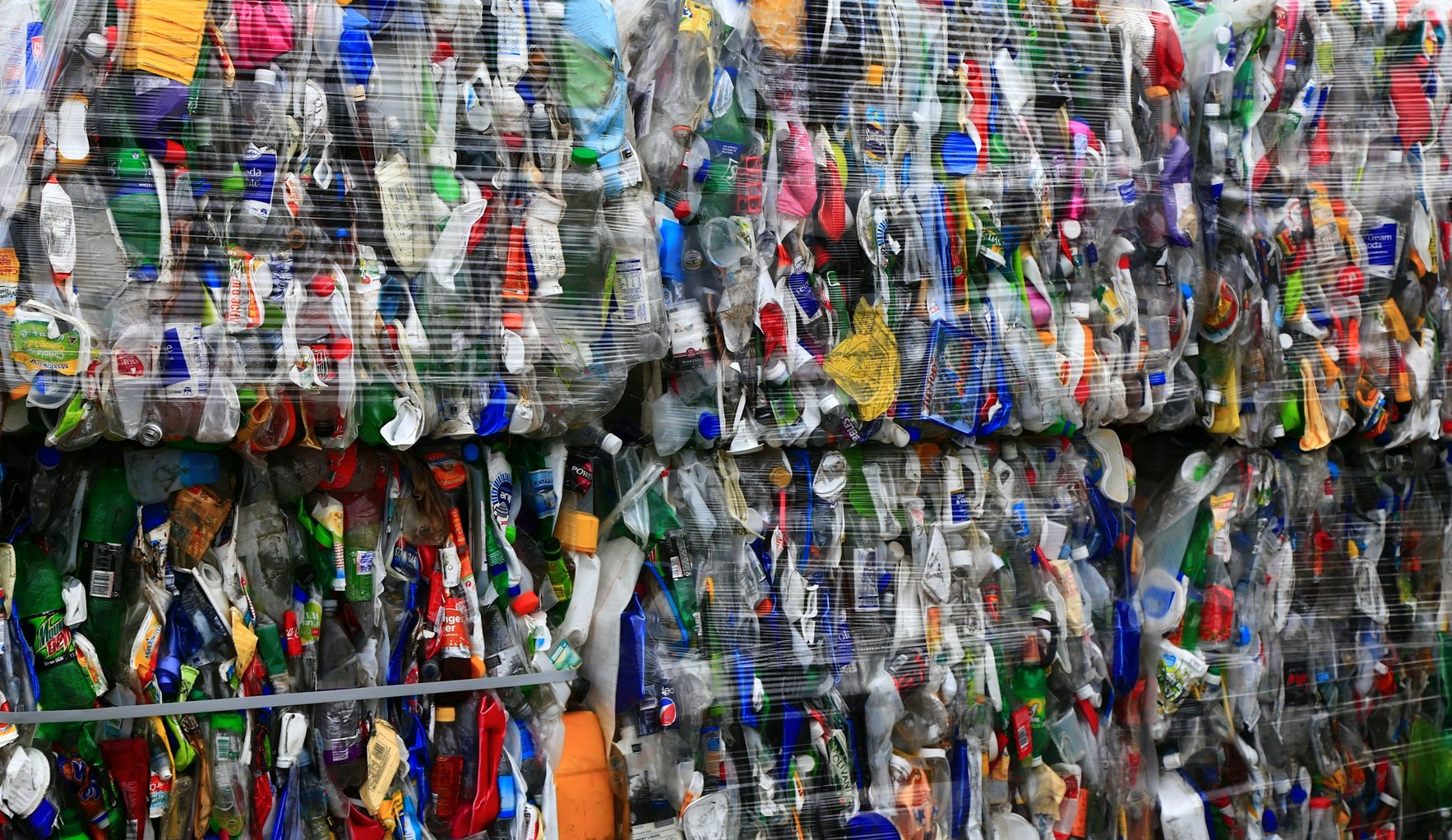
Ocean plastic treatment, in numbers
Ocean plastic and other marine litter collected from Japan's beaches is handled under the Waste Management Act. A Ministry of the Environment manual says beach litter is "basically" taken to the incinerators of coastal municipalities (Ministry of the Environment, manual on marine litter collection by fishers and local governments, p.22). Beyond that, Tsushima City in Nagasaki compresses foam buoys into ingots one fiftieth of their volume and sells them, and in Kawasaki a trial broke plastic down into gas through chemical recycling (Ministry of the Environment, case book on marine litter collection and treatment, 2nd edition, p.34 and p.43). Worldwide, 9% of plastic waste generated in 2019 was recycled (OECD, Global Plastics Outlook).
This page was compiled by Karatsu Farm & Food as part of the Karatsu Data Bank. It covers who treats collected marine litter and how it is classified as waste, the treatment process, Japanese examples by treatment method, volume reduction and recycling in Tsushima, the amount collected by prefecture, how plastic waste is treated worldwide, and Saga Prefecture and Karatsu. It uses only figures and statements found in the sources, without conclusions or value judgements. Rankings and percentages are our own sorting and calculations from the source tables.
| Item | Figure | Period | Source |
|---|---|---|---|
| Share of global plastic waste recycled | 9% | 2019 | OECD |
| Share of global plastic waste incinerated / landfilled | 19% / almost 50% | 2019 | OECD |
| Beach litter collected under the national subsidy programme (Japan) | 39,551.5 t | FY2024 | Ministry of the Environment |
| Prefecture collecting the most | 6,139.8 t (Kagoshima) | FY2024 | Ministry of the Environment |
| Saga Prefecture | 425.2 t (22nd of 39) | FY2024 | Ministry of the Environment (rank by us) |
| Volume reduction of foam buoys in Tsushima | 1/50 | from FY2024 | Ministry of the Environment case book |
| Beach litter landfilled in Tsushima | 278.32 t/yr → 231.71 t/yr | before → after the equipment | Ministry of the Environment case book |
| Chemical recycling trial in Kawasaki | about 20 kg × 4 runs | Apr 2024 to Mar 2025 | Ministry of the Environment case book |
| Driftwood recycled in Toyama | 622 t (of about 900 t) | FY2024 | Ministry of the Environment case book |
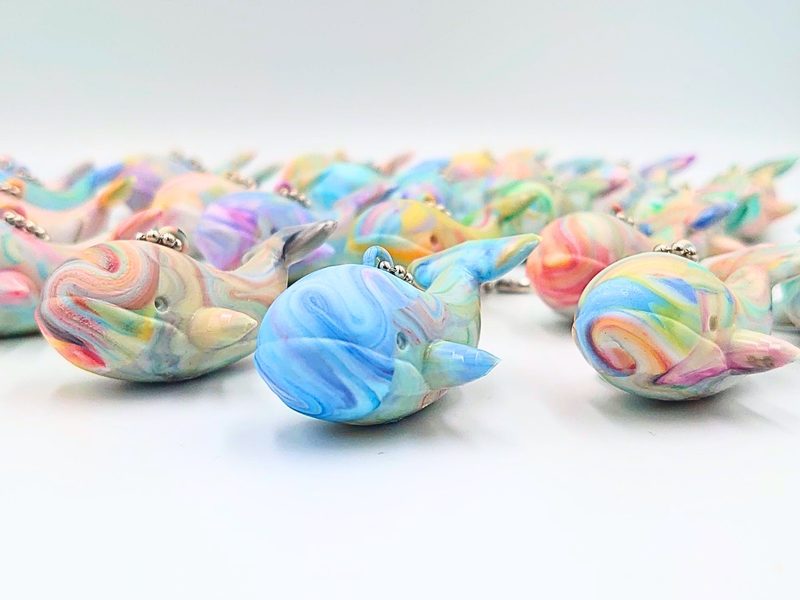
We collect PET bottle caps from homes, schools and beaches and turn them into products with small machines.
See our work
Who treats collected marine litter? The law and waste classification
Article 17 of Japan's Act on Promoting the Treatment of Marine Debris (Act No. 82 of 2009) requires coastal administrators to take the measures needed to treat marine debris so that the coasts they manage stay clean, and requires municipalities to cooperate where necessary (e-Gov). The national basic policy (revised May 2019) gives, as an example of municipal cooperation, accepting collected debris at municipal waste treatment facilities, and says collected debris must be properly collected, transported and disposed of under the Waste Management Act (Ministry of the Environment, basic policy on marine debris, p.4 and p.5).
The same litter can fall into different waste categories depending on who collected it and how. Citing a Ministry of the Environment notice (30 March 2010), Saga Prefecture's regional plan says litter collected by residents or private groups as volunteers is general (municipal) waste, while litter collected by private groups as a business contracted by coastal administrators is general or industrial waste depending on its type (Saga Prefecture, regional plan on marine debris, p.18). Litter that gets caught in fishers' nets during fishing and is brought back is not treated as fishery waste (Ministry of the Environment, guidelines on fishery waste, revised May 2020, as cited in the Ministry of the Environment FY2021 report, p.IV-8).
| How it was collected | Waste category | Source |
|---|---|---|
| Volunteers (residents, private groups) | General waste | Saga Prefecture's plan (Ministry notice) |
| Contracted work for coastal administrators | General or industrial waste, depending on type | Saga Prefecture's plan (Ministry notice) |
| Litter caught in nets during fishing and brought back | Not fishery waste | Ministry of the Environment fishery waste guidelines |
The classification affects where the litter can go. The Ministry's case book lists as issues that an RPF (solid fuel) maker licensed for industrial waste cannot treat beach litter collected as general waste even if it is physically the same, and that a chemical recycling plant licensed as a general waste facility cannot normally treat marine litter collected by businesses as industrial waste (Ministry of the Environment, case book, 2nd edition, p.43 and p.53).
The treatment process: collection, storage, transport and disposal
The Ministry's manual shows collected marine litter being sorted and stored, the local government arranging a contractor, and the litter being transported, processed into a treatable state and recycled (Ministry of the Environment, manual on marine litter collection by fishers and local governments, p.13). It notes that metals, non-combustibles and hazardous items mixed into incinerators can increase residues, damage furnace walls and lower the quality of recycled ash, and that lead in fishing nets and ropes should be removed as far as possible (same manual, p.21).
Salt is another issue. In Minamisanriku, Miyagi, collected litter is left out in the rain at a temporary site to wash out salt: six months to a year for driftwood and three to six months for plastics and other combustibles, before going to treatment (Ministry of the Environment, case book, 2nd edition, p.39). The chlorine content of beached plastic and its effect on fuel use and incineration are covered on Why Ocean Plastic Is Hard to Recycle.
Examples by treatment method (Japan, Ministry of the Environment case book, 2nd edition, March 2026)
In March 2026 the Ministry of the Environment revised its case book on marine litter collection and treatment, adding five treatment examples (Ministry of the Environment, case book, 2nd edition, revision history (page after the contents) and p.15). By method:
| Method | What is done | Where | Figures in the source | Issues in the source |
|---|---|---|---|---|
| Volume reduction and material recycling (foam) | Buoys shredded, compressed into ingots and sold | Tsushima, Nagasaki | Volume cut to 1/50 | Pre-processing of buoys is labour-intensive |
| Shredding and material recycling (hard plastic) | Sorted by colour, shredded and sold to a trading company | Tsushima, Nagasaki | 1 yen/kg; volume cut to 1/15 | Only about 10% of the total is sold |
| Chemical recycling (gasification) | Gasified with household packaging plastic into hydrogen, ammonia and carbon dioxide | Kawasaki, Kanagawa (Resonac) | Trial research, about 20 kg × 4 runs | Cannot normally take marine litter classed as industrial waste; no scheme to pay for transport and treatment |
| Solid fuel (RPF) | Sorted plastic, paper, fibre and wood made into solid fuel and sold to paper mills and others | Kakegawa, Shizuoka (Recycle Clean) | CO2 about 30% lower; cost about half of industrial-waste incineration or landfill (in general) | Cannot treat beach litter collected as general waste |
| Incineration, ash into road base | Combustibles incinerated; ash granulated into recycled road base | Minamisanriku, Miyagi (Tsukidate Clean Center) | Ash is about 10% of input volume | Prior consultation needed with the municipality where the plant is |
| Driftwood into compost and fuel | Driftwood composted or made into fuel with other wood waste | Toyama (Hokuriku Port Service and others) | 622 t of about 900 t (FY2024) | Outlets for compost and fuel |
| Driftwood into board | Driftwood shredded as raw material for building boards | Shizuoka City (Shimizu Futo) | Feed is 20–30% driftwood, 70–80% other wood | Large driftwood must be cut first |
In the Kawasaki trial, plastic from litter collected by a cleaning vessel in Kawasaki Port was processed four times between April 2024 and March 2025, about 20 kg each time, together with household packaging plastic treated as general waste. Even plastic with a lot of salt and dirt was fully processed at that scale, with no effect on the gas produced (Ministry of the Environment, case book, 2nd edition, p.43). In Kakegawa, 6,160 kg was collected from about 9.5 km of coast in FY2025, and the contractor separates RPF feedstock from the rest. The recycling rate for all waste the contractor received (not only beach litter) was 87.9% (October 2024 to September 2025) (Ministry of the Environment, case book, 2nd edition, p.51 and p.52).
Tsushima: figures for volume reduction and recycling
Ocean currents and seasonal winds bring 30,000 to 40,000 m³ of litter to Tsushima's coasts every year, more than 70% of it plastics including polystyrene foam. The city installed a shredder and compressor for foam buoys in FY2020, a shredder for hard plastics in FY2021, and a foam ingot machine in FY2024. In FY2024, turning about 2,000 bulk bags (over 2,000 m³) of foam into ingots meant it could be carried on one 10-tonne truck (Ministry of the Environment, case book, 2nd edition, p.32 and p.34).
| Item | Foam buoys | Hard plastics |
|---|---|---|
| Equipment installed | Shredder and compressor FY2020; ingot machine FY2024 | Shredder and screen FY2021 |
| Intake (FY2024) | 1,911 m³ | 2,227 m³ |
| Share turned into resources | 70% of what is processed | 70% of what is processed |
| Volume reduction | 1/50 | 1/15 |
| Capacity | 50 kg/hour | 45–55 m³/day |
| Outlet | Ingots sold to private companies | Chips sold to private companies (1 yen/kg) |
After the equipment was installed, the amount of beach litter landfilled after treatment fell from 278.32 t to 231.71 t a year (16.7% lower, our calculation). Operation and maintenance cost 2,508 thousand yen for maintenance and 185 thousand yen for repairs in FY2023, and 2,508 thousand yen and 2,311 thousand yen in FY2024. Hard plastic chips have become shopping baskets, plastic bags, ballpoint pens, storage boxes and shop display hangers. On the other hand, only about 10% of the hard plastic is sold, and driftwood is burned in the city's gasification melting furnace (Ministry of the Environment, case book, 2nd edition, p.33 to 35). The city's earlier foam-to-oil unit could only process about a third of the foam collected, because the oil could not be stored (same source, p.33).
Tsushima's budget for collecting and disposing of marine litter is on Marine Litter Collection and Disposal Costs, and the share of recyclable items in Tsushima's beach litter on Why Ocean Plastic Is Hard to Recycle.
Beach litter collected by prefecture (FY2024 ranking)
Under the national subsidy programme for marine debris, 39 prefectures collected a total of 39,551.5 t of beach litter in FY2024, cleaning a combined 41,902.5 km. The largest amounts were in Kagoshima (6,139.8 t), Okinawa (5,852.3 t) and Hokkaido (4,705.2 t) (Ministry of the Environment, FY2025 report on marine litter, Table II-3, p.7; ranking by us). The share of man-made items by weight varies widely: 98.3% in Okinawa, 77.0% in Kagoshima and 5.7% in Hokkaido (our calculation).
| Rank | Prefecture | Collected (t) | Man-made (t) | Man-made share | Cleanups |
|---|---|---|---|---|---|
| 1 | Kagoshima | 6,139.8 | 4,727.4 | 77.0% | 5,735 |
| 2 | Okinawa | 5,852.3 | 5,755.4 | 98.3% | 1,244 |
| 3 | Hokkaido | 4,705.2 | 267.7 | 5.7% | 411 |
| 4 | Kyoto | 2,788.9 | 1,345.8 | 48.3% | 246 |
| 5 | Nagasaki | 2,300.4 | 1,493.6 | 64.9% | 635 |
| 6 | Kanagawa | 2,089.2 | 222.3 | 10.6% | 3,440 |
| 7 | Yamagata | 1,551.9 | 769.3 | 49.6% | 219 |
| 8 | Oita | 1,326.4 | 176.8 | 13.3% | 296 |
| 9 | Niigata | 1,228.3 | 364.3 | 29.7% | 506 |
| 10 | Shizuoka | 1,143.2 | 94.9 | 8.3% | 916 |
| 22 | Saga | 425.2 | 56.6 | 13.3% | 294 |
| Total of 39 prefectures | 39,551.5 | 18,163.5 | 45.9% | 21,363 |
The national trend in beach litter collected is on Beach Cleanup Data, and the most common types of beach litter on Marine Litter by Type.
World: how is plastic waste treated? (OECD)
According to the OECD, of the 353 million tonnes (Mt) of plastic waste generated worldwide in 2019, 55 Mt (15%) was collected for recycling, of which 22 Mt ended up as residue needing disposal. In the end 9% was recycled, 19% incinerated and almost 50% sent to sanitary landfills; the remaining 22% went to uncontrolled dumpsites, open burning or leakage into the environment (OECD, Global Plastics Outlook; OECD press release, 22 February 2022). By 2060, recycling is projected to rise to 17%, with incineration at 18% and landfill at 50% (OECD, The current plastics lifecycle is far from circular).
| Treatment | Share (2019) |
|---|---|
| Landfill (sanitary) | almost 50% |
| Uncontrolled dumping, open burning or leakage | 22% |
| Incineration | 19% |
| Recycling | 9% |
How Japan treats all its plastic waste (9.11 Mt in 2024) and estimates of plastic leaking into the sea are on Plastic Statistics.
Marine litter treatment in Saga Prefecture and Karatsu
Saga Prefecture's regional plan on marine debris (September 2025) says municipalities and coastal administrators collect, transport and dispose of beach litter under the Waste Management Act and the prefectural and municipal waste plans, and that anything usable should be used as a resource as far as possible, giving as examples driftwood chipped into biomass fuel or park paving material, and use as raw material for livestock deodorant (Saga Prefecture, regional plan on marine debris, p.18). In FY2024 Saga collected 425.2 t, of which 56.6 t was man-made (Ministry of the Environment, Table II-3).
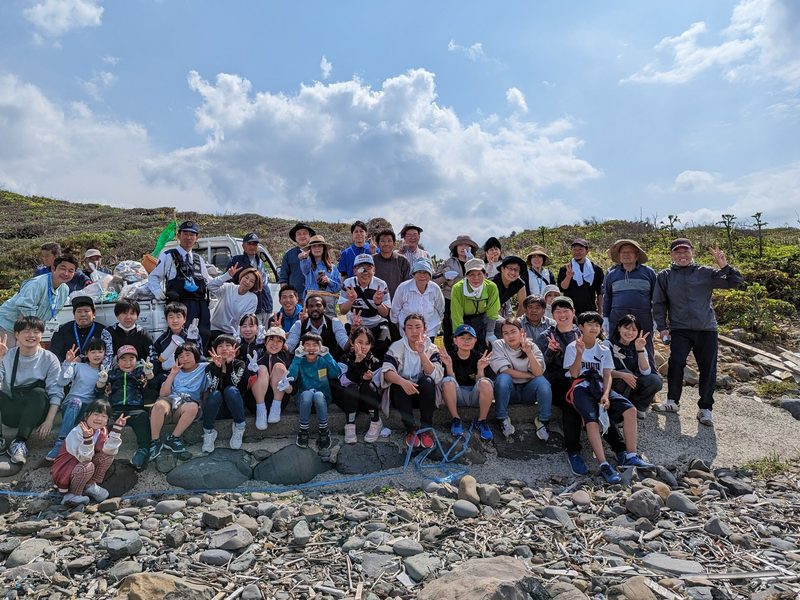
Karatsu City hands out volunteer rubbish bags for clean-ups at the city hall and its district centres. The city's August 2016 newsletter asks volunteers to separate what they collect into burnables, non-burnables (bottles and cans), mud and grass, leave it in one place where a collection truck can pull up, and contact the office that gave them the bags (Karatsu City environment newsletter, August 2016). The city also has "Hiroibako" boxes for beach litter; its November 2023 newsletter says there are five on the city's beaches (Karatsu City environment newsletter vol.33, November 2023, p.2; about the boxes: Karatsu City, Hiroibako). Saga's collection trend and how Karatsu's beaches feature in the prefectural plan are on Marine Litter Collection and Disposal Costs.
An example from Karatsu (our work)
As Precious Plastic Karatsu, we collect PET bottle caps from homes, schools and beaches and turn them into products with small machines. We have collected 3,026 kg of caps in total (as of April 2026, our records). This is the weight of PET bottle caps, not of all the litter collected from beaches. Cap collection and where the caps go are on PET Bottle Cap Collection Data, and our activity figures on Precious Plastic in Numbers.
Frequently asked questions
Q1. How is collected ocean plastic treated?
It is treated under the Waste Management Act. A Ministry of the Environment manual says beach litter is basically taken to the incinerators of coastal municipalities. There are recycling examples too, such as volume reduction and sale in Tsushima, a chemical recycling trial in Kawasaki and solid fuel (RPF) in Kakegawa.
Q2. Can ocean plastic be reused?
There are examples. Tsushima shreds hard plastic and sells it at 1 yen/kg, and it becomes products such as shopping baskets and ballpoint pens, though only about 10% of the total is sold. Foam buoys are compressed into ingots one fiftieth of their volume and sold.
Q3. Is litter picked up on a beach general waste or industrial waste?
According to Saga Prefecture's plan (based on a Ministry of the Environment notice), litter collected by volunteers is general waste, and litter collected as contracted work for coastal administrators is general or industrial waste depending on its type. Litter caught in nets during fishing and brought back is not treated as fishery waste.
Q4. Who is responsible for treating marine litter?
Under Article 17 of the Act on Promoting the Treatment of Marine Debris, coastal administrators must take the measures needed, and municipalities must cooperate where necessary. The national basic policy gives accepting collected litter at municipal waste facilities as an example of that cooperation.
Q5. What share of the world's plastic waste is recycled?
According to the OECD, of 353 Mt of plastic waste in 2019, 9% was recycled, 19% incinerated, almost 50% landfilled and 22% mismanaged or leaked.
Q6. Which prefectures collect the most beach litter?
Under the national subsidy programme in FY2024, Kagoshima (6,139.8 t), Okinawa (5,852.3 t) and Hokkaido (4,705.2 t) collected the most, out of a national total of 39,551.5 t. Saga collected 425.2 t.
Q7. How should litter from a beach clean-up in Karatsu be put out?
Karatsu City hands out volunteer rubbish bags at the city hall and district centres. The city's newsletter asks volunteers to separate burnables, non-burnables (bottles and cans), mud and grass, leave them where a collection truck can pull up, and contact the office that gave them the bags. Please check the current procedure with the city's environment division.
Sources
| Source | Publisher | Date | URL | Accessed |
|---|---|---|---|---|
| Act on Promoting the Treatment of Marine Debris (Article 17) | e-Gov (Digital Agency) | - | https://laws.e-gov.go.jp/law/421AC1000000082 | 2026-11-25 |
| Basic policy for comprehensive and effective measures on marine debris (revised) (p.4, p.5) | Ministry of the Environment, Japan | Cabinet decision 2019-05-31 | https://www.env.go.jp/content/900542989.pdf | 2026-11-25 |
| Manual on marine litter collection by fishers and local governments (p.13, p.21, p.22) | Ministry of the Environment, Japan | 2023-08 | https://www.env.go.jp/content/000159344.pdf | 2026-11-25 |
| Case book on marine litter collection and treatment using IT and other technologies, 2nd edition (revision history; p.15; Table 2, p.16–18; p.32–53) | Ministry of the Environment, Japan | 2026-03 | https://www.env.go.jp/content/000397362.pdf | 2026-11-25 |
| FY2025 report on understanding marine litter and efficient collection (Table II-3, p.7) | Ministry of the Environment, Japan | 2026-03 | https://www.env.go.jp/content/000318995.pdf | 2026-11-25 |
| FY2021 report on marine litter collection with fishers, chapter IV (p.IV-8) | Ministry of the Environment, Japan | FY2021 | https://www.env.go.jp/content/000192519.pdf | 2026-11-25 |
| Saga Prefecture regional plan on marine debris (p.18) | Saga Prefecture | 2025-09 | https://www.pref.saga.lg.jp/kiji00352458/3_52458_367947_up_2no2qav5.pdf | 2026-11-25 |
| Global Plastics Outlook | OECD | 2022-02-22 | https://www.oecd.org/en/publications/global-plastics-outlook_de747aef-en.html | 2026-11-25 |
| Plastic pollution is growing relentlessly as waste management and recycling fall short, says OECD (press release) | OECD | 2022-02-22 | https://www.oecd.org/en/about/news/press-releases/2022/02/plastic-pollution-is-growing-relentlessly-as-waste-management-and-recycling-fall-short.html | 2026-11-25 |
| The current plastics lifecycle is far from circular | OECD | 2022-08-18 | https://www.oecd.org/en/data/insights/data-explainers/2022/08/the-current-plastics-lifecycle-is-far-from-circular.html | 2026-11-25 |
| Environment newsletter vol.19 (notes for volunteer clean-ups) | Karatsu City | 2016-08-01 | https://www.city.karatsu.lg.jp/uploaded/attachment/4656.pdf | 2026-11-25 |
| Environment newsletter vol.33 (more beach litter boxes installed, p.2) | Karatsu City | 2023-11-01 | https://www.city.karatsu.lg.jp/uploaded/attachment/4642.pdf | 2026-11-25 |
| Hiroibako beach litter boxes | Karatsu City | updated 2024-10-11 | https://www.city.karatsu.lg.jp/page/3824.html | 2026-11-25 |
Where sources differ
Japan's FY2024 total of beach litter collected is 39,551.5 t in Table II-3 of the Ministry of the Environment's FY2025 report used here (results of the subsidy programme), but 35,570.7 t in the Ministry's survey on implementation of the marine debris act (FY2024 results), as shown on Why Ocean Plastic Is Hard to Recycle. We have not confirmed the reason for the difference. The 1st edition of the Ministry's case book (March 2023) gives 20,000 to 30,000 m³ of litter a year reaching Tsushima, and the 2nd edition (March 2026) 30,000 to 40,000 m³; the share of plastics changed from "over 50%" to "over 70%". This page uses the 2nd edition. For the Hiroibako boxes, Karatsu City's November 2023 newsletter gives five beaches, while the city's Hiroibako page (updated 11 October 2024) lists three locations: Nishinohama, Kitahama and Hado Misaki.
What this page does not cover
Degradation, chlorine and the difficulty of recycling beached plastic are on Why Ocean Plastic Is Hard to Recycle; the cost of collecting and treating marine litter and national subsidies on Marine Litter Collection and Disposal Costs; types of marine litter on Marine Litter by Type; beach clean-up amounts and participants on Beach Cleanup Data; microplastics on Microplastic Data; and plastic production and waste in Japan and worldwide on Plastic Statistics. National totals of marine litter by treatment method (incineration, landfill, recycling) are not covered, because we could not find a published breakdown.
Citing this page and enquiries
To cite these figures, or to discuss plastic collection and recycling workshops, use our contact page or info@karatsu-f-f.com.
About this page
Publisher: Karatsu Farm & Food / Reviewed and approved by Hiroaki Kojima (Vice Director) / Contact: info@karatsu-f-f.com (contact page) / Published: 25 November 2026 / Markdown: ocean-plastic-disposal-data.mdThis page is made together with AI. See this data bank and AI for how.
Related links
▶ Karatsu Data Bank
▶ Why Ocean Plastic Is Hard to Recycle
▶ Marine Litter Collection and Disposal Costs
▶ Marine Litter by Type
▶ Beach Cleanup Data
▶ Microplastic Data
▶ Plastic Statistics
▶ Precious Plastic in Numbers
▶ 海洋プラスチックの処理方法:回収した海ごみはどう処理・再利用されているか(日本語)